What must an oil sample record contain for the laboratory result to be usable?
It must tie each container to the right asset, compartment and sampling point, with the conditions the laboratory cannot recover later. Record collection date and time, operating context, oil temperature and where it was measured, container and seal condition, requested tests, fluid identity and any deviation, keeping collection time separate from report dates. If identity remains uncertain, hold the result and resample instead of assigning it by guesswork.
A laboratory can measure a sample accurately yet tell you little about the intended transformer if the asset, point or container is wrong.
Sampling must preserve representativeness, identity and condition. Chain of custody records collection, handling and laboratory receipt.
Before the Visit: Specify the Sample, Not Only the Test List
IEC 60475:2022 covers sampling insulating liquids from delivery containers and electrical equipment, including mineral and non-mineral oils. IEC 60422:2024, clause 6, addresses representative sampling, trained personnel and oil-temperature recording for mineral-oil supervision.
Agree tests and containers with the laboratory. A container suitable for one analyte may compromise another. Doble's sample-container paper explains compatibility, sealing and contamination control.
Follow the equipment manufacturer's approved procedure; access, pressure and oil level need competent assessment. This is a documentation workflow, not valve-opening guidance.
Give each container a unique identifier linked to asset, compartment and designated point. A substation nickname is insufficient.
At Collection: Capture What the Laboratory Cannot Recover
This original record design is an engineering suggestion, not a standard form.
| Record field | Example of the ambiguity it prevents | Responsible handover |
|---|---|---|
| Asset and compartment | Main tank confused with separate tap changer | Collector to laboratory |
| Sampling point and method | A convenient drain mistaken for the designated point | Collector to reviewer |
| Date, time and operating context | Comparing samples from different equipment states | Collector to analyst |
| Oil temperature and measurement location | Ambient temperature entered as oil temperature | Collector to laboratory |
| Container and seal condition | Transport damage treated as a transformer change | Courier handover to receipt |
| Requested tests and fluid identity | Inapplicable method or interpretation selected | Owner to laboratory |
| Deviations and qualifications | An unsuitable sample reported without warning | Every stage to final reviewer |
Record recent treatment, filling or maintenance. Keep collection time separate from analysis and report dates; a trend built on issue dates can distort intervals.
Record handovers and reception conditions so each container resolves to a request and any test-limiting deviation.
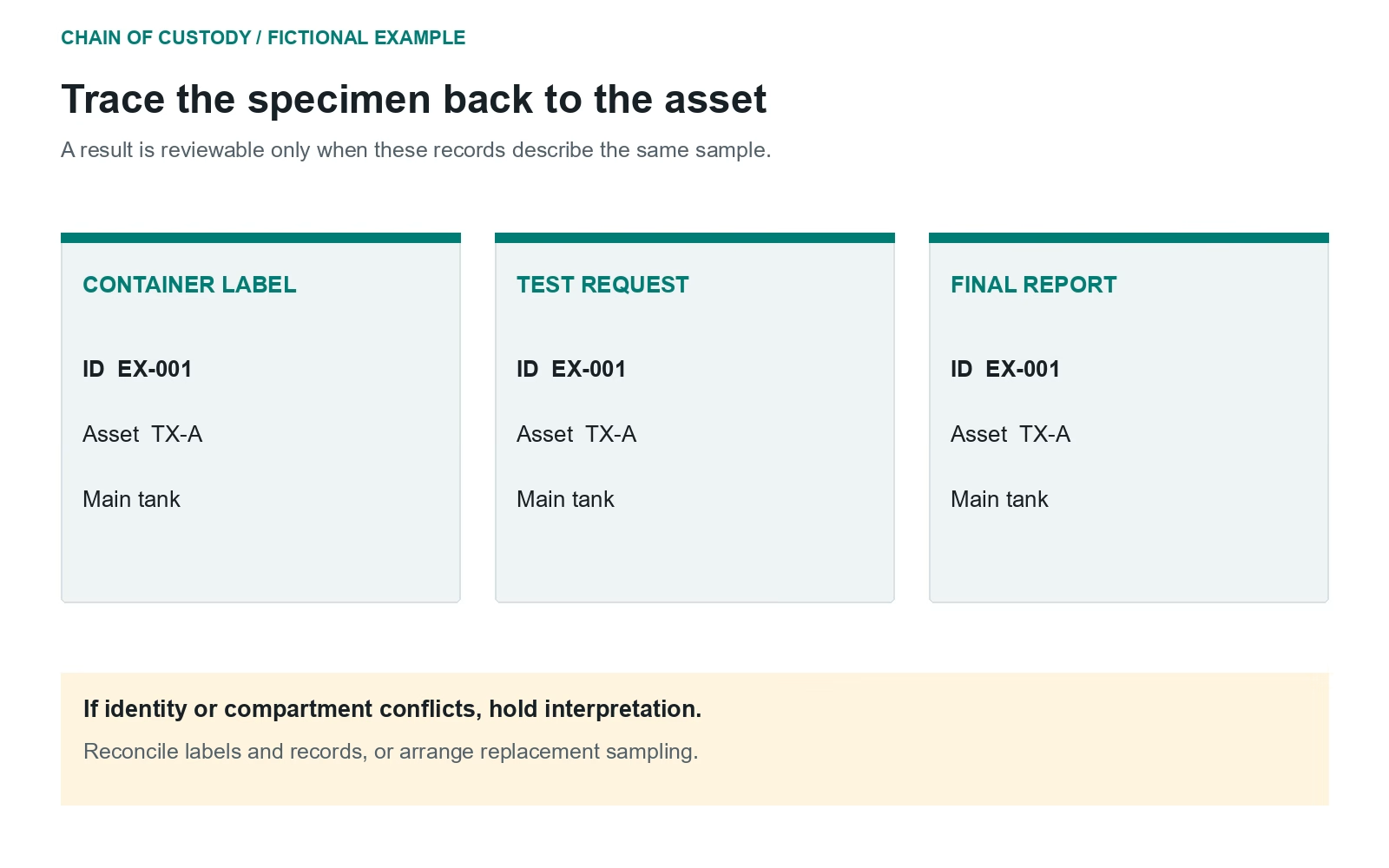
A Worked Mix-Up: Resolve Identity Before Interpreting Chemistry
Hypothetical: two bottles arrive labelled T1. One form says main tank, another tap-changer compartment. Results differ, but a spreadsheet offers only one asset row.
Hold the identity question open. Laboratory and collector reconcile identifiers, collection record and labels. If origin remains uncertain, arrange replacement sampling instead of assigning the concerning result by guesswork.
Retain both results with an identity hold; averaging cannot resolve origin.
Compartment and handling matter for DGA, water, particles and chemistry.
Accept, Qualify or Resample
Classify results as usable, qualified or unsuitable for the intended inference with the laboratory and responsible engineer.
Missing oil temperature may restrict moisture interpretation even if the measured concentration is valid. Identity failure is more fundamental; container problems may affect analytes differently.
Preserve laboratory qualifiers: below limit is not zero, not tested is not below limit, and sample rejected is not adverse oil evidence. Keep these states distinct in condition-monitoring records.
Reconcile request, container label and final report. A remote reviewer should recover asset, compartment, collection time and qualifications without guessing.
Sources and Scope
IEC 60475:2022, edition 3.0, published scope verified; full sampling instructions not reproduced. IEC 60422:2024, clause 6, printed pp. 13-14, checked in the licensed text in the earlier review. Doble's container-selection paper linked above. Evidence checked 25 and 29 September 2026.
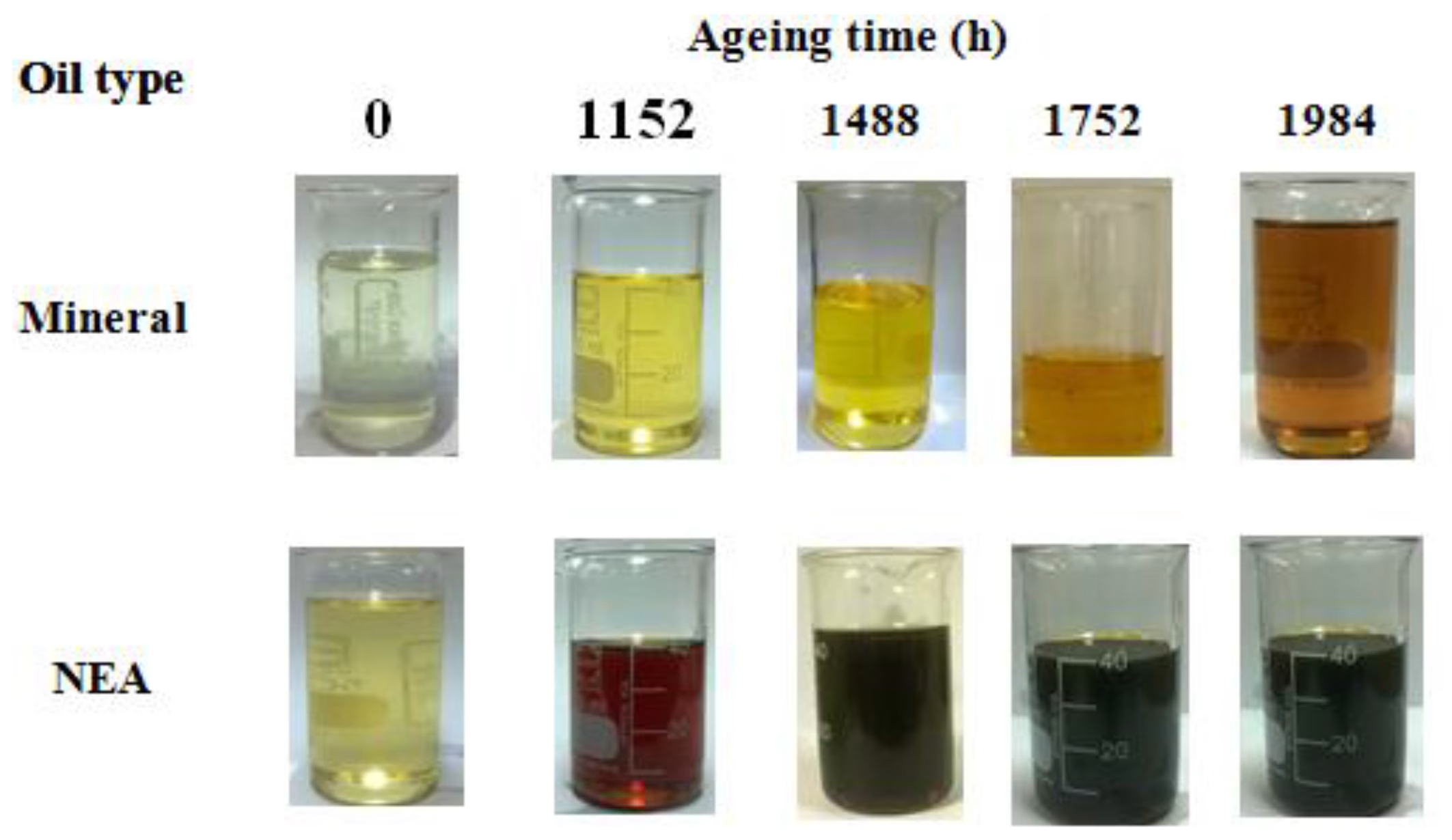
Cover figure: Mineral and natural ester oil under accelerated laboratory ageing. Cropped reproduction of Figure 10 in Bandara, Ekanayake, Saha and Ma, Energies 9(4), 258 (2016), CC BY 4.0. This is not a sampling procedure.