Is an oil particle cleanliness code enough to decide on finer filtration for a transformer?
No. A cleanliness code hides the raw counts and identifies neither particle material nor origin. Request the counts and volume basis, size channels, test method, calibration and sampling record, and confirm the compartment before trending. An increase after maintenance is an investigation lead to confirm with a properly collected repeat sample, not proof of cause, and codes should not be averaged across a fleet as if they were raw counts.
A cleanliness code is not enough to specify a finer filter. Request the raw counts, size channels, test method and sampling record first.
The code identifies neither material nor origin. That uncertainty decides whether to repeat sampling, investigate recent work or examine the equipment.
Read What Was Actually Counted
IEC 60970:2007 covers automatic and microscope-based methods. ASTM D6786-15(2023) is a mineral-oil automatic-counter method identified in the earlier review. Obtain method details from the laboratory report.
Ask whether channels are cumulative or interval-based, with units, calibration and preparation. Matching spreadsheet columns do not establish comparability.
This review table exposes what the code hides.
| Report element | Why it matters | Question for the laboratory |
|---|---|---|
| Raw counts and volume basis | A code hides the underlying measurements | Are counts per mL or another stated volume? |
| Size channels | Different channels describe different populations | Are counts cumulative or interval-based? |
| Method and calibration | Apparent changes may reflect measurement changes | Is this directly comparable with the previous report? |
| Sample preparation | Handling can affect an optical measurement | Were any interference or validity issues recorded? |
| Particle description, if available | Count alone does not identify material | Is further examination justified? |
A cleanliness code is not a linear score. Do not average codes across a fleet as if they were raw counts.
Connect the Count to a Plausible Source
IEC 60422:2024, clause 7.12, discusses handling contamination, ageing and mechanical wear as possible sources, and the relevance of particles alongside moisture to dielectric properties.
Check filling, pump work, tank opening, oil transfer and sampling changes. Confirm the compartment; main-tank and switching-compartment results do not form one trend.
If material identity would change the response, request additional laboratory examination. Size distribution alone is not evidence of metallic debris.
Other condition-monitoring evidence can test the hypothesis; a particle pattern cannot uniquely locate a defect.
Work Through a Post-Maintenance Increase
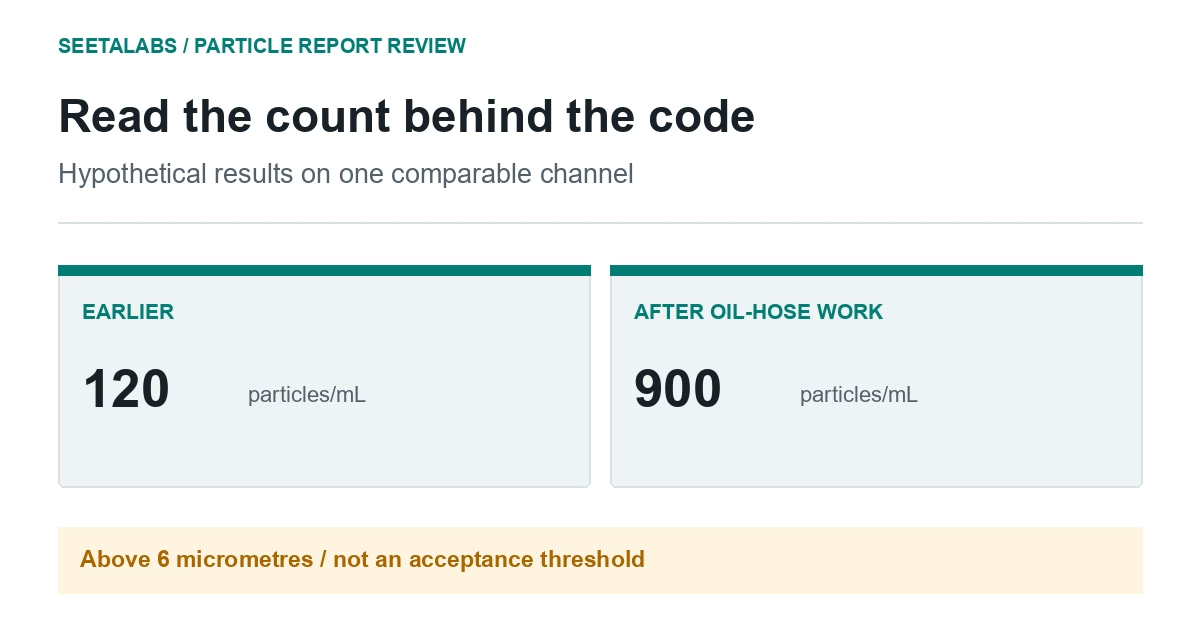
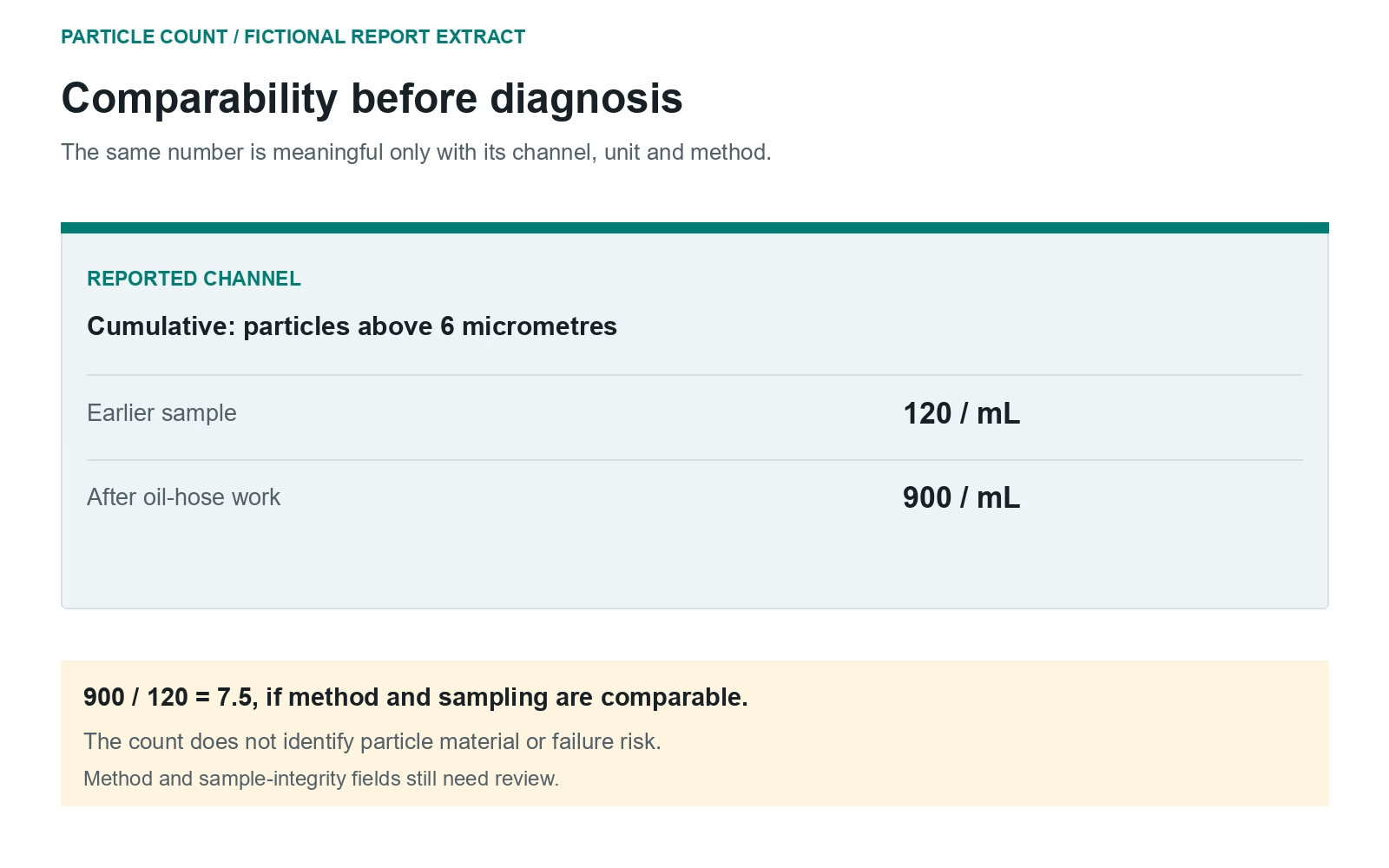
Hypothetical, not acceptance limits: a report shows 900 particles/mL above 6 micrometres versus 120 particles/mL previously. Method, channel and volume are assumed comparable. The new sample followed oil-hose replacement.
First check container and collection. Doble's author paper explains the need to prevent container-introduced contamination.
If a properly collected repeat does not confirm the increase, retain and qualify the first result. If confirmed, recent work is an investigation lead, not proof of cause.
Review other channels, water, breakdown results and transfer controls. Verify any treatment with comparable methods and representative samples, not only an outlet count.
Preserve the Evidence in Fleet Comparisons
Store count, unit, threshold, method, date, location and qualification alongside the code.
An unmeasured channel is missing evidence; below a reporting limit is not zero. Resolve incompatible channels before calculating changes or ranking assets.
In the example, 900/120 = 7.5 only for comparable channels and volume basis; it is not a 7.5-fold increase in failure risk. Check mineral-oil guidance separately before applying it to esters.
Sources and Scope
IEC 60970:2007, edition 2.0, published scope verified on 29 September 2026. ASTM D6786-15(2023), published scope recorded in the earlier review; no procedure reproduced. IEC 60422:2024, clause 7.12, printed pp. 23-24, checked in the licensed text. Doble author paper linked above, read for sample-container considerations. Evidence checked 25 and 29 September 2026.