Which reference applies when accepting mineral insulating oil delivered, after filling, or in service?
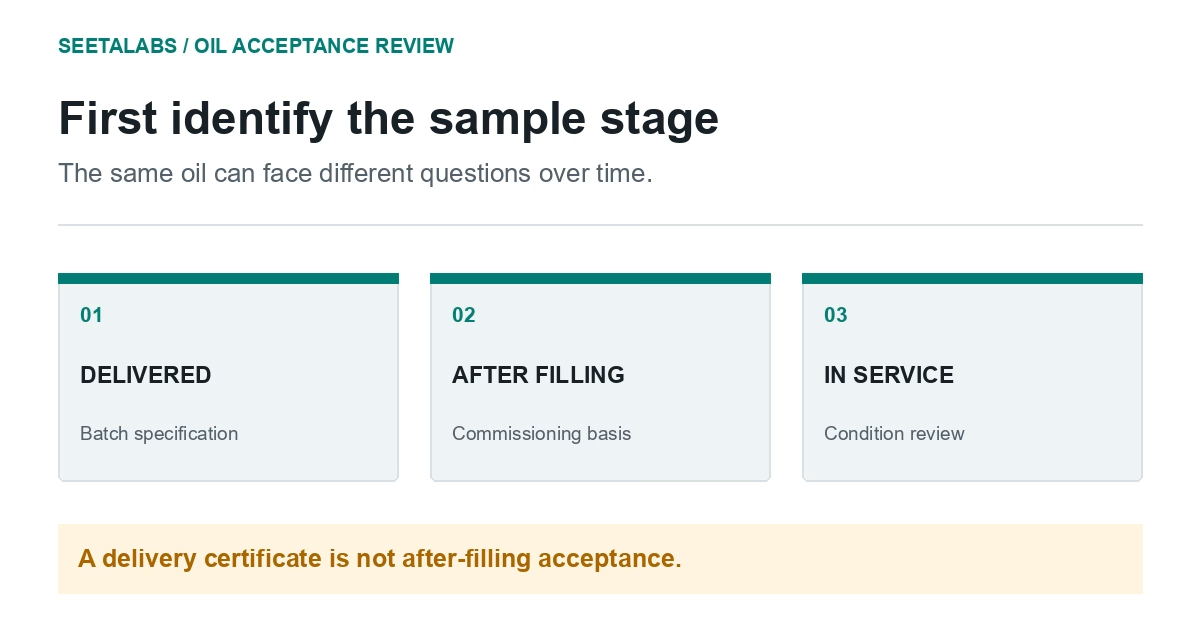
It depends on what the sample represents. IEC 60296:2020 covers unused and off-site recycled mineral oil in the delivered state, while IEC 60422:2024 addresses mineral oil in new equipment in clause 8 and service evaluation in clause 9, so a supplier certificate and a post-filling result can both be valid. Identify fluid, stage, method and reference edition before applying a limit, and do not transfer mineral-oil values to esters.
Acceptance criteria depend on what the oil sample represents: delivered batch, filled equipment or service condition. A supplier certificate and commissioning exception can both be valid because transfer and contact with equipment intervene. Identify fluid, stage and reference before applying a limit.
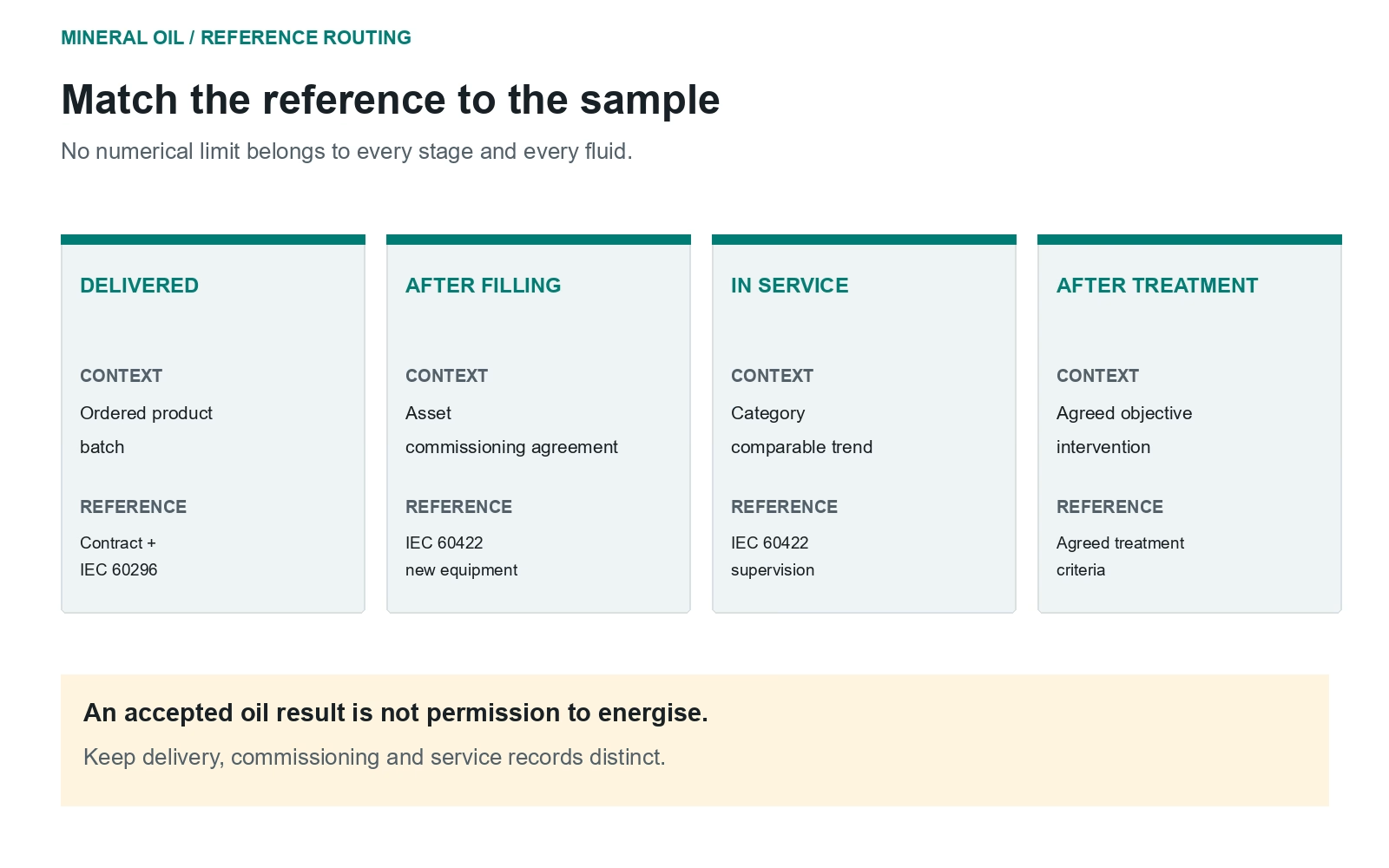
Identify the Stage That the Sample Represents
IEC 60296:2020 covers unused and off-site recycled mineral oil in the delivered state, not on-site treatment. Ask what a contractor means by "recycled" or "regenerated."
IEC 60422:2024, clause 8, addresses mineral oil in new equipment, after it has contacted the transformer. Clause 9 addresses service evaluation.
This original routing guide contains no numerical limits.
| Sample state | Main assessment question | Reference to establish | Record to retain |
|---|---|---|---|
| Oil delivered in a container | Does this batch meet the ordered product specification? | Delivery contract and applicable fluid specification | Batch certificate and receiving sample |
| Oil after filling new equipment | Does the filled equipment meet agreed oil acceptance criteria? | Commissioning agreement, OEM requirements and relevant guidance | Filling history and representative sample |
| Oil during service | Does its condition require investigation or maintenance review? | Applicable supervision framework and equipment category | Comparable trends and operating context |
| Oil after on-site treatment | Were the agreed treatment objectives achieved? | Treatment specification and applicable service criteria | Before/after records and intervention details |
Keep Contractual Acceptance and Condition Assessment Distinct
A supplier certificate supports the delivered batch, not the condition after transport, transfer and filling. A later service result cannot retrospectively prove the delivered batch failed its specification.
IEC 60422:2024, clause 8, relates oil in new equipment to equipment design and agreed requirements. A contract may demand more than a maintenance benchmark; use the actual acceptance documents.
Specify test method, edition and conditions. A BDV result in kV cannot be judged against a limit from an incompatible method.
Retain acceptance as a condition-monitoring baseline, then use a service framework for later samples.
Work Through a Commissioning Disagreement
Hypothetical: a delivery batch meets its purchase specification. After filling, water and particle results change. Should the whole supplier batch be rejected?
The samples bracket transfer and filling, not only production. Check sample integrity, transfer equipment, processing records and the after-filling agreement before assigning cause. Representative resampling may be needed. The responsible engineer and contractual parties decide acceptance.
Similarly, oil reclaimed on site needs treatment and service-context review, not a "new oil" label. A better oil baseline does not restore solid insulation or reset every equipment indicator.
Make Every Acceptance Statement Traceable
An acceptance statement names asset or batch, fluid and grade, sampling stage, methods, reference and edition, equipment category, contract, qualifications and reviewer.
Do not transfer mineral-oil values to esters. A shared sampling method does not make product specifications or maintenance limits interchangeable.
Not measured cannot become pass; below detection is not zero. Keep delivery certificates, commissioning acceptance and service reviews as distinct records.
Agree the reference map before work. Oil acceptance is not permission to energise the transformer.
Sources and Scope
IEC 60296:2020, edition 5.0, published scope verified. IEC 60422:2024, clause 8, printed pp. 28-29, and clause 9, printed pp. 29-34, checked in the licensed text in the earlier review. This article routes decisions; it does not reproduce acceptance tables or define commissioning authority. Evidence checked 25 and 29 September 2026.