Can I keep using mineral-oil limits after retrofilling a transformer with natural ester?
No. Natural-ester retrofill changes the basis of the condition record: new liquid, residual mineral oil and processing can alter concentrations without reversing earlier insulation damage, and identical laboratory column names are no reason to transfer mineral-oil thresholds. Agree applicable tests, limits and methods for the resulting fluid and mixed-fluid period, keep unknown residual mineral oil from becoming zero in the record, and mark the fluid boundary on every trend.
Natural-ester retrofill changes the basis of a mineral-oil transformer's condition record. New liquid, residual mineral oil and processing can alter concentrations without reversing earlier insulation damage. This is an evidence handover, not a filling or energisation procedure; synthetic esters need a separate basis.
Start With a Compatibility Decision
Identify fluid, design, preservation system and service environment. Seek supplier/OEM compatibility evidence for seals, materials, cooling and accessories. Miscibility alone does not settle application suitability.
IEC 62770:2024's public scope restricts natural ester to sealed units or conservators protected from atmospheric contact. A free-breathing design needs preservation-system review. IEC 62975:2021 addresses natural-ester maintenance and use; its detailed requirements were not reviewed here.
Cargill's FR3 retrofill guide includes pre-work sampling and gasket considerations for its fluid. It is not a universal procedure; OEM instructions govern the project.
Changing fluid does not automatically increase permissible loading; winding insulation, cooling and accessories remain constraints.
Preserve the Retrofill Evidence
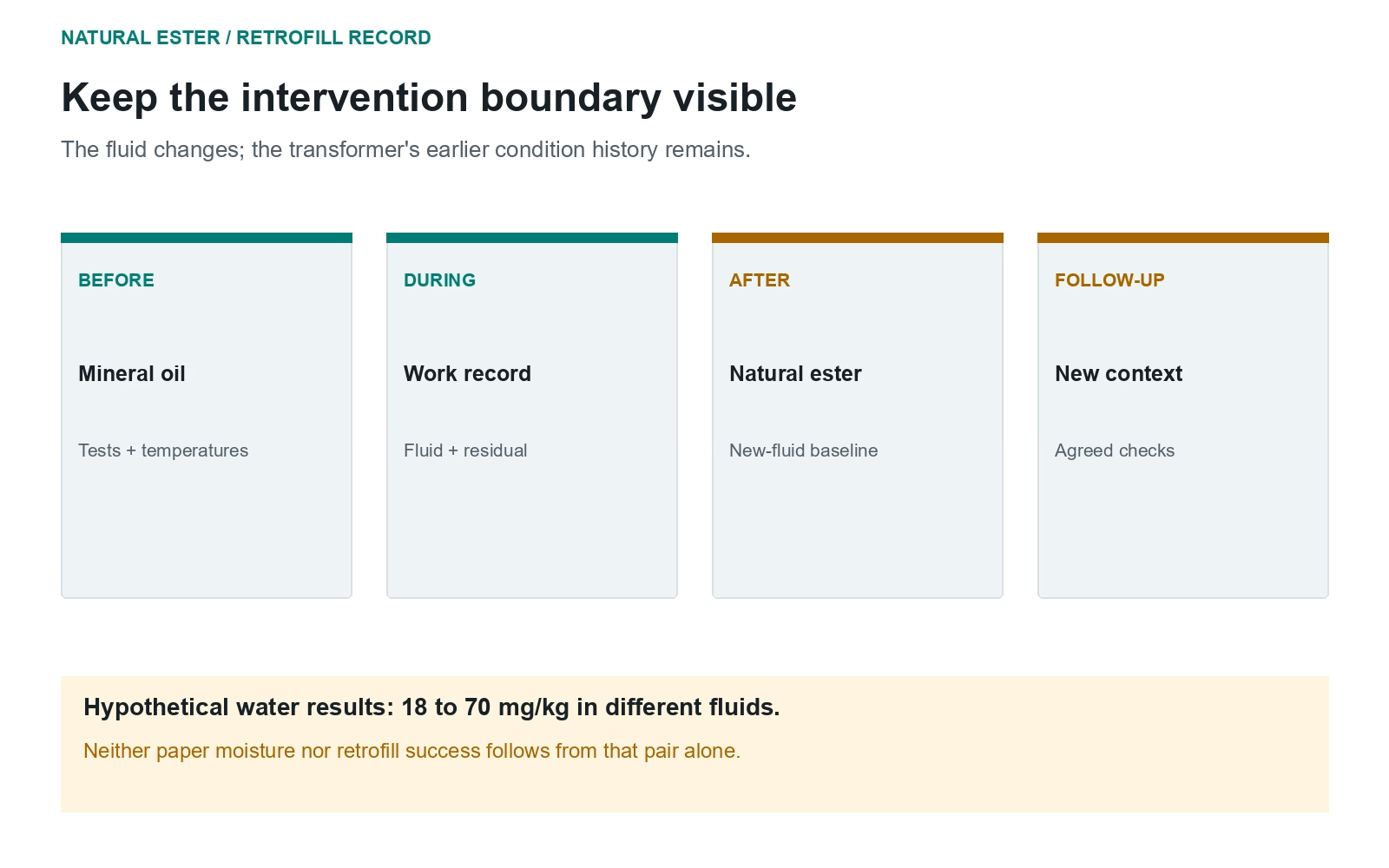
This original record structure is a documentation proposal, not a standard test schedule.
| Record group | Essential content | Future interpretation it protects |
|---|---|---|
| Before retrofill | Fluid identity, DGA, oil tests, cellulose markers and temperatures where available | What was known about the transformer before work |
| During intervention | Approved procedure, fluid batches, removed/added volumes, residual-oil assessment and work scope | Why concentrations or thermal behaviour may have changed |
| After retrofill | New-fluid test results, sampling conditions, fluid mixture identity and acceptance review | The starting point for subsequent comparable trends |
| Follow-up | Supplier/OEM agreed checks, thermal context and deviations | Whether the post-work condition remains consistent |
Record concurrent drying, repairs, gasket or cooling work separately; otherwise improvement may be misattributed to fluid alone.
Keep original reports and fluid identity. Mark the intervention and interpretation change on every cross-boundary trend.
Worked Example: The Water Number Rises
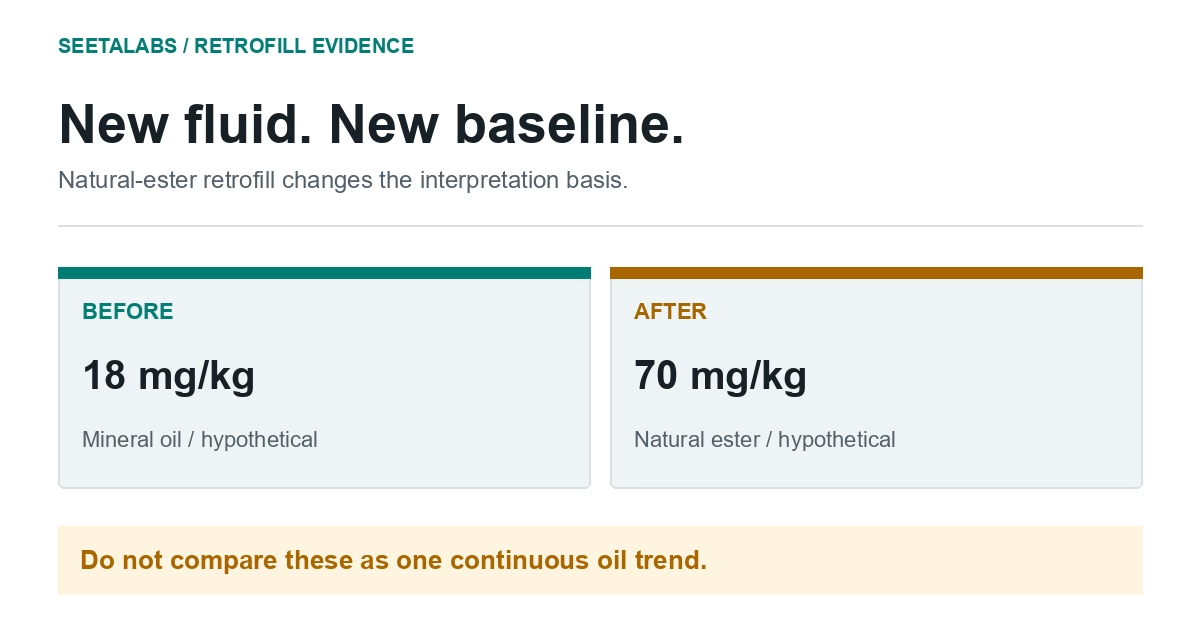
Hypothetical, not acceptance limits: mineral-oil water is 18 mg/kg before retrofill; a later natural-ester sample reports 70 mg/kg.
That increase alone establishes neither wetter paper nor failed retrofill. Do not transfer the old mineral-oil criterion to ester, or dismiss every ester result as harmless.
Retrieve fluid identity, residual mineral oil, sampling temperatures and interpretation basis. Confirm the laboratory method suits the fluid and whether the result is a commissioning baseline or stabilised comparison.
If drying also occurred, evaluate its outcome separately; oil water alone does not quantify paper-moisture change.
For DGA and cellulose markers, preserve the prior history while marking fluid and event boundaries; concentration change does not reverse ageing.
Ask What Changes in the Assessment Method
Agree applicable tests, limits and methods for the resulting fluid and mixed-fluid period before routine monitoring. Identical laboratory column names do not justify mineral-oil threshold transfer.
Unknown residual mineral oil must not become zero in the record.
The handover must identify fluid, work, comparable baseline and governing procedure. Connect it to condition monitoring; changing a database label does not make old and new results comparable.
Sources and scope: IEC 62770:2024 and IEC 62975:2021 official scopes read 29 September 2026, full requirements not reviewed. Cargill FR3 power-class retrofill guide (2020) read for manufacturer-specific context, not copied procedure. No generic ester limit, loading uplift or life-extension multiplier is asserted.