What does a remaining life estimate for a power transformer actually tell me?
Very little until its endpoint is named: paper condition, failure probability, economic replacement or an operating constraint. The figure is a conditional forecast that depends on the model, paper type, temperature history and assumed future duty, and a health index of 70 is not a 70% survival probability. Report the endpoint, scenarios and excluded mechanisms, and read a range from selected assumptions as sensitivity, not a confidence interval.
An estimate of 8.4 years is meaningless until its endpoint is named: paper condition, failure probability, economic replacement or an operating constraint. Insulation ageing cannot predict every bushing fault or future duty change. State what evidence could alter the decision.
Separate Condition, Consumption and Forecast
Condition evidence concerns today; thermal ageing models a contribution over a period; a forecast projects toward a defined endpoint under future assumptions.
Accumulated thermal ageing depends on model, paper type and temperature history. It is not a failure date. IEC 60076-7:2018 guides mineral-oil transformer loading; its equations are not reproduced here.
A health index can prioritise review, but a score of 70 is not a 70% survival probability. The CIGRE ELECTRA discussion describes its use and interpretation pitfalls.
Label each output as present condition, period ageing contribution or conditional forecast.
Make Every Forecast Declare Its Assumptions
This original table tests the meaning of a life-assessment claim.
| Statement in the report | Question the reviewer should ask | More useful reporting form |
|---|---|---|
| Remaining life: 8.4 years | To which endpoint, under which future duty? | Conditional estimate with endpoint and scenario |
| Paper DP estimated from oil | Which relationship, paper type and oil history? | Estimate with method and applicability limitations |
| Thermal life consumed: a percentage | What reference life and starting condition were assumed? | Period contribution with reference basis |
| Failure risk derived from health index | Where was the probability mapping validated? | Condition score unless calibration is demonstrated |
| Confidence interval | Does it cover model and input uncertainty? | Interval definition and excluded uncertainties |
Missing temperatures, paper type or oil history are substantive uncertainties. Defaults enable calculation, not evidence. Show them and test whether they change the recommendation.
Worked Example: A Range Changes the Next Action
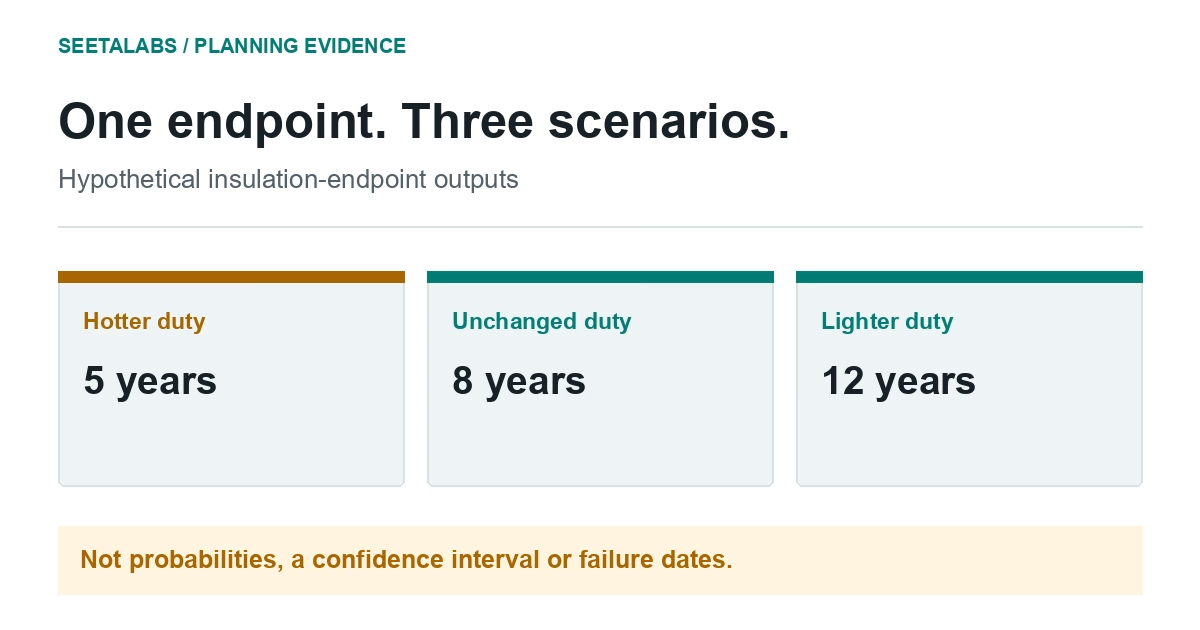
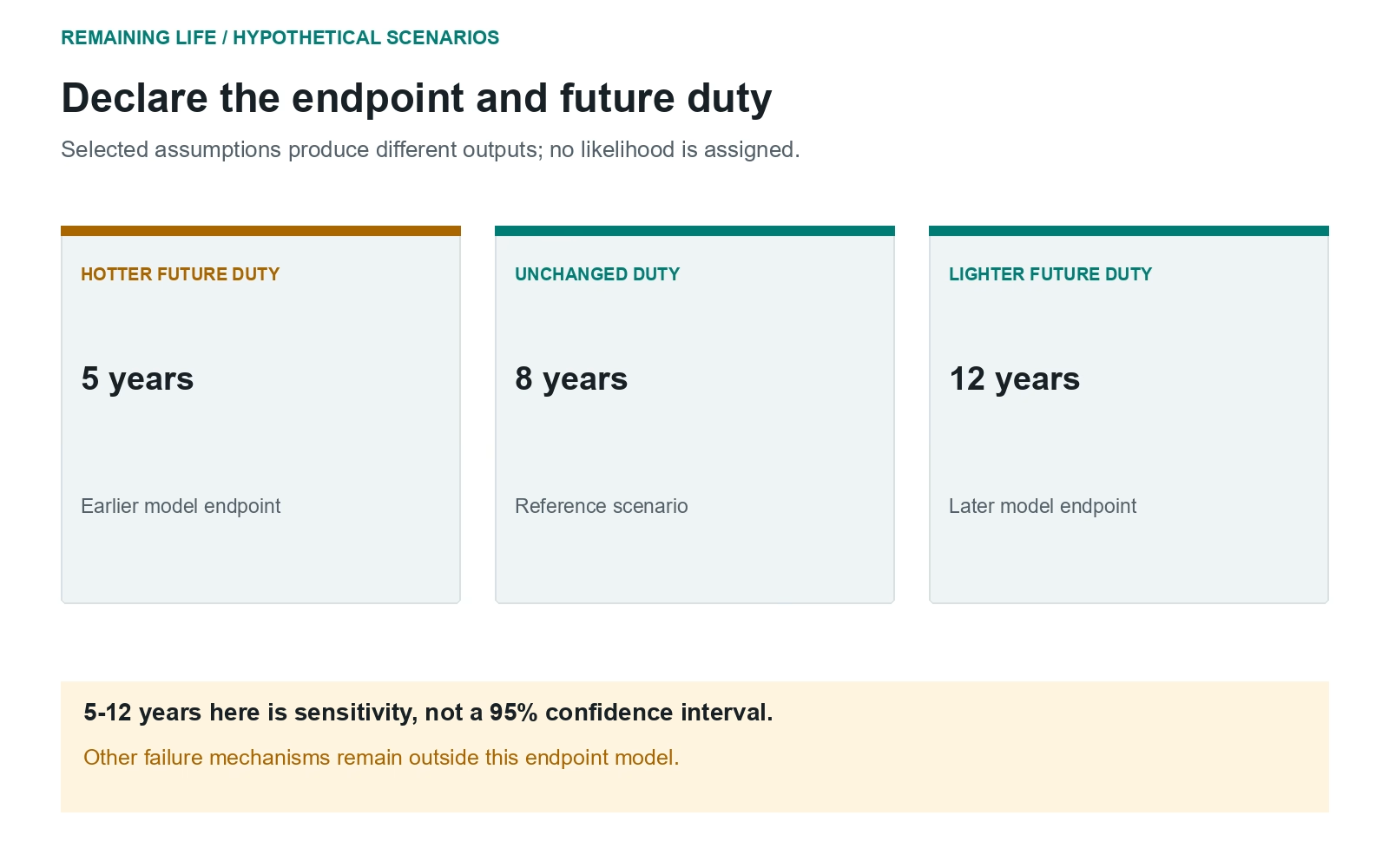
Hypothetical scenario outputs, not asset estimates: a specified insulation endpoint is eight years away under unchanged duty, five under hotter future duty and twelve under lighter duty.
Five to twelve years is not a 95% confidence interval without a statistical coverage analysis. It is sensitivity to selected assumptions, not the probability of each scenario or every failure mechanism.
If replacement takes years and the dominant uncertainty is future load, reconcile the demand forecast and missing thermal evidence while keeping a replacement option viable. Another low-impact oil test may add less value.
A documented accessory defect requires its own response regardless of distant modelled paper endpoints.
Separate actions robust across scenarios from those requiring a load forecast. Eight years is not automatically expected life.
Write a Decision Record That Can Be Updated
A decision record needs endpoint, evidence date, model, assumptions, scenarios, excluded mechanisms and owner. Revision triggers include changed duty, thermal evidence, oil intervention or confirmed defect.
Keep component findings beside aggregate scores in the condition-monitoring record; see the health-index introduction for scoring context.
If endpoint, future duty and revision triggers cannot be recovered, the precise number is not a sound replacement commitment.
Sources and scope: IEC 60076-7:2018 official scope and clauses 6.1-6.4 in an earlier licensed local review; CIGRE TB 761 (2019) catalogue scope only and the public ELECTRA article on TB 858 (2022), read 29 September 2026. Scenarios are original and hypothetical, with no lifespan guarantee or calibrated probability.