Can mineral-oil DGA limits be applied to an ester-filled transformer?
No. IEC 60599:2022 and IEEE C57.104-2019 are scoped to mineral-oil equipment, and ester chemistry, gas solubility and reference evidence differ, so imported limits can create misplaced concern or false reassurance. Some natural esters show stray gassing of ethane, and ester decomposition can contribute CO and CO2. Record the exact fluid and retrofill history, use an applicable ester reference, and log the gap if none is available.
An ester-filled transformer has rising ethane. A mineral-oil worksheet marks the value as abnormal, and the discussion jumps to a thermal fault. Ask whether that worksheet applies to this liquid.
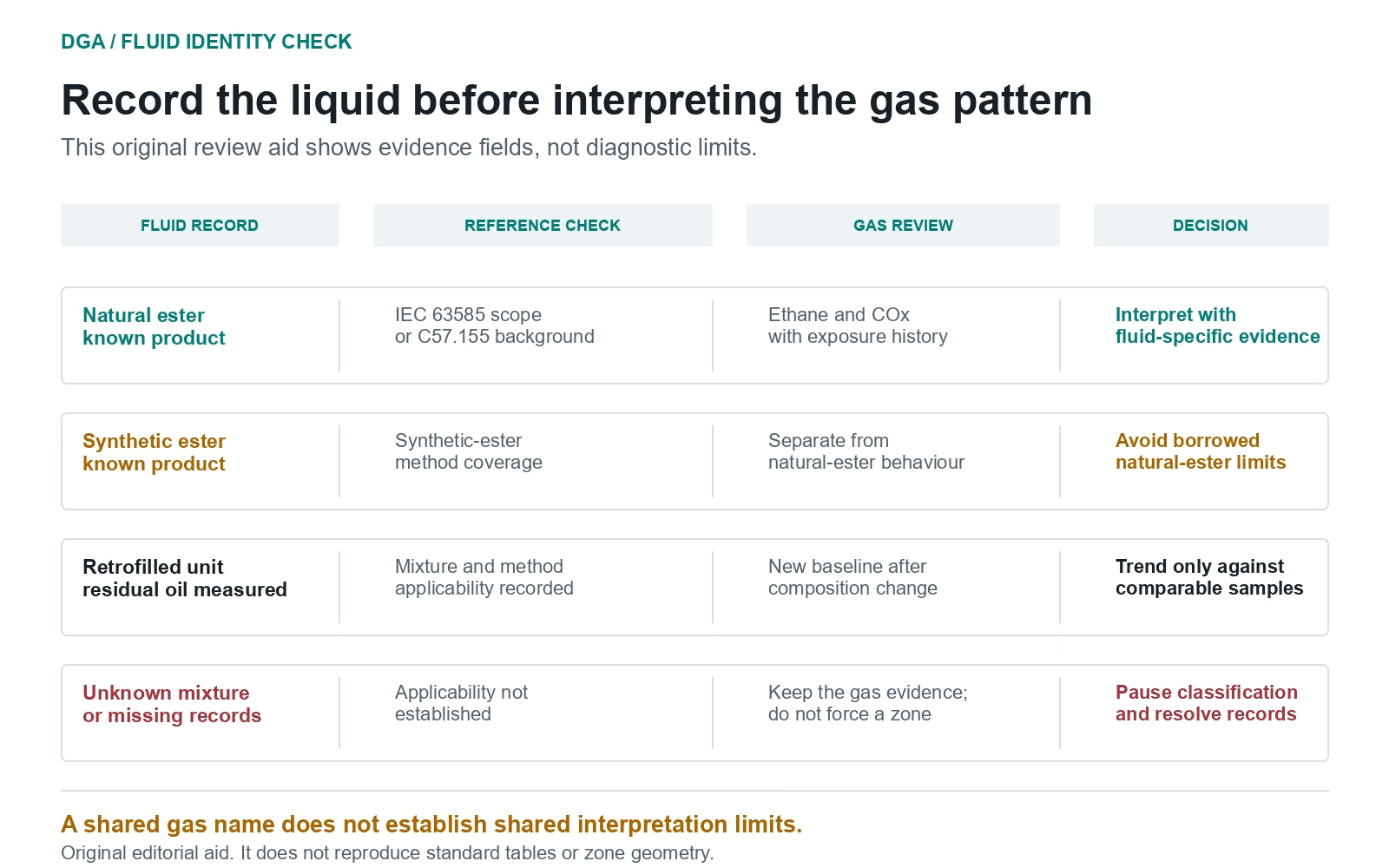
Ester transformer DGA uses familiar gas names, but chemistry, solubility and reference evidence differ. Importing mineral-oil limits can create misplaced concern or false reassurance. Natural ester, synthetic ester and retrofill mixtures need separate identities in the asset record.
Check the reference before the gas pattern
IEC 60599:2022, Clause 1, concerns mineral-oil equipment with cellulosic insulation and cautions about other systems. IEEE C57.104-2019 defines its mineral-oil scope in Clause 1.1 and excludes non-mineral liquids in Clause 1.3. A spreadsheet label does not transfer those criteria to esters.
IEC 63585:2026 covers DGA interpretation in natural esters according to IEC 62770 and synthetic esters according to IEC 61099. Its publication and scope were verified; its full text was not reviewed here, so no thresholds are attributed to it.
IEEE C57.155-2014 is inactive-reserved, but still useful background. Clause 4.1 discusses gas production and solubility; Clause 4.1.1 describes ethane generation in some natural esters; Clause 4.1.3.2 notes carbon oxides from the ester liquid as well as cellulose.
Loiselle, Rao and Fofana's 2020 experimental study compared prepared samples under controlled stresses. It supports separating fluid families, not universal field limits.
Replace shortcuts with fluid evidence
| Shortcut | Why it can mislead | Evidence to request |
|---|---|---|
| Apply mineral-oil gas limits unchanged | Reference population and chemistry differ | Applicable ester guide and fluid-specific experience |
| Treat ethane alone as overheating | Some natural esters can show stray gassing | Exact fluid, other gases and exposure history |
| Attribute carbon oxides entirely to paper | Ester decomposition can contribute CO and CO2 | Joint liquid and insulation assessment |
| Select a generic "ester" triangle | Supported liquids and boundaries may differ | Exact method variant and documented applicability |
| Reuse the old baseline after retrofill | Liquid composition and gas history changed | Retrofit record and new comparable samples |
The table is a review aid, not a replacement limit set. The laboratory should also state how extraction and analysis were validated for that matrix.
A hypothetical ethane review
Suppose a natural-ester unit reports ethane at 80, 125 and 160 ppm after commissioning, while the other measured combustible gases show no comparable rise. These invented figures are not normal limits.
Confirm the compartment, laboratory method, exact fluid and storage history. Oxygen, light and heat exposure matter to the natural-ester ethane mechanism described in IEEE C57.155-2014; do not generalise it to every synthetic ester.
A predominantly ethane pattern may make stray gassing credible. It does not prove the rise is harmless. Check whether it stabilises, other gases emerge, or tests and inspection records support another explanation.
If acetylene and ethylene later rise on confirmed samples, the earlier ethane explanation no longer settles the case. Each new observation has to be assessed in the applicable fluid context.
Record the unresolved part
A useful ester DGA assessment states liquid history, applicable reference, analytical method, trend evidence and unresolved alternatives. For a retrofilled transformer, request drain-and-fill records and residual mineral-oil evidence.
If the right method or reference population is unavailable, record the gap. Keep reliable observations, but do not fill the gap with mineral-oil numbers because they are convenient.
Attach the fluid specification and retrofill record to the laboratory history. The general DGA workflow organises evidence; it does not make mineral-oil limits transferable.
References: IEC 63585:2026, publication and public scope only. IEC 60599:2022, Clause 1. IEEE C57.104-2019, Clauses 1.1 and 1.3, pp. 13-14. IEEE C57.155-2014, Clauses 4.1, 4.1.1 and 4.1.3.2, pp. 4-6. Loiselle, Rao and Fofana, Energies 13(13), 3472, published 5 July 2020: experimental Sections 2.1-2.2 read in the open university copy. Evidence reviewed as of 28 September 2026.