How do I choose the right Duval method for a transformer oil sample?
Identify the fluid, the sampled compartment and the equipment arrangement before plotting, then confirm that the method covers that case. IEEE C57.104-2019, Clause 1.3, excludes LTC interpretation and non-mineral liquids, so OLTC oil points to the Triangle 2 family with model-specific interpretation, and esters or silicone need a documented liquid-specific variant. If applicability remains unresolved, keep the concentrations but withhold the classification.
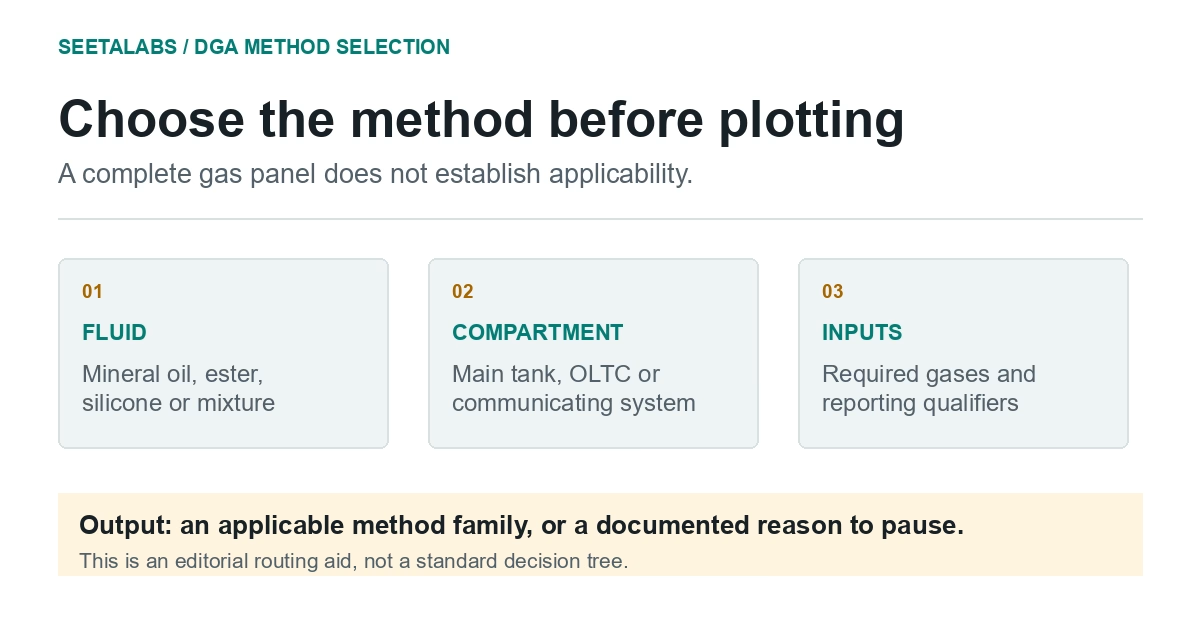
A Duval plot can be mathematically valid and still be wrong for the sample. Before plotting, identify the fluid, compartment and equipment arrangement. Confirm that the method covers that case and that every required gas was measured reliably.
The Duval Triangle explanation covers plotting.
Start with the sample record
Record the asset, sampling point, compartment, fluid family and exact product. For a transformer with an on-load tap changer (OLTC), establish whether its oil and expansion space are separate from the main tank. A label such as "transformer oil" is insufficient.
IEEE C57.104-2019, Clause 1.1, defines the guide's mineral-oil transformer scope. Clause 1.3 lists exclusions, including LTC interpretation, non-mineral liquids and arrangements in which main-tank oil contacts LTC oil or shares a common expansion-tank air space. IEC 60599:2022, Clause 1, also addresses mineral oil with cellulosic insulation and calls for caution with other systems.
Fault classification should follow evidence of abnormal gas behaviour. Very small concentrations can create a precise-looking coordinate without useful diagnostic significance; IEEE C57.104-2019, Clauses 5.2.1 and 6.2, discuss this limitation.
Match the method to the case
This routing aid does not replace each method's applicability rules.
| Sample or question | Method family to investigate | Check before use |
|---|---|---|
| Mineral-oil main tank, initial fault identification | Triangle 1 or Pentagon 1 | Abnormality evidence and reliable required gases |
| Mineral-oil thermal pattern requiring refinement | Triangles 4/5 or Pentagon 2 | Initial result and the stated follow-on question |
| Oil from an OLTC | Triangle 2 family and model-specific OLTC interpretation | Switching architecture, compartment and normal operating pattern |
| Natural ester, synthetic ester or silicone | Documented liquid-specific Duval variant | Exact liquid and reference version |
| Hydrogen-only online measurement | Trend assessment of that channel | Insufficient inputs for a multigas Duval method |
| Mixed or unknown fluid after retrofill | Specialist review before classification | Composition and evidence that a method covers the mixture |
CIGRE TB 771 (2019), Appendix H.4, distinguishes initial identification from thermal refinement. Section 4.1 covers OLTC applications; Appendix H.8 discusses non-mineral liquids. A higher triangle number is not a general-purpose upgrade.
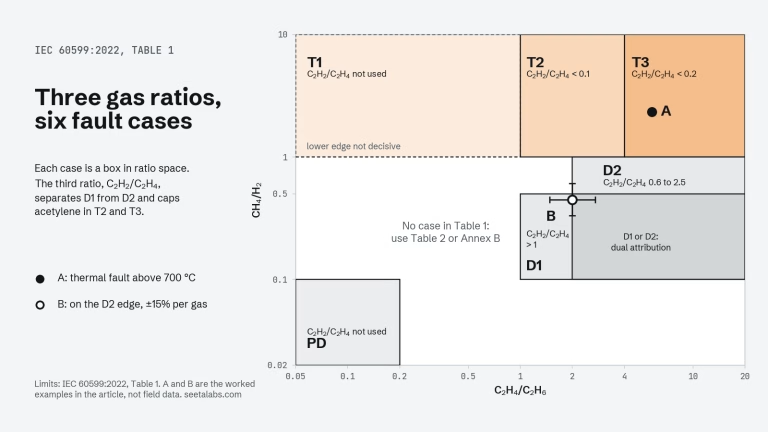
Triangle 1 uses methane, ethylene and acetylene. Pentagon methods also use hydrogen and ethane. More inputs require more dependable measurements. Do not enter an unmeasured gas as zero to complete a form.
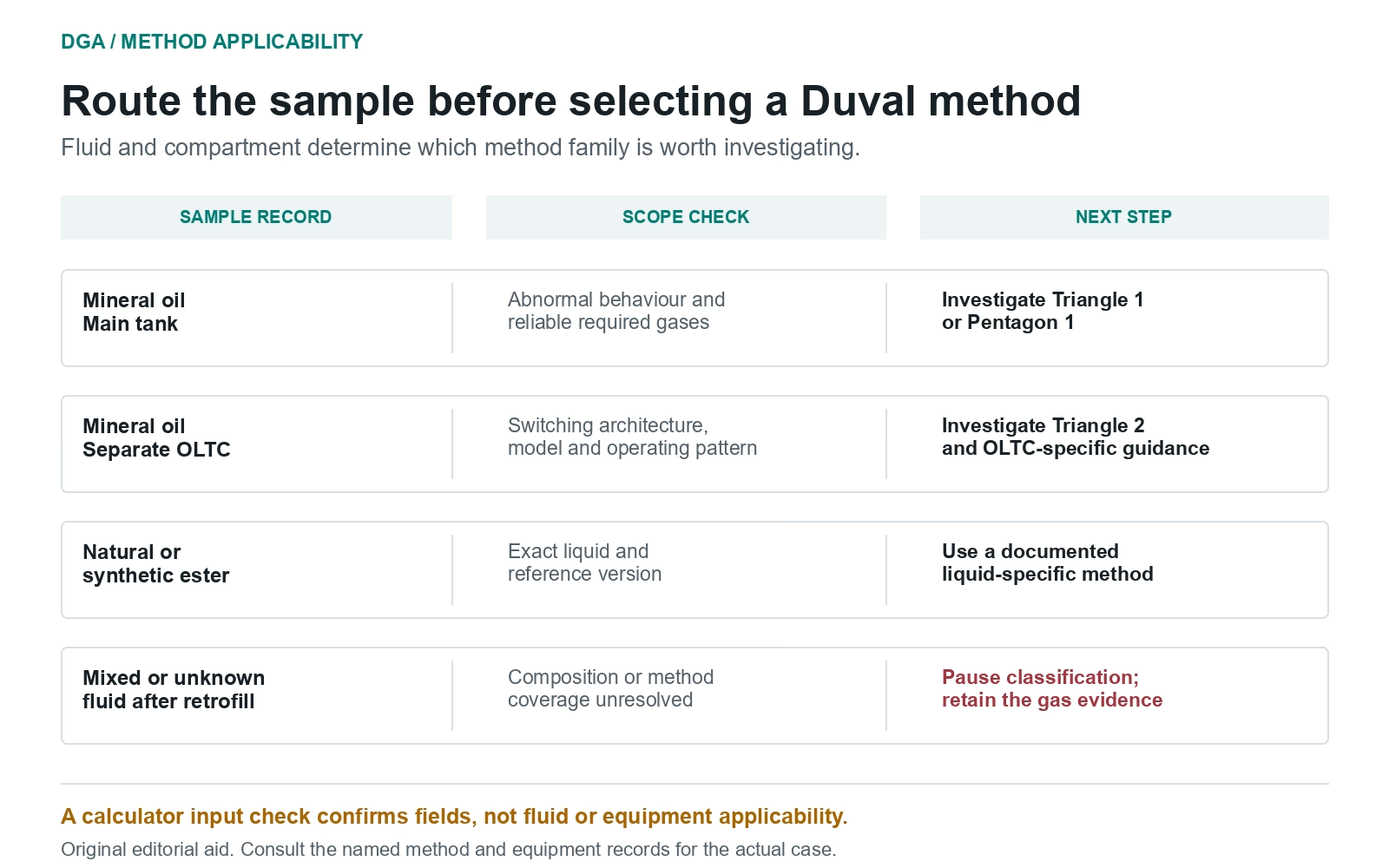
Same gas report, different applicability
Consider two complete gas reports: one from a mineral-oil main tank and one from a transformer retrofilled with natural ester. Both pass an input check, which says nothing about fluid applicability.
For the retrofilled unit, obtain the product name, fill record and residual mineral-oil information. A menu option labelled "ester" does not establish coverage of an undocumented mixture.
IEC 63585:2026, published on 24 July 2026, has a public scope covering dissolved gas analysis in natural and synthetic esters. Its full-text methods and thresholds were not reviewed for this article. IEEE C57.155-2014, Annex G, contains earlier ester triangle guidance, but that edition is inactive-reserved. Use the applicable liquid-specific reference and manufacturer information; do not transfer mineral-oil boundaries by assumption.
If applicability remains unresolved, retain the concentrations and history but withhold the unsupported classification.
Keep an auditable method record
Store the fluid, compartment, method version, required gases, reporting qualifiers and reason for applicability. Retain unrounded inputs and record missing equipment information.
A suitable Duval method identifies a gas-pattern family. It does not locate the fault, prove paper involvement or prescribe an operating action. Combine it with gas evolution and equipment history through a transformer condition-monitoring process.
References: IEEE C57.104-2019, Clauses 1.1, 1.3, 5.2.1 and 6.2. IEC 60599:2022, Clause 1. CIGRE TB 771 (2019), Section 4.1 and Appendices H.4 and H.8. IEEE C57.155-2014, Annex G (inactive-reserved). IEC 63585:2026, publication and public scope only. Evidence reviewed as of 25 September 2026.