Does the water content of transformer oil tell you how much moisture is in the paper?
Not directly. An oil sample measures water in the sampled liquid, and oil and paper do not respond on the same timescale, so recent heating, cooling or treatment can break the assumed equilibrium. Keep water in oil, relative saturation and estimated paper moisture as separate quantities, and record fluid identity, sampling temperature, load history and treatment before applying any oil-to-paper model.
An oil sample measures water in the sampled liquid, not in the paper. To estimate paper moisture, establish whether the result represents the insulation system under the measured temperature and recent operating conditions.
Oil and Paper Do Not Respond on the Same Timescale
CIGRE Technical Brochure 349 (2008) addresses moisture equilibrium and migration in transformer insulation. Its catalogue scope was verified; no numerical criterion is taken from the abstract.
Koch, Krueger and Tenbohlen's primary study explains why sampling, changing temperature, ageing and an unsuitable equilibrium diagram can undermine an oil-to-paper estimate. Their case studies are not a universal conversion for other equipment.
Recent heating, cooling or oil treatment can interrupt an assumed equilibrium. A bulk oil result cannot locate wet paper within an unevenly heated winding.
Keep water concentration in oil, relative saturation or water activity in oil, and estimated moisture in solid insulation as distinct quantities.
Build a Measurement Record That Can Be Interpreted
This original checklist is a review aid, not a prescribed sampling interval or acceptance table.
| Information | Why it matters | What to record when unavailable |
|---|---|---|
| Fluid identity | Mineral and ester liquids have different water behaviour | Fluid unknown; interpretation restricted |
| Temperature at sampling | Water distribution depends on thermal conditions | Temperature missing; no precise paper conversion |
| Recent load and temperature history | A changing system may not be at equilibrium | Stability not demonstrated |
| Oil treatment and drying history | Liquid and solid insulation may respond differently | Intervention details requested |
| Analytical method and limit | Results need a comparable measurement basis | Method or detection limit unresolved |
| Independent insulation evidence | Helps test the oil-based interpretation | No corroborating assessment available |
Choose a model applicable to the fluid and aged materials. A result below detection is a bounded observation, not zero or proof of dry insulation. Record those qualifications in the condition assessment.
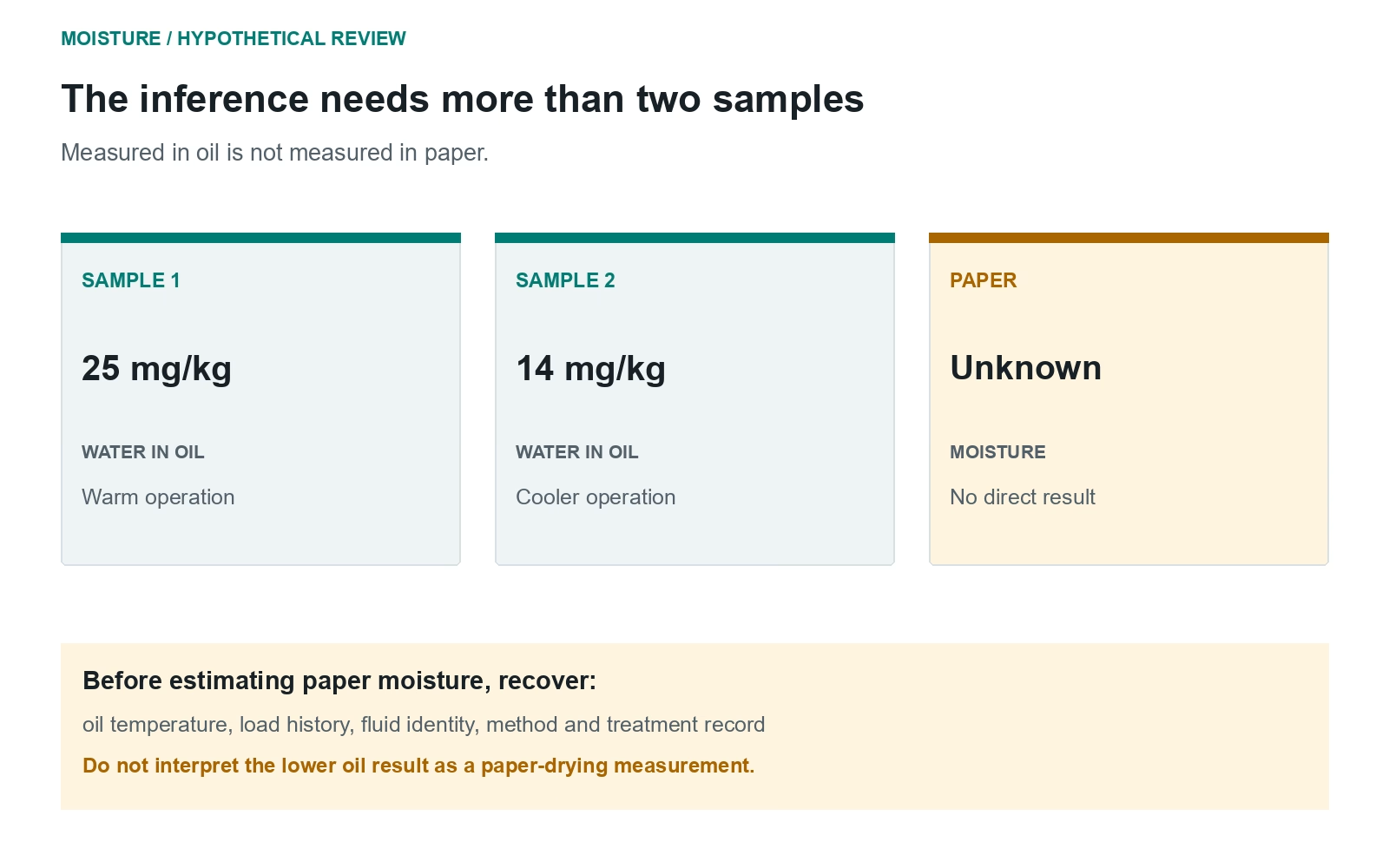
Worked Example: A Cooler Sample Appears Better
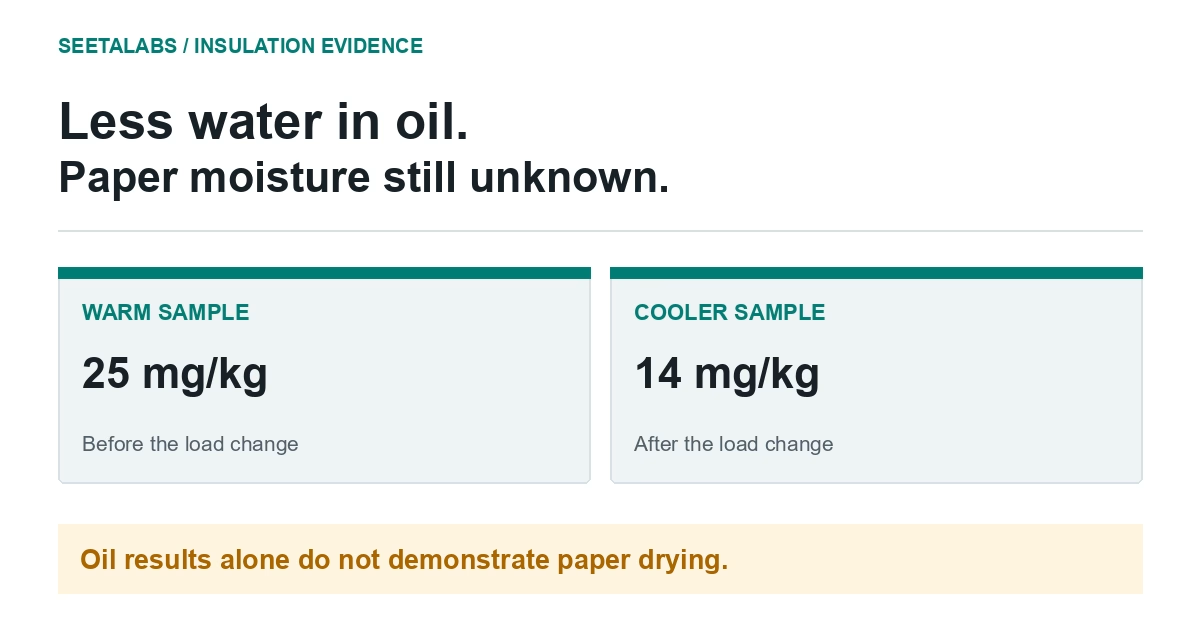
Hypothetical, not acceptance limits: a mineral-oil transformer gives 25 mg/kg after a warm operating period and 14 mg/kg during cooler operation after a load change.
The second sample contains less measured water in the oil. It does not demonstrate that the paper dried.
Compare dates, oil temperatures, load profiles, sample points, methods and interventions. If temperature history is missing, leave it missing rather than substituting seasonal weather. Do not calculate a change in paper-water percentage from these two oil values.
For a drying-process review, seek the agreed acceptance evidence and post-process stabilisation conditions. For a loading question, seek a qualified insulation assessment with relevant thermal assumptions.
Dielectric response can add evidence, but its interpretation depends on temperature, geometry, oil conductivity and ageing. Preserve the method and assumptions with any estimate.
Choose the Next Test for the Decision
A drying review asks whether moisture removal from solid insulation was demonstrated. An ingress investigation also needs preservation-system and leak history. Repeating an oil test without recovering its context may resolve neither.
Audit one recent sample for fluid identity, temperature and treatment history. Until those are known, describe it as oil-moisture evidence with limited paper inference, alongside the wider condition-monitoring record.
Sources and scope: CIGRE TB 349 (2008), catalogue scope only; Koch, Krueger and Tenbohlen, Comparing Various Moisture Determination Methods for Power Transformers (2009), author-hosted primary paper, read 29 September 2026. No universal paper-moisture threshold or equilibrium time is asserted.