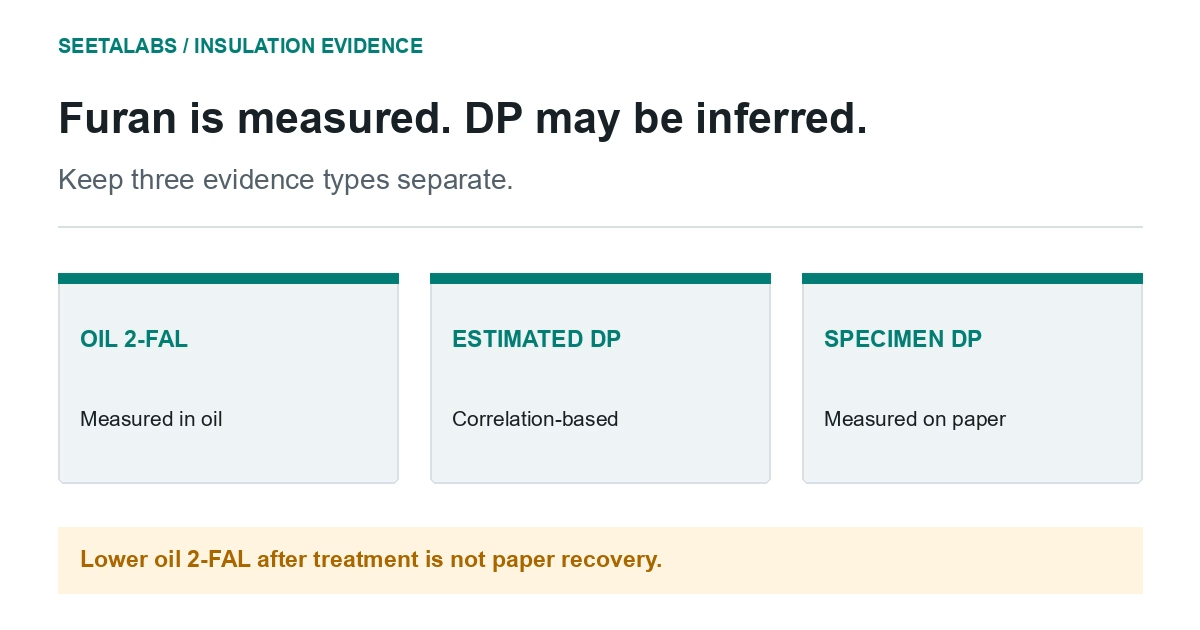

Furan analysis measures markers in oil, not the paper's degree of polymerisation (DP). A reported DP may be a correlation-derived estimate, dependent on paper type and oil history. Keep concentration and inferred paper condition separate.
This concerns mineral-oil, cellulose-insulated transformers; other fluids need a separate interpretation basis.
What Furan Analysis Measures
Furan analysis includes 2-furfural (2-FAL). IEC 61198:1993 covers analysis in mineral insulating oil; its published scope supplies no universal conversion to remaining years.
DP describes cellulose chain length. Measurement needs a paper specimen; oil-based estimation uses a population-specific relationship. A review of chemical insulation indicators compares correlations and notes limits for thermally upgraded paper.
Ask which correlation, units and material assumptions apply. Substituting mg/L for mg/kg without conversion introduces error before interpretation.
Mixed oil cannot identify a local weak turn of a winding.
Decide Whether the Trend Is Comparable
Use this original review framework, not as acceptance criteria.
| Finding in the record | Interpretation problem | Evidence to obtain next |
|---|---|---|
| Paper type is unknown | Correlation applicability is uncertain | Manufacturer's insulation specification |
| Oil was replaced or reclaimed | The marker history may have been altered | Treatment dates, volumes and laboratory results |
| Latest result is marked <LOD or <LOQ | Detection and quantification have different limits | Original qualifier, numerical limit, units and reporting convention |
| DP is reported without a method | Measured and inferred DP may be confused | Calculation reference or specimen information |
| Furan rises while other evidence is stable | A real change and a comparability problem remain possible | Comparable repeat sample and operating history |
Missing means no result. LOD concerns reliable detection; LOQ is the lowest concentration quantifiable with acceptable performance. Eurachem's 2025 guide, sections 5.3.1 and 5.3.4, distinguishes them.
Read <LOD under the laboratory's reporting convention; it generally denotes non-detection. A detected result below LOQ is not reliably quantifiable; bare <LOQ does not establish whether detection occurred. Preserve qualifier, limit and units. Neither missing nor below-limit means measured zero for a DP calculation.
Keep certificates, sample dates, method, limits, fluid, oil interventions and load context. A changed laboratory or limit can change a qualifier without changed paper condition.
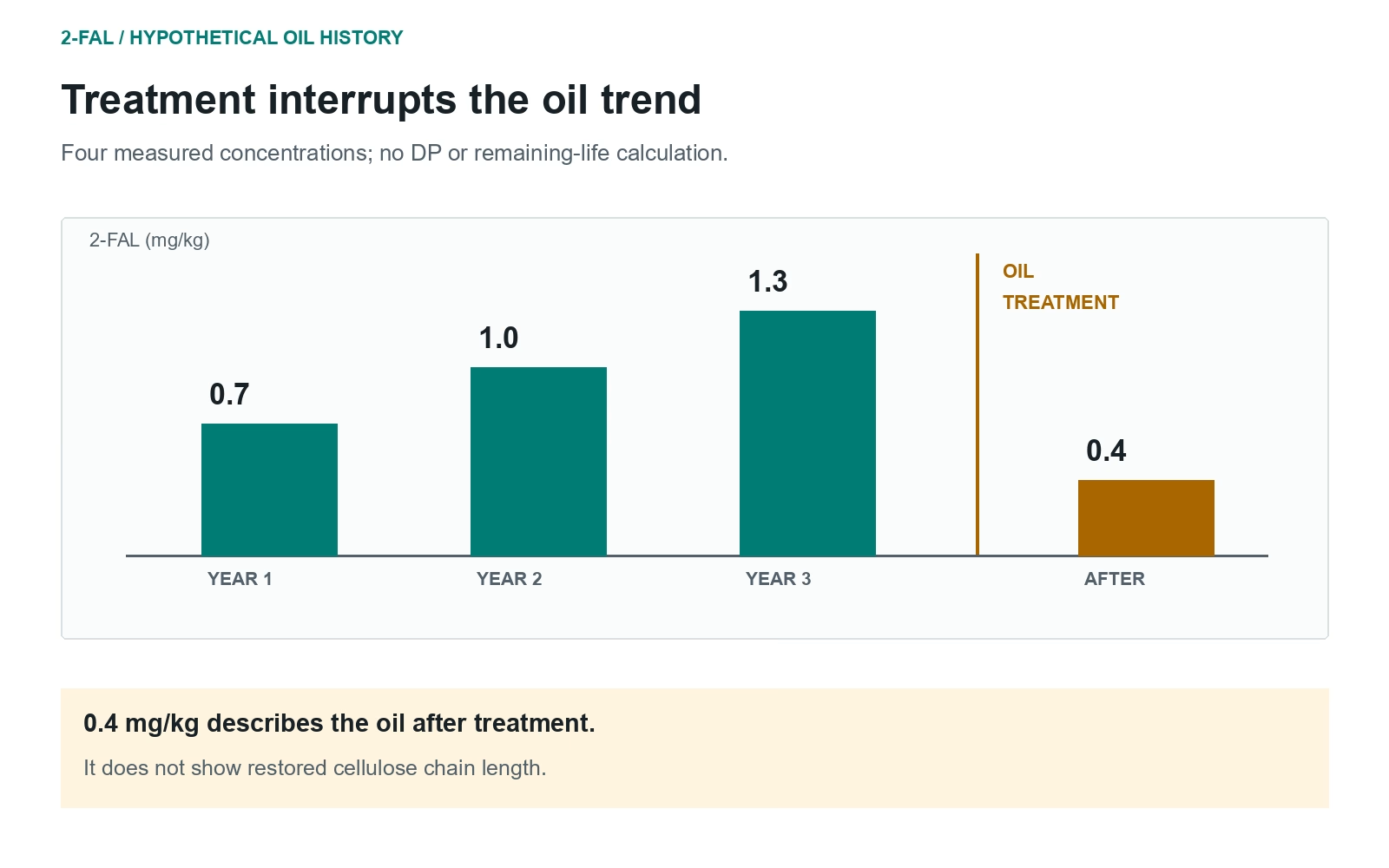
Worked Example: A Falling Result After Oil Treatment
Hypothetical, not thresholds: annual 2-FAL results are 0.7, 1.0 and 1.3 mg/kg. After oil treatment, the next result is 0.4 mg/kg.
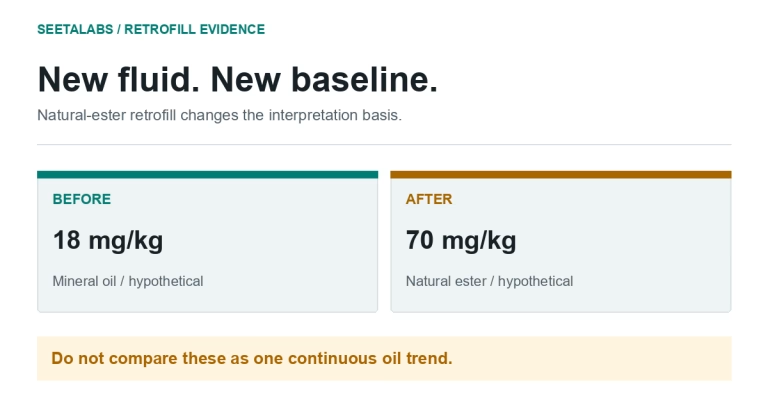
A repeated DP calculation may suggest improved paper condition. It actually flags the need to inspect oil history; cellulose chains have not recovered.
Identify partial replacement, full replacement or reclamation, with volume and date. Split pre- and post-treatment trends at the intervention; do not draw one uninterrupted ageing line.
Compare subsequent documented samples and relevant DGA evidence and paper-type information. The defensible finding is changed oil-phase marker concentration, not restored paper strength.
If a DP estimate is retained, name its method and applicability. Comparing correlations is sensitivity analysis, not a validated confidence interval; averaging formulas does not create accuracy.
State the Limit of the Inference
For a condition-monitoring review, state what was measured, inferred and missing. An uncertain oil result alone does not justify opening equipment. If a correlation cannot handle the intervention, report concentration without a misleading DP conversion or years-of-life claim.
Sources and scope: IEC 61198:1993, published analytical scope checked; full text not read. The linked 2021 indicator review is secondary and was assessed in the earlier review, not newly accessed here. Eurachem, The Fitness for Purpose of Analytical Methods, third edition (2025), sections 5.3.1 and 5.3.4, checked in the open guide. Evidence rechecked 29 September 2026. Example and table are original.