
Filtration, regeneration and replacement solve different oil problems. Before comparing price per litre, name the measured problem and the test that will demonstrate improvement.
This comparison concerns mineral insulating oil. A change of fluid family requires a separate engineering assessment.
Define the Treatment Target Before the Equipment
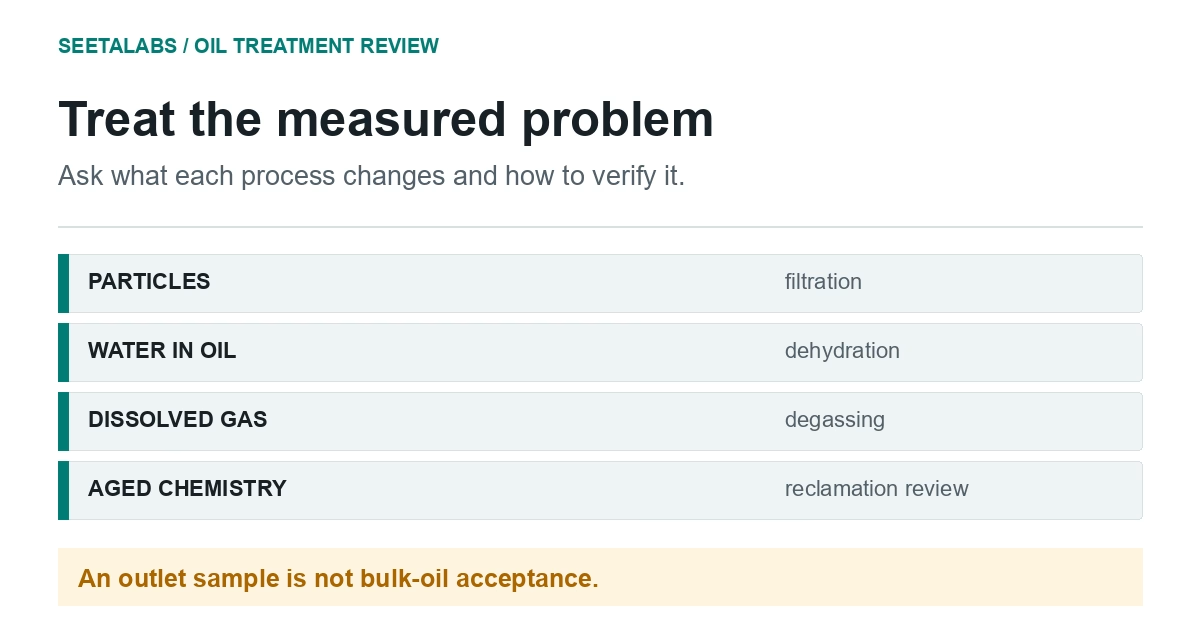
IEC 60422:2024 distinguishes physical reconditioning (clause 14.3) from reclamation (clause 14.4). Filtration, dehydration and degassing may share equipment but do different jobs. Request the actual stages, not a generic promise of "filtration."
Reclamation, also called regeneration, targets contaminants and ageing products through additional processing. Replacement exchanges the liquid but raises questions about compatibility, residual oil, filling quality and the equipment's condition. IEC 60296:2020 covers unused and off-site recycled mineral oil in the delivered state; on-site treatment belongs under IEC 60422.
Use this procurement matrix to test a proposed scope, not to prescribe treatment.
| Documented objective | Process to evaluate | Evidence required before closing the work |
|---|---|---|
| Reduce suspended particles | Suitable filtration | Comparable particle results from representative samples |
| Reduce water in the liquid | Dehydration within an approved process | Oil moisture result and subsequent behaviour |
| Remove dissolved gases from liquid | Degassing | Processing record and a new gas baseline |
| Improve degraded oil chemistry | Reclamation feasibility | Acidity, IFT, dielectric properties and additive review |
| Introduce replacement oil | Engineered oil change | Compatibility, receiving and after-filling acceptance |
Oil dehydration does not establish that the cellulose is dry. IEC 60422:2024, clause 14.3.2.2, separates ordinary vacuum oil processing from significant moisture removal from solid insulation.
Compare Proposals Against the Same Evidence
Hypothetical procurement example: a transformer shows a confirmed particle increase after maintenance; comparable acidity and IFT have not materially changed. Proposal A specifies filtration and representative particle testing. Proposal B adds regeneration but names no chemical-treatment objective.
Proposal B needs a reason for the added process. Both bidders need contamination control and comparable verification.
If instead acidity rises and IFT falls on repeated, comparable samples, finer filtration alone does not explain how dissolved ageing products will be addressed. A condition-monitoring review must also consider equipment problems that oil processing cannot resolve.
Write Acceptance Around the Bulk Oil and the Timeline
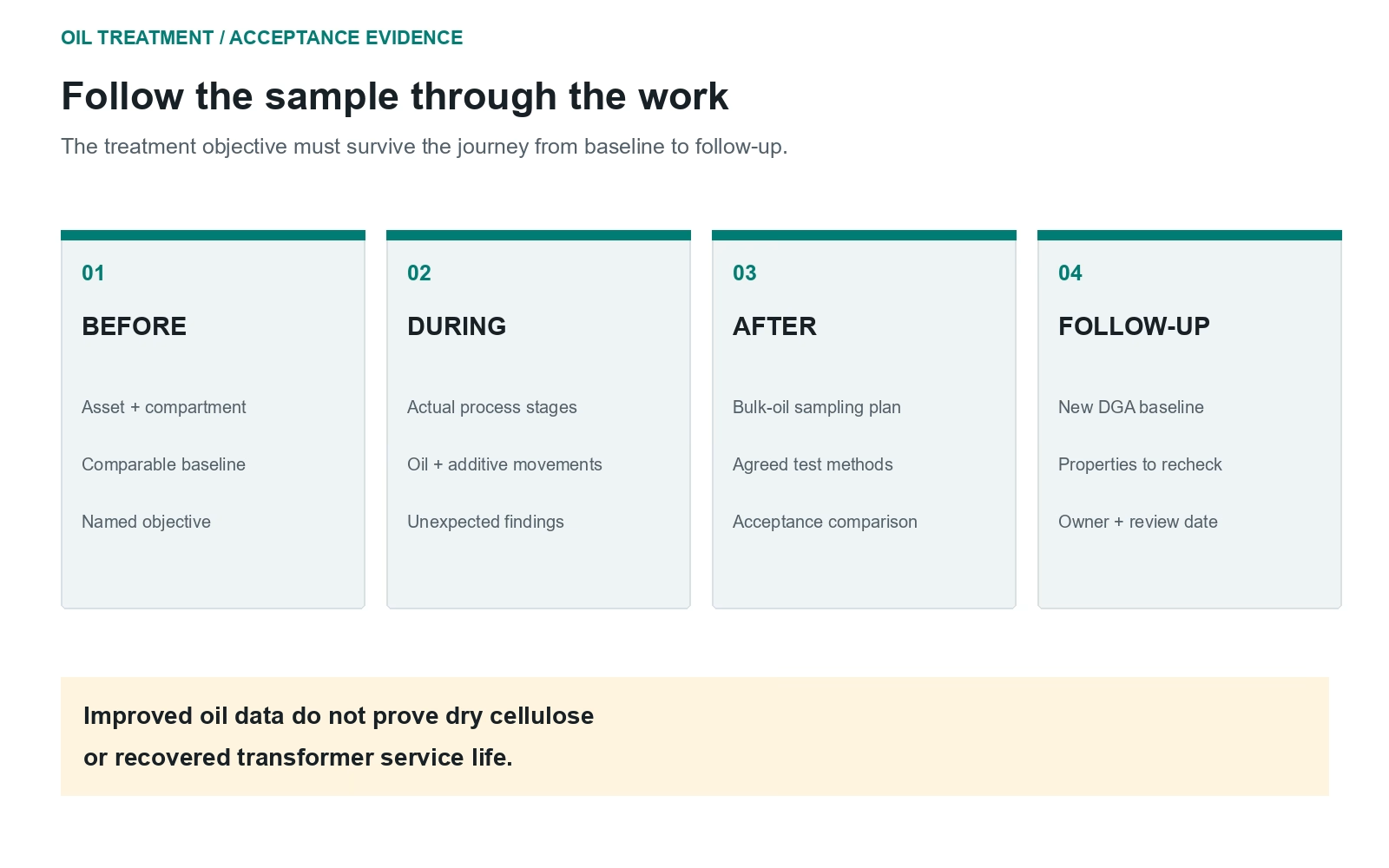
An outlet sample describes the outlet, not necessarily the bulk oil after circulation and mixing. Agree sampling points and timing before work starts.
The acceptance package needs:
- Pre-treatment results linked to asset, compartment and methods.
- Named stages, objectives and equipment-compatible procedure.
- Oil movements, additives, interruptions and unexpected findings.
- Representative after-treatment results against agreed criteria.
- Follow-up for properties that may change again.
IEC 60422:2024, clause 14.4.4, addresses additive renewal after reclamation. Verify additive content rather than assuming it remained unchanged.
Degassing and replacement interrupt DGA trends. Record the intervention and establish a new baseline; a lower gas result does not prove that gas generation ended.
Decide What the Treatment Cannot Prove
Oil treatment does not restore lost cellulose strength. A better oil report cannot prove recovered years of transformer life.
Compare outage, transport, waste, testing and follow-up responsibilities as well as price. Site-specific environmental and contamination requirements need specialist review.
Do not fill missing tests with acceptable values. Preserve reporting limits and open findings. Record which objectives were verified and who reviews the rest.
Ask each bidder to complete the same objective-and-evidence table. No agreed measurement, sampling point or reviewer means no finished acceptance specification.
Sources and Scope
IEC 60422:2024, clause 12, printed pp. 46-47; clauses 14.3-14.4, printed pp. 49-56; relevant text checked in the licensed copy. IEC 60296:2020, published scope verified for delivered unused and off-site recycled mineral oils. No process settings or numerical treatment acceptance criteria reproduced. Evidence checked 25 and 29 September 2026.