
A transformer oil breakdown voltage (BDV) result is incomplete without its test method. Two laboratories can report different kilovolt values for the same oil because the test arrangements differ.
Check comparability before reading a laboratory or method change as deterioration or improvement.
What Breakdown Voltage Actually Measures
BDV records electrical breakdown in a defined liquid test cell under rising voltage. The published scope of IEC 60156:2025 includes acceptance and maintenance samples. Its full procedure is not reproduced here.
BDV helps investigate contamination. IEC 60422:2024, Clause 7.4, discusses water and particles, but a high BDV does not establish that all contaminants are absent.
It tests a sample, not the complete transformer's withstand capability. Keep it alongside other condition-monitoring evidence.
Why the Method Changes the Number
ASTM D1816-12(2019) uses VDE electrodes; ASTM D877/D877M-19e1 uses disk electrodes. IEC 60156:2025 is another procedure. Configuration, spacing, voltage application and sample handling can change the result; verify the edition actually used.
The following is an original comparison framework, not a standard's acceptance table.
| Reported result | What to verify | Defensible comparison |
|---|---|---|
| IEC 60156 result | Edition, cell configuration, test temperature and complete sequence | Previous results using equivalent conditions |
| ASTM D1816 result | Edition, electrode gap and handling conditions | D1816 results with the same stated gap |
| ASTM D877/D877M result | Edition and procedure identification | Results from the same specified procedure |
| Result at instrument ceiling | Whether breakdown actually occurred | A lower bound, not an exact breakdown value |
| Method absent | Original report or laboratory clarification | No cross-method trend until resolved |
No fixed multiplier converts one method to another. Dividing voltage by gap does not erase differences in field geometry or procedure.
When a Laboratory Change Looks Like Deterioration
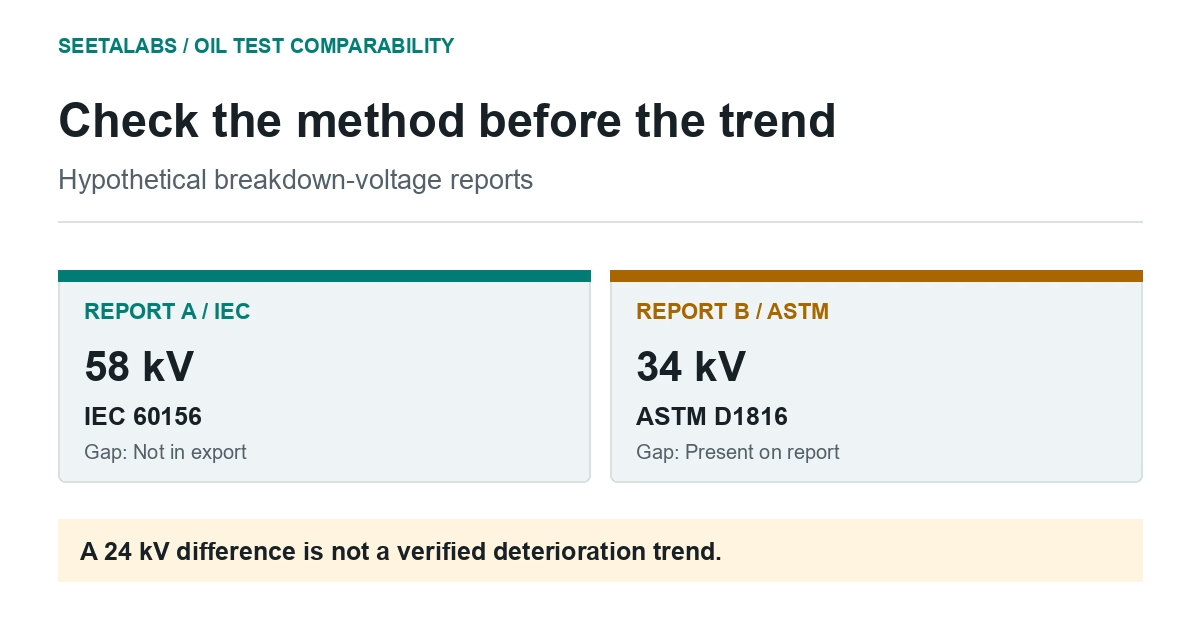
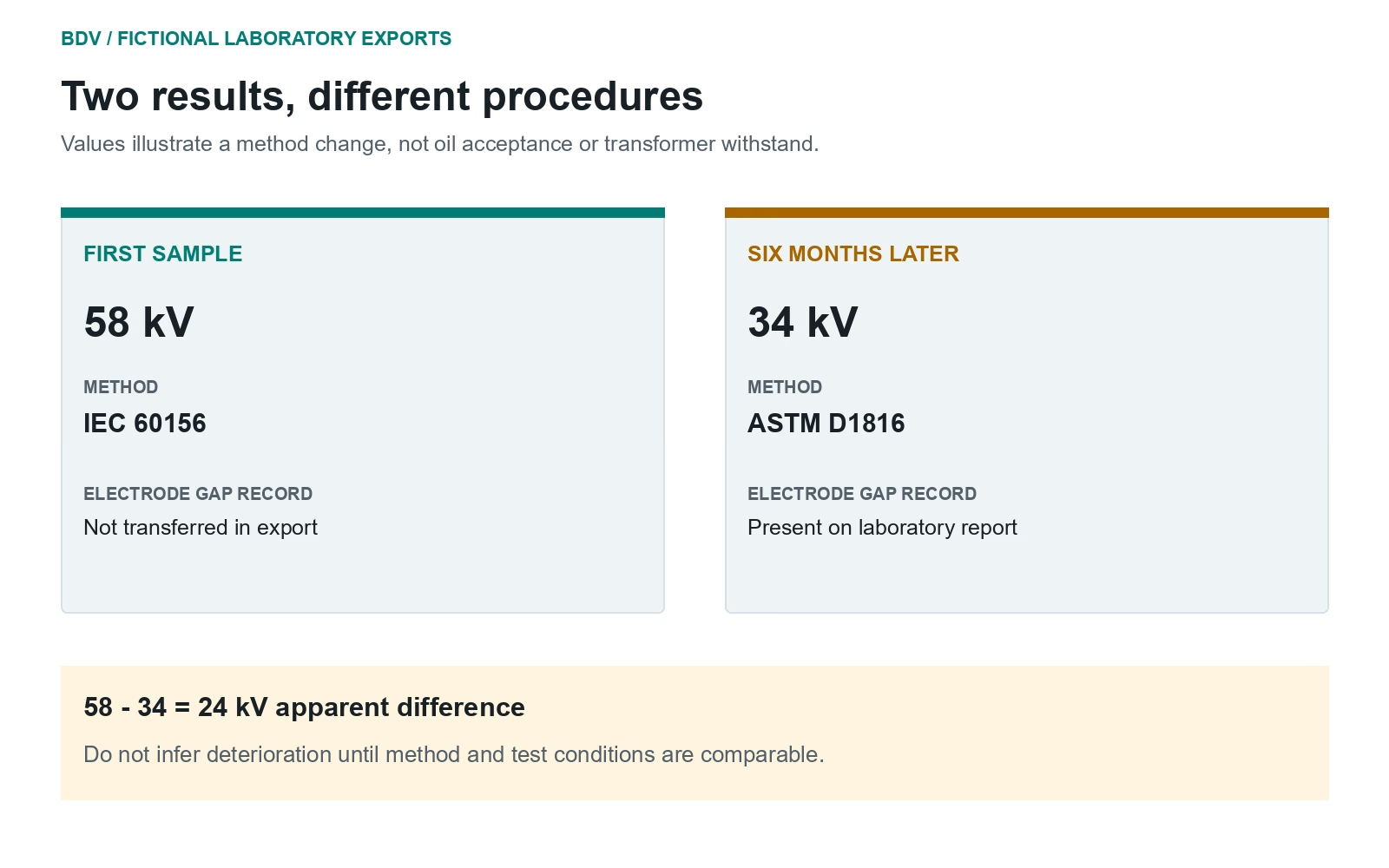
Hypothetical, not acceptance limits: one report gives 58 kV by an IEC method; six months later, another gives 34 kV by ASTM D1816. The dashboard flags a decline, but only the second export records an electrode gap.
The apparent 24 kV fall is not an established deterioration trend. Separate the methods and ask how to obtain a comparable result. If equivalent testing confirms a decline, investigate water and particles. Keep both reports.
After treatment, an outlet sample and a later bulk-tank sample also describe different states; record location and conditions.
A favourable BDV does not overrule a developing DGA trend.
Request a Comparison You Can Defend
For an auditable trend, request method and edition, electrode gap, sample and test temperatures, sample identity, individual readings or summary statistics, instrument range and validity checks.
Preserve qualifiers: an above-range report is not an exact endpoint; missing is not zero; a rejected sample does not demonstrate poor oil.
Select interpretation criteria by fluid, equipment and service stage; mineral-oil maintenance criteria do not automatically apply to esters. An unresolved method change belongs in the conclusion. Operating decisions need the wider engineering assessment.
Sources and Scope
IEC 60422:2024, Clause 7.4, printed p. 15, checked in the licensed text. IEC 60156:2025, edition 4.0, published scope verified. ASTM D1816-12(2019), public scope and significance sections; ASTM D877/D877M-19e1, publisher listing verified. Evidence checked 25 September 2026; no standard acceptance table reproduced.