Does a rise in dissolved gases after oil degassing mean the fault has returned?
Not automatically. Degassing changes the gas inventory without necessarily removing the gas source, and IEEE C57.104-2019 notes that gas remaining in cellulose may influence later oil samples, so maintenance involving degassing can require a new DGA baseline. Keep all earlier samples, plot the treatment as an event and compare later results with a documented post-treatment reference, not with one gas-rate fit across the intervention.
After vacuum degassing, reported gas concentrations fall. Later, some rise again. That sequence proves neither repair success nor recurrence. The intervention changed the gas inventory, so the next comparison needs a documented post-treatment reference.
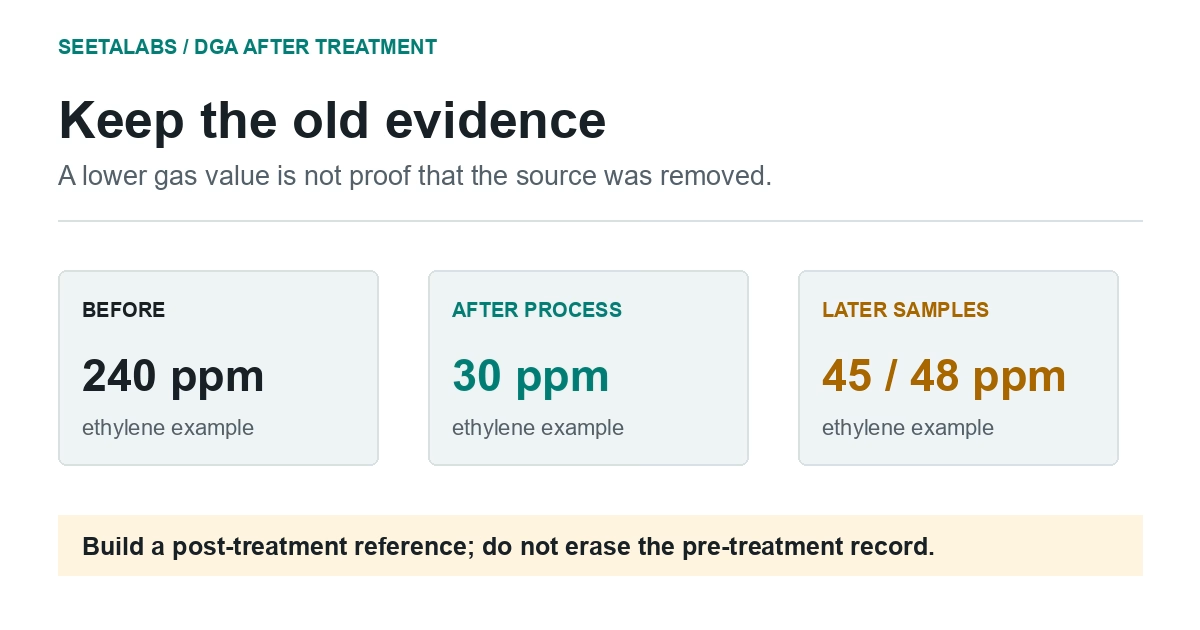
Keep the old evidence. Removing dissolved gases and removing their source are different outcomes, and the pre-treatment reports may be the clearest record of the original problem.
Record what was actually done
"Oil serviced" is not enough. Distinguish degassing, filtration, dehydration, reclamation, partial replacement, complete replacement and work that opened the tank. Record the process, dates, fluid added and associated repairs; do not infer degassing from a filtration invoice.
IEEE C57.104-2019, Annex B, printed page 50, explains that maintenance involving degassing can require a new DGA baseline. It also notes that gas remaining in cellulose may influence later oil samples. A post-treatment rise therefore needs interpretation; it cannot automatically be attributed to fresh fault activity.
Residual gas is possible, not a standing exemption. Pattern change, persistent development or independent evidence can shift the assessment.
Separate process verification from condition assessment
| Review question | Evidence needed | Interpretation to avoid |
|---|---|---|
| Did the process change dissolved gases? | Before/after samples with collection conditions | Calling lower gases proof of repaired damage |
| Was the suspected gas source addressed? | Repair scope and supporting inspection/test evidence | Assuming degassing removed a physical defect |
| Is the oil representative? | Circulation, energisation, sampling point and timing | Treating the first bottle as a settled baseline |
| Are later results comparable? | Same fluid context, method and reporting basis | Fitting one slope across treatment |
| What explains subsequent gas return? | Several comparable results plus operating history | Automatically calling it recurrence or harmless rebound |
| Did the insulating liquid change? | Fill records and fluid identity | Continuing mineral-oil rules after ester retrofill |
The contractor may demonstrate a treatment result while the transformer diagnosis remains unresolved.
A hypothetical baseline review
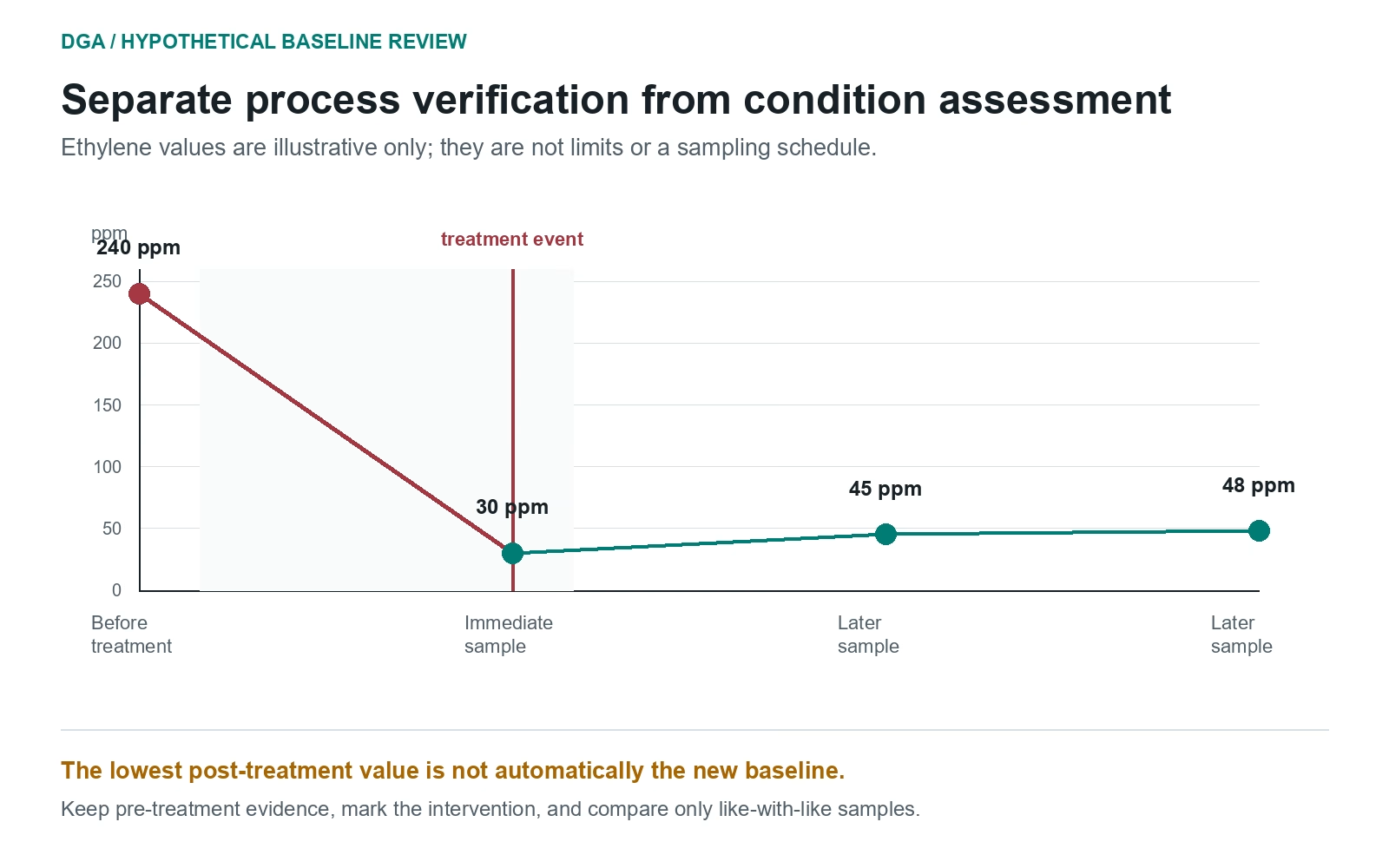
A mineral-oil transformer has ethylene at 240 ppm before documented vacuum degassing. An immediate post-process sample reports 30 ppm. Later comparable samples report 45 ppm and 48 ppm. These values are illustrative, not limits.
The fall from 240 to 30 ppm shows lower measured concentration, not proof of a repaired gas source. The rise from 30 to 45 ppm needs review of redistribution, sampling and operating context before it is called a new defect.
Plot treatment as an event. Separate pre-treatment history, immediate process-verification and later operating samples. Identify energisation, load and whether oil was circulated.
A 45-to-48 ppm movement may be small relative to analytical variability; ask the laboratory rather than assume significance. A stabilising pattern differs from repeatedly rising acetylene with other new evidence.
The baseline is a documented reference period and set of conditions, not necessarily the lowest post-treatment number. IEEE C57.104-2019, Clause 5.3.1, addresses initial verification when processing or repairs reset usable DGA history.
Keep the history, change the comparison
Set a clear boundary. Preserve all samples, but do not include pre- and post-degassing observations in one unqualified gas-rate fit. Label any provisional baseline and state what would make it representative.
For partial oil replacement, a dilution estimate may help, but its assumptions must be visible: oil volumes, incoming gas content, mixing and exchange with solid insulation. A percentage correction is not the internal gas inventory.
Treat missing and below-detection results as qualified data. A treatment that brings gases below reporting limits does not establish exact absence, and later detection by a more sensitive method may not establish new generation.
Reconcile the work record, sampling chronology and follow-up plan before accepting a new baseline in the condition-monitoring history. The next DGA assessment should show which samples are comparable and why.
References: IEEE C57.104-2019, Clauses 4.4 and 5.3.1 and Annex B, pp. 22, 28 and 50. Relevant licensed passages checked as of 25 September 2026. The worked example is hypothetical; neither its sampling sequence nor the proposed record structure is a standard-mandated acceptance rule.