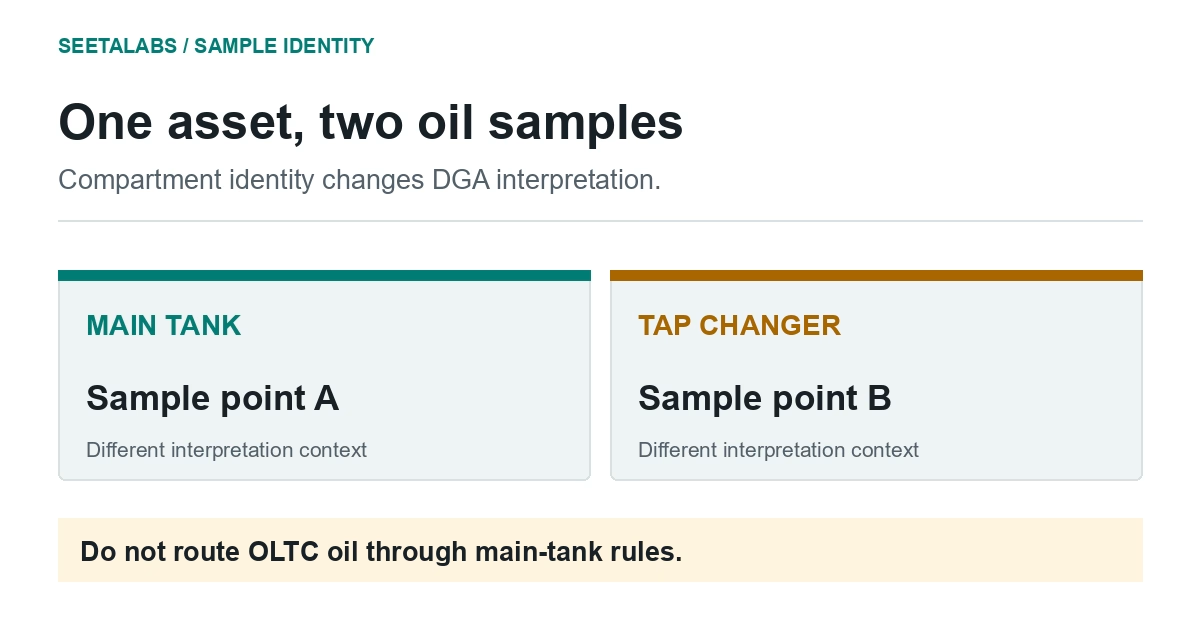

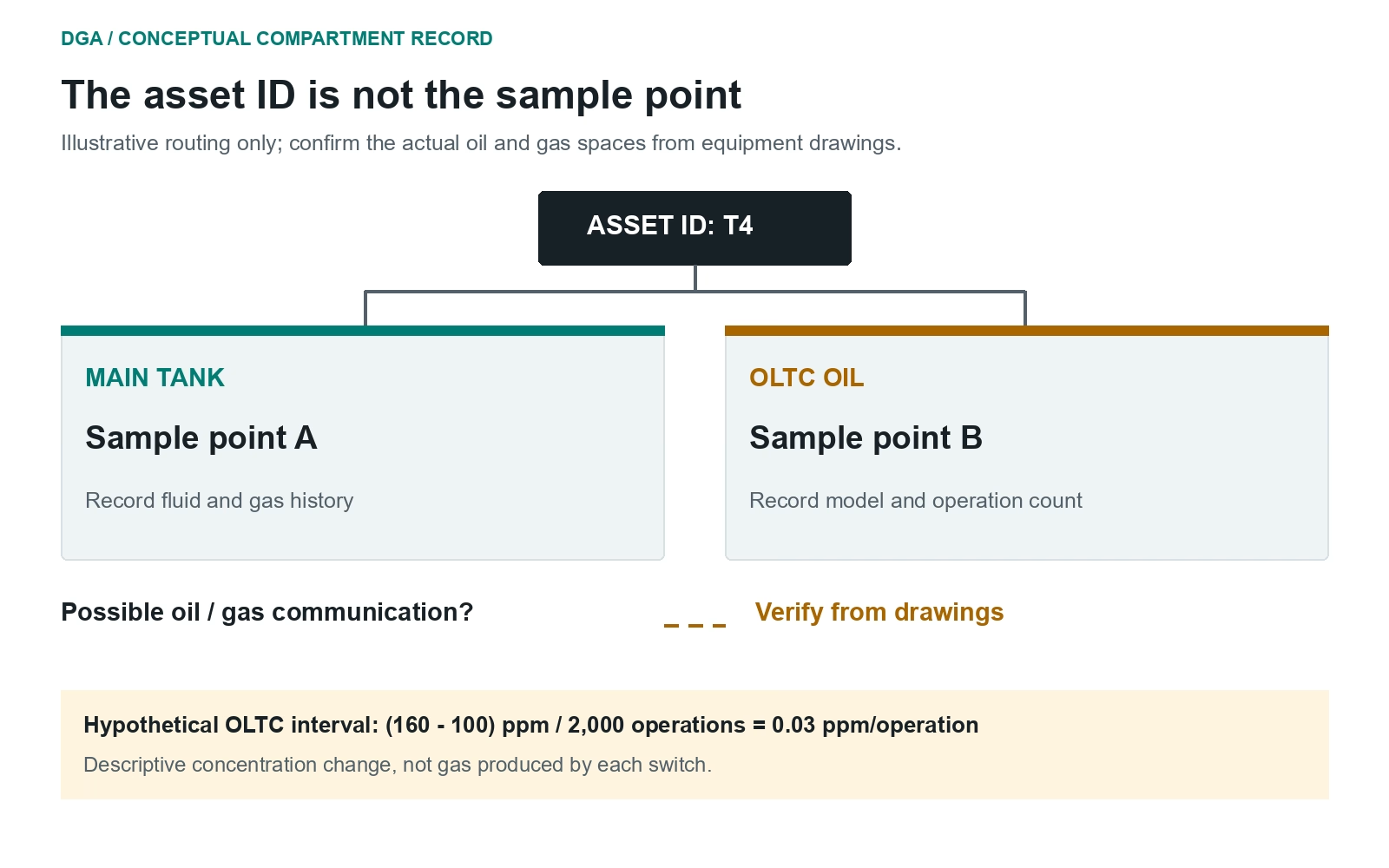
The bottle is labelled "T4", so the asset system applies main-tank rules to a sample from T4's tap changer. The acetylene alarm looks authoritative, but the compartment is wrong.
OLTC DGA needs switching design and duty, not just a transformer identifier. Preserve the sample point through interpretation.
Normal switching changes the meaning of the gases
An oil-switching on-load tap changer intentionally creates arcs. Their gases differ in meaning from unexpected main-tank arcing. IEEE C57.139-2015, Clauses 4 and 5, discusses design, duty and breathing arrangement.
Vacuum switching does not make every oil sample gas-free: oil-immersed bypass contacts can produce small amounts of acetylene in normal operation (IEEE C57.139-2015, Clause 5.1). Identify the contacts and compartment.
IEEE C57.104-2019, Clause 1.3, excludes LTC interpretation and relevant communicating oil or air spaces. Check the arrangement even if the valve says "main tank". These mineral-oil references do not establish criteria for ester-filled OLTCs.
Build a compartment record that survives the workflow
| Record field | Why the reviewer needs it | Failure if omitted |
|---|---|---|
| Exact sample point and compartment | Connects the report to the oil being assessed | Main-tank rules applied to switching oil |
| Manufacturer, model and switching technology | Establishes the expected gas-producing mechanisms | Wrong reference group |
| Separate or communicating oil/gas spaces | Identifies possible transferred gases | Imported gas attributed to an internal main-tank fault |
| Operation count and relevant duty | Helps interpret changes in gas accumulation | Busy operation mistaken for comparable quiet duty |
| Breathing arrangement | Provides context for gas retention and loss | Trends compared across unlike designs |
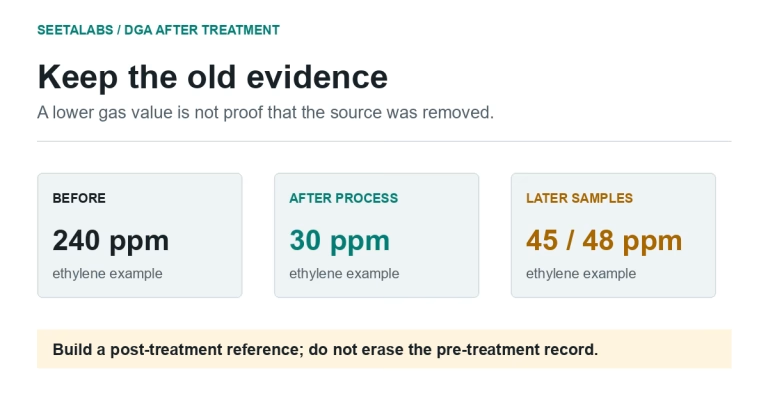
| Oil changes, filtration and maintenance dates | Marks changes in the observed history | Treatment interpreted as condition improvement |
IEEE C57.139-2015, Clause 5.2, discusses norms for comparable designs, conditions and compartments. One fleet-wide acetylene limit ignores those distinctions.
Compare duty before interpreting the increase
Hypothetically, acetylene rises from 100 to 160 ppm across 2,000 operations: 60 / 2,000 = 0.03 ppm per operation for that interval.
That is not gas produced per switch. Venting, oil volume, loading, elapsed time and losses affect concentration. It is not a model-independent threshold.
A previous 100-operation interval is not equivalent duty, even over the same months. Compare history and matched models.
Review the full gas pattern and maintenance evidence. CIGRE TB 771 (2019), Section 4.1, describes OLTC Duval variants for different architectures. A normal region must fit the actual model and sufficiently reliable measurements.
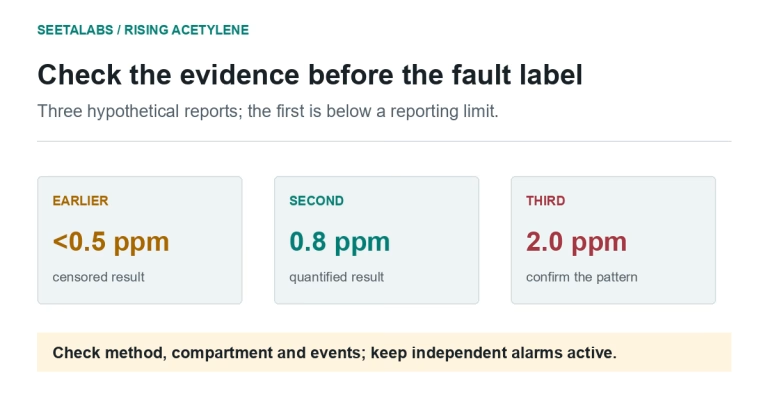
At very low gas levels, a denominator near the reporting limit can make a ratio unstable. "Not detected" is not zero.
Investigate communication without inventing a correction
If main-tank acetylene may come from the OLTC, inspect drawings and maintenance history for a communication route. Similar timing does not quantify transfer.
Do not subtract an arbitrary OLTC fraction from the main-tank result. Concentrations alone do not define the oil exchange. Keep both reports for specialist review.
Put the compartment and model on the next work order and laboratory request, then carry them into the DGA assessment and condition-monitoring record. Gas alone does not prescribe operation or shutdown.
References: IEEE C57.139-2015, Clauses 4, 5.1 and 5.2, pp. 14-16; IEEE C57.104-2019, Clauses 1.1/1.3, pp. 13-14; CIGRE TB 771 (2019), Section 4.1, p. 33. Relevant licensed passages checked as of 25 September 2026. The record checklist and hypothetical ppm-per-operation calculation are editorial aids, not prescribed schemas or OLTC limits.