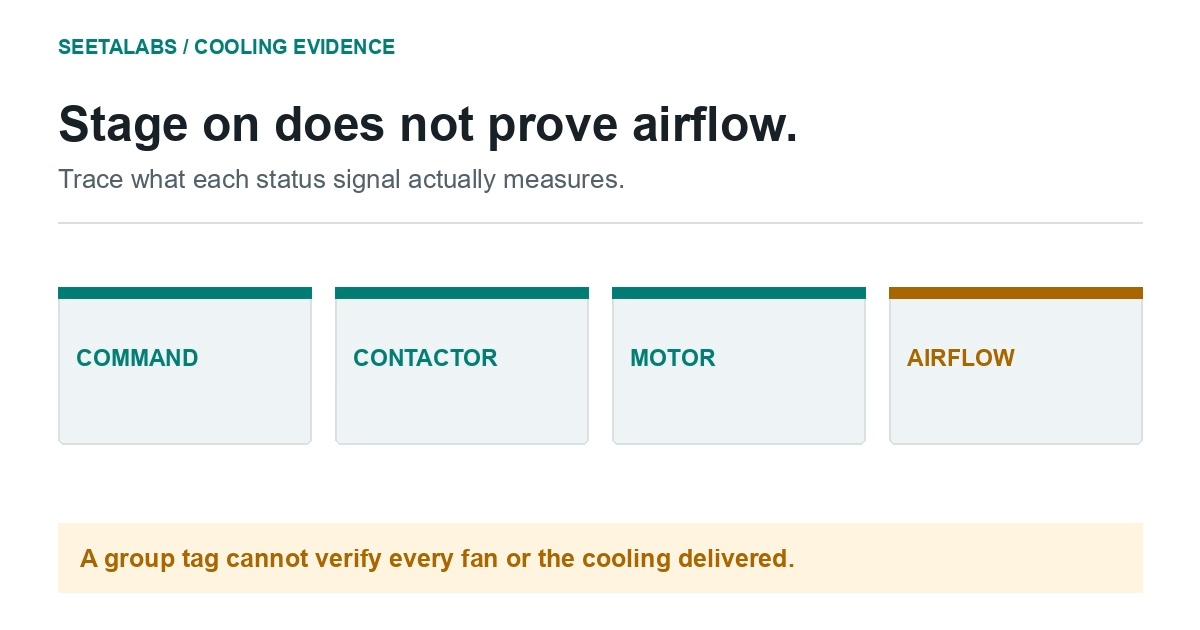

The control room shows a cooling stage running, yet one fan is stationary. Both observations can be correct if the tag comes from a group contactor. Establish whether each indication proves a command, energised circuit, motor operation or airflow, particularly after repairs at low demand.
Trace the Signal From Command to Heat Removal
Trace the schematic and status source. One signal can represent several fans; motor current still does not measure airflow through the intended radiator bank.
The Bureau of Reclamation manual, sections 3.4.6 and 9.4.4, discusses cooling inspections. Use manufacturer and site procedures for field work; this article is not an energised-work instruction.
| Available evidence | What it establishes | What it leaves unresolved |
|---|---|---|
| Cooling-stage command | The controller requested a stage | Whether the equipment responded |
| Contactor auxiliary status | A control-device state | Individual fan rotation and airflow |
| Motor electrical measurement | Electrical behaviour at the measured circuit | Whether air reaches the intended cooling surface |
| Verified fan operation | Mechanical response at inspection | Performance between inspections |
| Comparable thermal response | Heat-removal behaviour under stated duty | The specific cause of an abnormal response |
This original table separates evidence types. Group status does not verify every fan.
Compare Like-for-Like Temperature Behaviour
A hotter transformer does not diagnose failed fans. Compare load, ambient, stage, relevant tap position and elapsed time; weather also affects cooling.
For screening, plot top-oil rise above ambient with current and stage transitions. Do not compare a load-step transient with a settled period as if both measured fan performance.
Formal loading assessment needs the applicable thermal model and cooling configuration, not a derating factor inferred from one temperature difference.
Hitachi Energy's cooling-service documentation identifies cooling-performance changes as maintenance evidence and refers to manufacturer documentation.
A Worked Historian Review
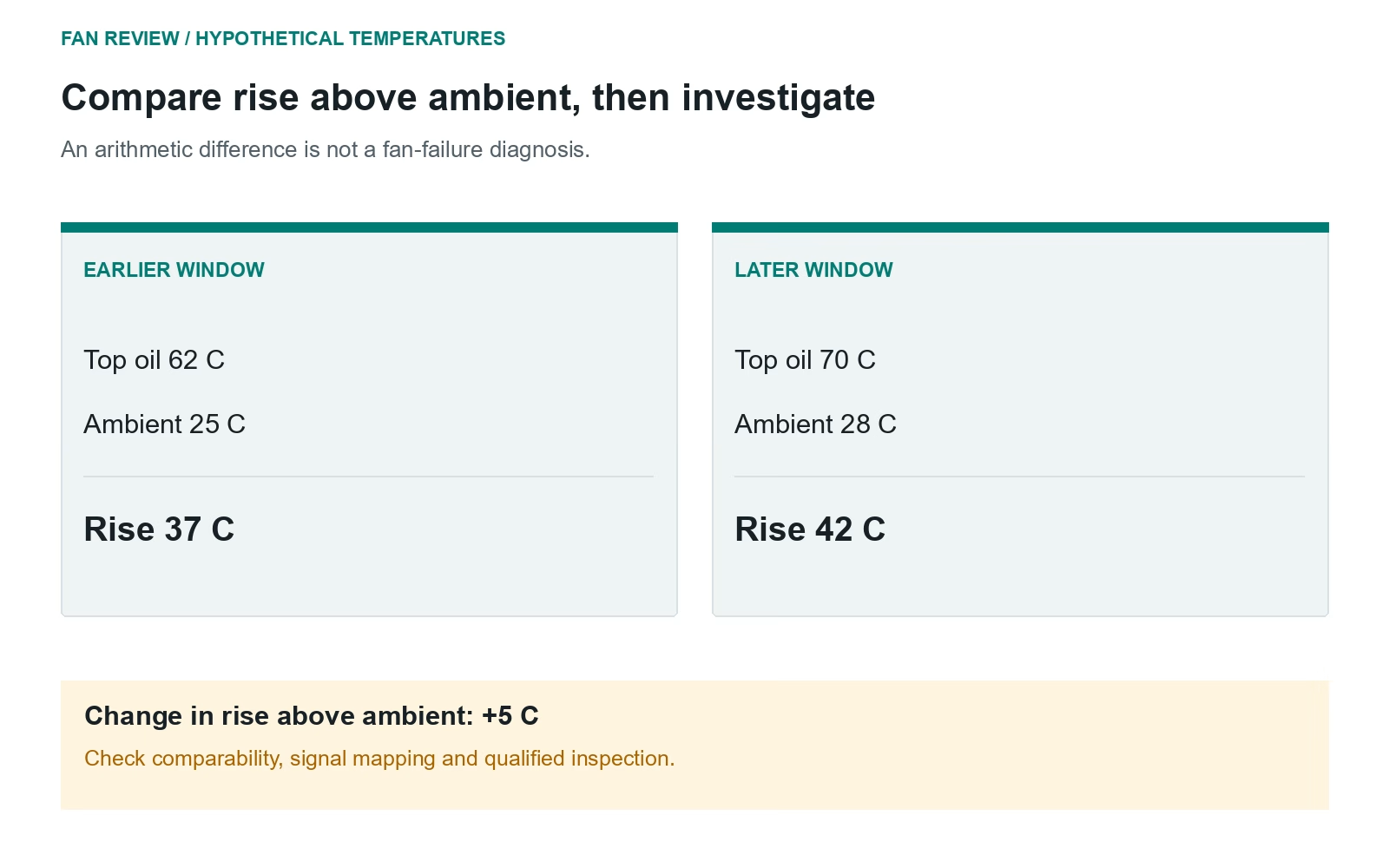
Hypothetical, not alarm limits: two windows have similar loads and indicated fan stages. First: top oil 62 degrees C, ambient 25, rise 37. Later: top oil 70, ambient 28, rise 42.
Top oil increased eight degrees; rise above ambient increased five. This flags a thermal difference, not its cause.
Check window duration, sensor calibration and tag meaning. A later maintenance record shows fan work; qualified inspection confirms one group lacked expected airflow.
Preserve the chain: historian anomaly, comparison checks, intervention, confirmed defect. The temperature difference alone did not prove fan failure.
Four of eight fans unavailable does not imply 50% less permissible load; arrangement, redundancy and heat transfer need assessment.
Close the Repair With Evidence
After repair, confirm equipment identity, feedback mapping and documentation. Check thermal behaviour under an authorised, representative operating opportunity.
If mild weather prevents a meaningful performance comparison, record that limitation; do not call it a passed capacity test.
Keep a map of each fan group's command, feedback and inspection evidence with the condition-monitoring record. DGA is complementary, not a substitute for equipment checks.
Sources and scope: IEC 60076-7:2018 official scope rechecked 29 September 2026; clause 8.2 in earlier licensed review. Bureau of Reclamation (2005), sections 3.4.6 and 9.4.4, checked in earlier review but not newly accessible; Hitachi Energy page read 29 September 2026. The comparison is original, not an operating limit.