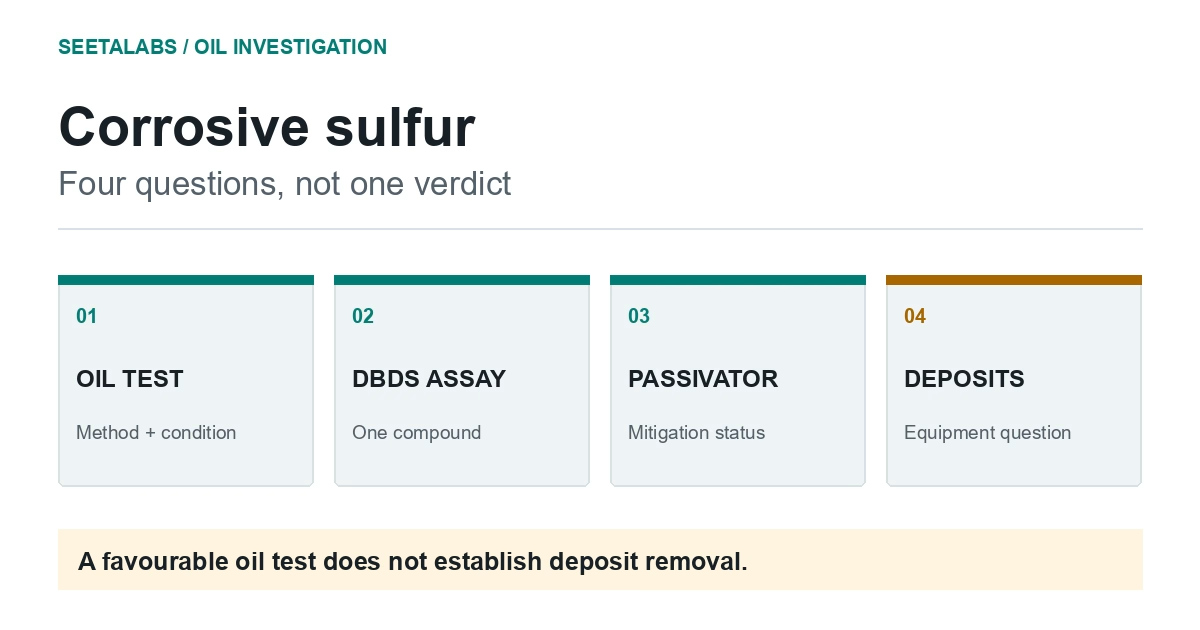

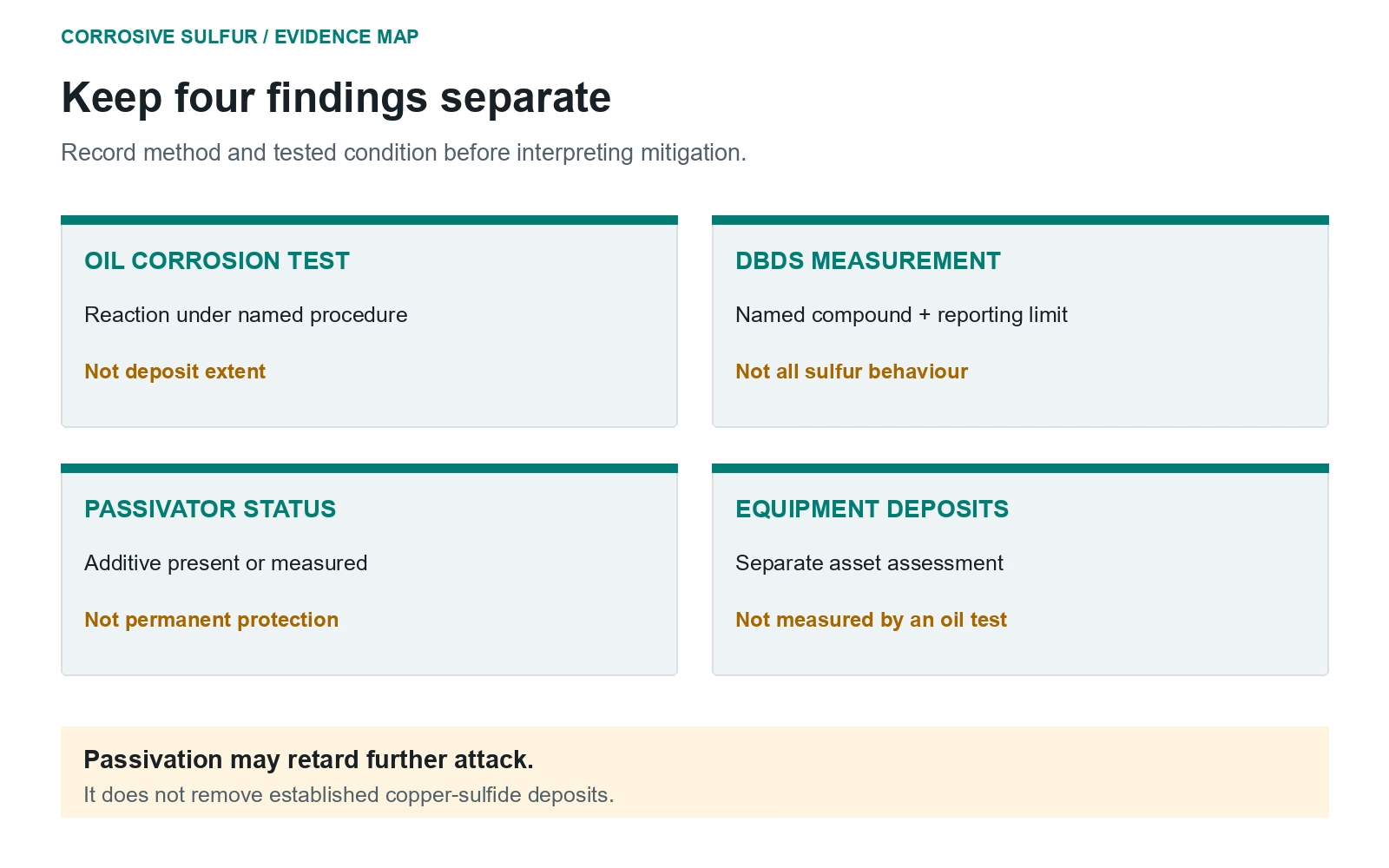
A corrosive-sulfur result describes how oil behaved in a specified test, not the amount of conductive deposit already inside a transformer. A negative result is not universal clearance.
This discussion concerns mineral insulating oil; check method applicability before extending it to another fluid.
Different Sulfur Tests Answer Different Questions
IEC 62535:2008 examines potentially corrosive sulfur using paper-wrapped copper. Its published scope says tests with paper and bare copper are complementary and can disagree. ASTM D1275-24 is another named test; do not treat the methods as interchangeable.
Record method, edition and procedure. A historical "non-corrosive" entry without these details may not be comparable.
IEC 60422:2024, clause 7.19.1, makes passivator status material. Ask the laboratory whether a passivator was present, removed before testing, and which preparation it used. A favourable result on passivated oil does not prove corrosive compounds were removed. Record the tested condition; preparation belongs to the laboratory.
DBDS measurement answers a different question. Below its stated analytical limit does not mean no potentially relevant sulfur compound is present.
What the Result Establishes About the Equipment
This evidence map supports review, not automatic asset classification.
| Finding | What it establishes | What it does not establish |
|---|---|---|
| Positive identified corrosion test | Reaction under that test's conditions | Extent of deposits inside the transformer |
| Negative identified corrosion test | No qualifying reaction in that procedure | Universal absence of sulfur-related risk |
| DBDS detected | Presence of the measured compound | A complete account of sulfur chemistry |
| Passivator detected | Presence of a specified mitigation additive | Permanent protection or deposit removal |
| Ambiguous paper appearance | An unresolved laboratory observation | A confirmed deposit mechanism without clarification |
IEC 60422:2024, clause 7.19.3, notes that sludge in aged oil can complicate interpretation. Request laboratory clarification and justified confirmation rather than forcing an ambiguous appearance into pass/fail.
Keep that uncertainty in the condition-monitoring record alongside oil and equipment history.
A Passivation Proposal Needs a Follow-Up Plan
Passivation may retard metal attack; it neither removes corrosive compounds from oil nor established copper-sulfide deposits. Doble's 2006 technical paper explains the mechanism, not a current dose or treatment protocol.
IEC 60422:2024, clause 7.20, addresses passivator monitoring. A treatment proposal needs follow-up verification.
Hypothetical: after a positive, method-identified oil result, a contractor proposes passivation and retesting. The owner requests additive identity, compatibility, target rationale, mixing verification and monitoring. The engineer considers operating and design history before deciding whether equipment investigation is needed.
The closure record separates the treated oil's test result from unknown historical deposits. Removal processes or oil replacement also require a fluid- and equipment-specific assessment.
What Belongs in the Mitigation Closure Record
Retain the original report, method, edition, procedure, passivator status, compound results and reporting limits; add oil-batch, top-up, treatment and equipment history.
State what remains unknown after mitigation, with follow-up tests, owner and review date. Missing passivator measurement is not zero concentration; preserve qualified laboratory wording.
Dissolved gas analysis supplies other condition evidence, not a substitute sulfur test or proof of mitigation. Operating decisions remain with the responsible engineer.
Close with a method-specific finding, additive status and the unresolved equipment question.
Sources and Scope
IEC 60422:2024, clauses 7.19-7.20, printed pp. 26-28, checked in the licensed text. IEC 62535:2008 and ASTM D1275-24, published scopes verified; full test procedures not reproduced. Doble's 2006 author paper is linked for mechanism and mitigation limitations only. Evidence checked 25 September 2026.