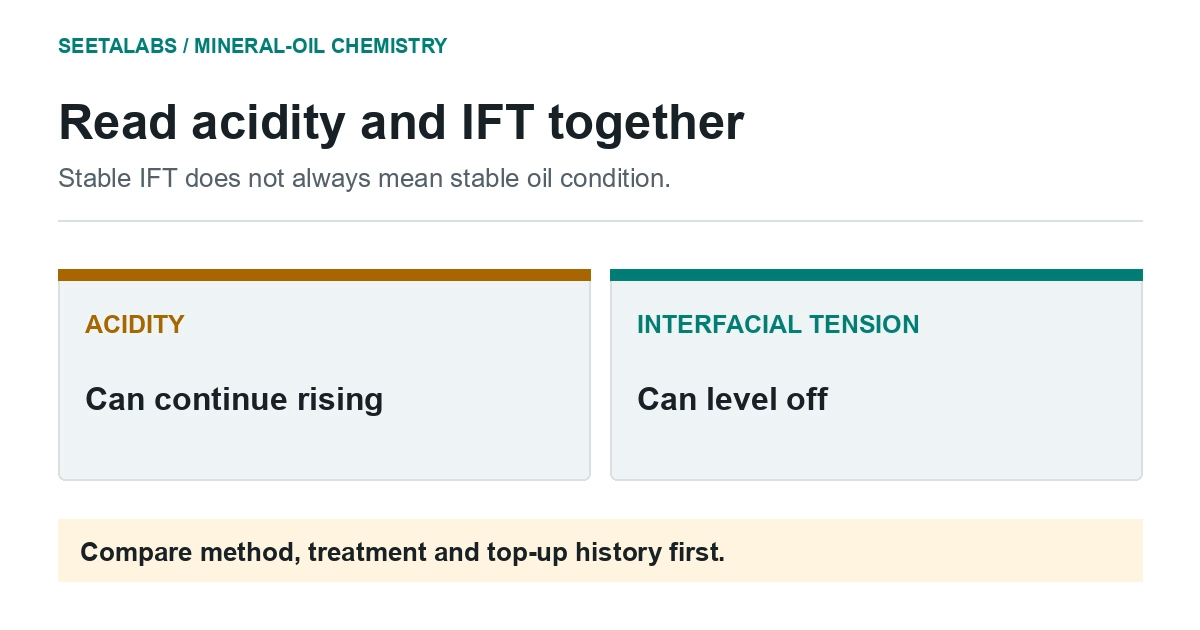

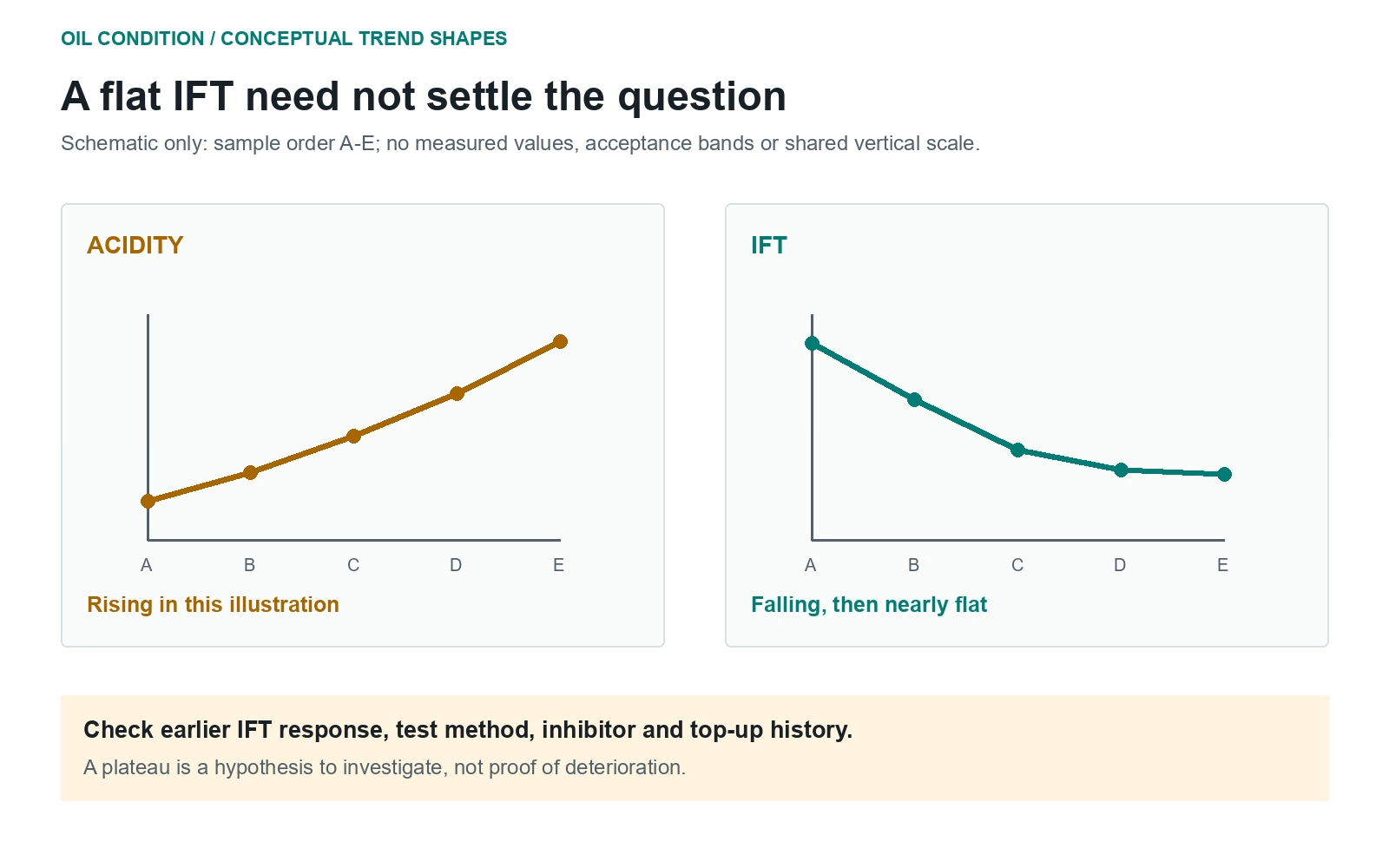
Rising acidity and falling interfacial tension (IFT) can support an investigation of mineral-oil deterioration. IFT can later level off while deterioration continues. Read both histories before treating stable IFT as reassurance or a laboratory contradiction.
This article concerns mineral insulating oil. Ester chemistry requires its own interpretation framework.
What Acidity and IFT Measure
Acidity, in mg KOH/g, is a neutralisation measurement, not oil pH or a list of acidic compounds. IEC 62021-1:2003 covers potentiometric determination in mineral oil; its published scope does not make acidity a direct prediction of corrosiveness.
IFT measures an oil-water interfacial property. IEC 60422:2024, Clauses 7.6 and 7.11, discusses both measures. An abrupt IFT change can also suggest contamination or compatibility questions.
IEC 62961:2018 describes a ring method near equilibrium; ASTM D971-20 describes non-equilibrium measurement. Their published scopes support that distinction. Matching mN/m units do not make the methods interchangeable.
Keep both measurements in the wider condition-monitoring record.
Read the Shape of Both Trends
This original review table contains no standard limits or operating status.
| Observed pattern in comparable results | Working interpretation | Next evidence to request |
|---|---|---|
| Acidity rises and IFT falls | Consistent with oil deterioration | Inhibitor history, dissipation factor and treatment assessment |
| IFT falls abruptly while acidity changes little | Contamination, compatibility or method change deserves attention | Recent filling work, materials history and method details |
| Acidity rises while IFT appears stable | IFT may be less sensitive to further deterioration; a method issue is another possibility | Earlier IFT trend, repeatability, DDF and inhibitor history |
| Both improve after reclamation | Treatment may have changed the liquid | Post-treatment baseline and additive verification |
| One result is absent or qualified | Incomplete evidence | Missing measurement or laboratory clarification |
These are hypotheses, not diagnoses. IEC 60422:2024, Clause 7.11, describes an early IFT response that can flatten. Earlier results help distinguish that from a method change.
Do not invent a universal acidity-to-IFT ratio; keep the two trends and their units.
Three Samples, Two Possible Histories
Hypothetical, not limits: acidity in three comparable samples rises 0.04, 0.06, 0.09 mg KOH/g while IFT falls 34, 29, 25 mN/m. Identified methods remain the same; no treatment intervenes.
Check inhibitor content, dissipation factor, oxygen ingress and thermal duty. The pattern does not establish a fault or intervention date.
Change the history: the middle sample followed a top-up with another oil and the final IFT test used another method. The same numbers now require reconstruction of those changes and a comparable baseline.
Keep DGA separate: better oil chemistry does not erase fault-gas evidence.
Evidence to Assemble Before a Treatment Review
Before treatment, assemble reports, dates, methods, fluid and inhibitor identity, top-ups, processing, equipment category and interpretation criteria.
Clarify method changes with the laboratory. Preserve below-limit qualifiers; missing acidity is not zero and missing IFT is not healthy IFT.
Specify what post-treatment evidence should improve and when a bulk-oil sample is representative. Clearer oil does not prove removal of degradation products or reversal of cellulose damage.
Plot both series against sampling dates with method and maintenance events marked.
Sources and Scope
IEC 60422:2024, clauses 7.6, 7.8 and 7.11, printed pp. 20-23, checked in the licensed text. IEC 62021-1:2003 and IEC 62961:2018, published scopes verified. ASTM D971-20, published scope and significance verified. Test procedures and numerical acceptance limits are not reproduced. Evidence checked 25 September 2026.