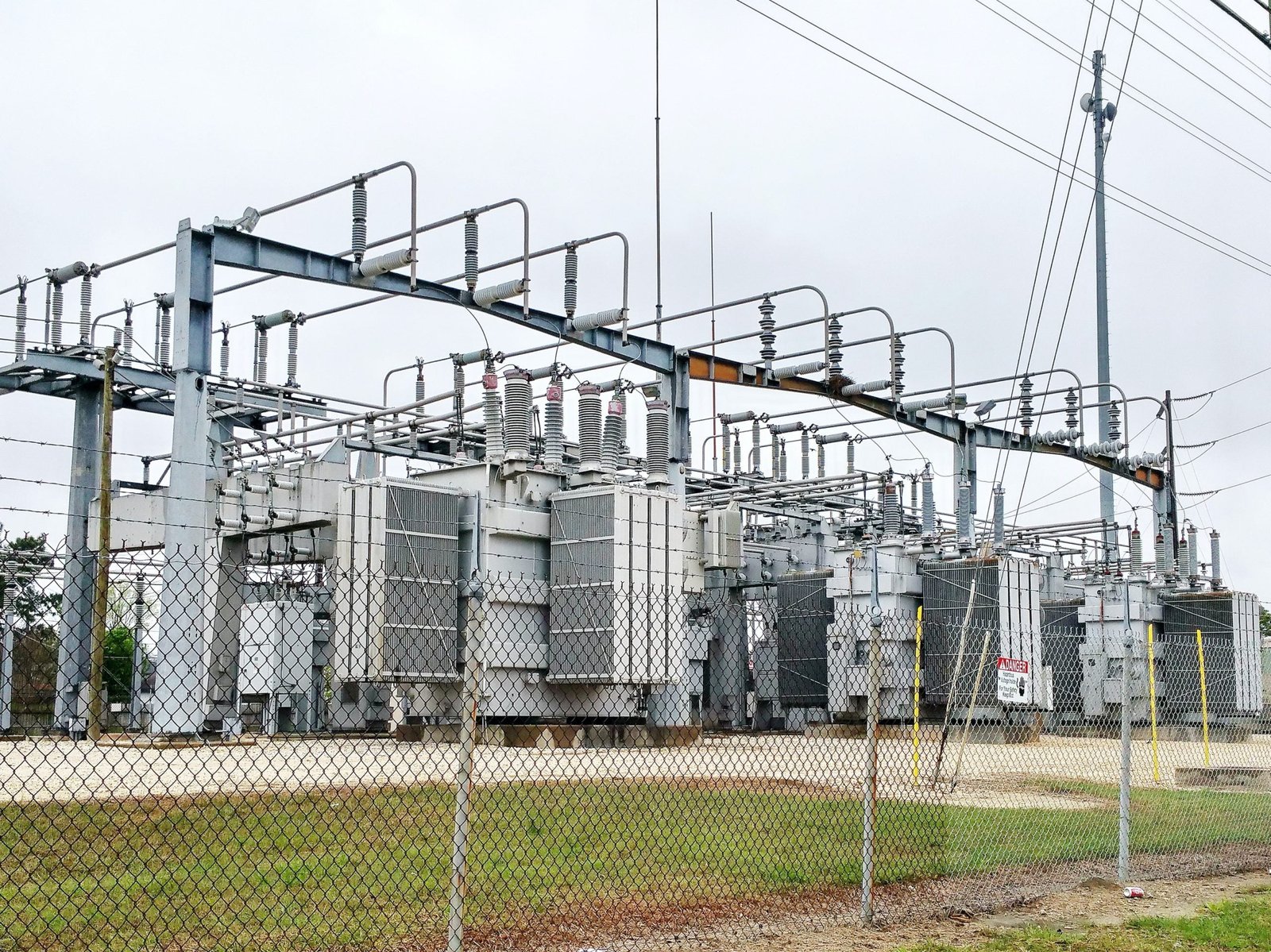

This historical release introduced Approximate Fleet Behavior (AFB), an add-on in Seetalabs RONIN for reviewing the distribution of transformer health-index scores across a selected fleet.
What is approximate fleet behavior (AFB)?
Approximate Fleet Behavior summarizes how the health index score varies across transformers in a fleet. The chart makes differences and outlying scores easier to see. Those differences can guide further review, but they are not, by themselves, measurements of failure probability or remaining life.
How to use AFB for detecting fleet performance?
To use the AFB tool, firstly you must be logged inside the RONIN-Dashboard environment with an active license and credentials. Then, go to the left side menu bar and drop down to “Fleet Management”. On the top of the screen, you will find the “Add fleet” button. Create a label for your fleet using alphanumeric and special characters. Once your fleet is created, go on to add the assets that belong to this fleet. Click here for step-by-step instructions.
How can AFB improve fleet performance?
The image below shows a historical example containing 100 transformers. Some units have high health-index scores and others have low scores. The distribution helps identify which units merit closer review; it does not establish how long any transformer will remain in service.
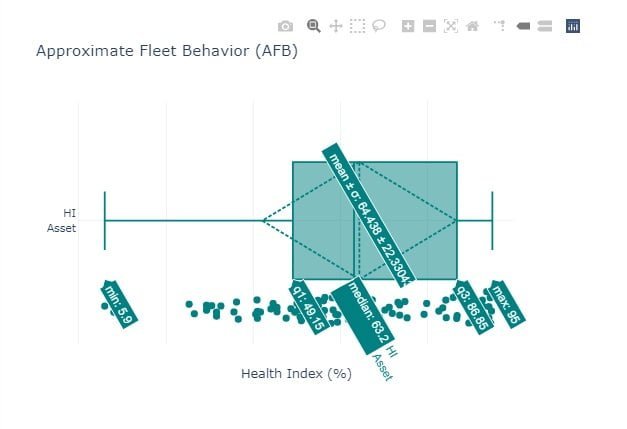
In the displayed example, the reported minimum score is 5.9%, the maximum is 95%, and the reported mean is 64.438%. A mean is not automatically a weighted mean: that description requires explicit weights. The median is reported as 63.2%; for 100 ordered observations, the usual median is the average of the 50th and 51st values. These figures describe this example, not acceptance thresholds for transformers.
Spread requires a separate definition. Variance measures squared deviations from the mean; standard deviation is its square root and has the same units as the score. A variance cannot be interpreted as a plus-or-minus interval around the mean. The underlying data and calculation behind the previously quoted 22.3 value are not available here, so it should not be used as a dispersion estimate or an uncertainty bound.
The Q1 and Q3 labels mark the lower and upper quartiles, corresponding to the 25th and 75th percentiles. Quartiles divide ordered observations into four portions, and the box contains the middle 50% of the scores. The example reports Q1 as 49.15 and Q3 as 86.85. Under the median-of-halves convention, Q3 is the median of the upper half, not of the top quarter; software can use other interpolation conventions. In the interactive view, hovering over a point identifies the asset and its score.
What is the take away?
The fleet view is a screening aid. Review the low scores, their input data and any missing information, then decide which units need further testing. A chart can be generated quickly; the time needed for a defensible engineering decision depends on the evidence and the asset. For the statistical definitions used here, see the NIST box-plot guide and its definitions of variance and standard deviation.
If you wish to learn more about RONIN then watch this video or mail us at info@seetalabs.com