
Reducing transformer monitoring false alarms should make the review queue more useful without concealing changes in the transformer. A quieter dashboard is not evidence of a better alarm system. It may simply mean the system stopped reporting difficult cases.
Begin by separating a measurement problem, an unusual observation and an engineering concern. Each can deserve attention, but not the same notification or response. Keep transformer protection functions outside an experiment in analytical alert tuning.
The approach below is an original review workflow for advisory monitoring. It does not prescribe trip settings, operating limits or a universal delay before responding to a change.
1. Define What Counts as a False Alarm
A false alarm needs a reference judgement. An alert that prompted investigation but found no confirmed defect is not automatically false; it may have been justified by the information available at the time. Use a reviewer to classify outcomes and retain unresolved cases as unresolved.
Separate duplicate notifications from incorrectly detected events. Ten emails about one developing condition are a delivery problem. Ten independent measurements with unexplained changes are an evidence problem. Counting both as ten false alarms will obscure the remedy.
IEC 62682:2022 addresses alarm management in process industries. Its scope is useful background, but this article does not claim it prescribes transformer DGA thresholds. IEEE C57.143-2024 addresses monitoring applications, while interpretation requires additional methods and engineering judgement.
For laboratory and online gas evidence, use our DGA guide to keep diagnostic context distinct from notification design. An alarm label should identify the observation that triggered it, the applicable rule version, and the evidence still required.
2. Match the Remedy to the Cause
The following table proposes ways to investigate nuisance notifications. None is a universal setting change.
| Observed pattern | Check first | Candidate remedy to test |
|---|---|---|
| Repeated notifications for unchanged evidence | Event identity and acknowledgement logic | Group deliveries while retaining all observations |
| Abrupt step after maintenance | Treatment, sensor or sampling changes | Annotate the intervention and review comparability |
| Spikes during communications recovery | Timestamps, backlog and duplicate messages | Restore event order and flag uncertain timing |
| Small oscillations around a boundary | Measurement uncertainty and rule behaviour | Test hysteresis against reviewed cases |
| Missing sensor values shown as healthy | Availability handling | Create a separate data-availability state |
| Lab and sensor disagree | Sampling time, method, unit and calibration context | Reconcile evidence before assuming either is wrong |
Do not smooth away the raw measurements. If a derived trend or persistence rule is used, display it alongside its input window and retained observations. Any added delay needs an explicit reason and review of cases where the delay could matter.
Likewise, use normal gas-level guidance as context rather than a shortcut to one alarm limit for all transformers. Equipment, liquid and measurement context matter. Missing data and a result below detection must not become a measured zero to simplify notification logic.
3. Replay a Hypothetical Alert Week
Suppose a fleet generated 80 notifications in a week. Engineering review links 50 messages to five unchanged events, including each event's first notification and its repeat deliveries. Another 15 concern a communications outage, and 15 concern measurement changes that still need interpretation. The groups are mutually exclusive in this invented example; they are not typical industry proportions.
If an approved grouping rule retained one initial message for each of the five unchanged events, it would remove 50 – 5 = 45 repeat messages in this replay. Leaving the other 30 messages unchanged gives 35 rather than 80 deliveries. That arithmetic does not eliminate five underlying events, prove that they were false, or justify suppressing new observations on those assets. All observations and the delivery history remain available.
The outage-related notifications should create a visible availability issue with an owner. Restored connectivity should not convert unobserved hours into an uninterrupted healthy trend. The remaining 15 changes should retain their evidence for review, including cases that eventually prove benign.
Replay periods with and without alerts through the proposed rule. Have engineers independently review both groups using available laboratory, inspection and maintenance evidence. Reviewing only alerted assets cannot reveal concerns the rule never raised. Record monitoring hours actually available, time to first useful notification, repeated deliveries, independently confirmed missed concerns and unresolved outcomes. Unobserved hours are not healthy hours; unknown outcomes do not support a validated false-negative rate.
Tune on development cases, then freeze the rule and evaluate a separate acceptance set with predetermined reference judgements. If acceptance results guide repairs, those cases become development evidence: use fresh cases for acceptance. Include relevant historical challenges without treating them as a representative failure population. The separation follows general evaluation-leakage principles; this replay protocol is our engineering proposal. Fewer messages count as an improvement only alongside the observed detection delays and unresolved concerns.
4. Govern Changes and Keep Escalation Visible
Require an owner, reason, expiry and review record for any temporary suppression of advisory notifications. Distinguish acknowledging receipt from resolving the underlying issue. A dashboard should make suppressed and unavailable states visible to the people responsible for follow-up.
For AI-based alerts, the voluntary NIST AI RMF 1.0, MEASURE 2.3, calls for performance evaluation under conditions resembling deployment. It supports examining the test population, not any particular transformer alarm setting. NIST AI RMF, printed page 29.
A retrospective replay cannot prove that every future concern will be detected. Continue reviewing missed or late signals after deployment, and use the owner's procedures for engineering escalation. Do not infer operate or stop instructions from alert counts alone.
Start by auditing one week's repeated, unavailable and unexplained events alongside independently reviewed no-alert periods. To discuss the laboratory-evidence part of that workflow, talk to an engineer.
Sources and Scope
- IEC 62682:2022, edition 2, and IEEE C57.143-2024: public catalogue scopes checked; full-text requirements and alarm settings not reviewed for this article.
- NIST AI RMF 1.0, 2023, MEASURE 2.3: evaluation context, not transformer alarm thresholds.
- Kapoor and Narayanan's leakage research: development/evaluation separation.
Evidence checked on 30 September 2026. Tables, replay design and counts are original illustrative material, not a validated change to a deployed monitoring system.
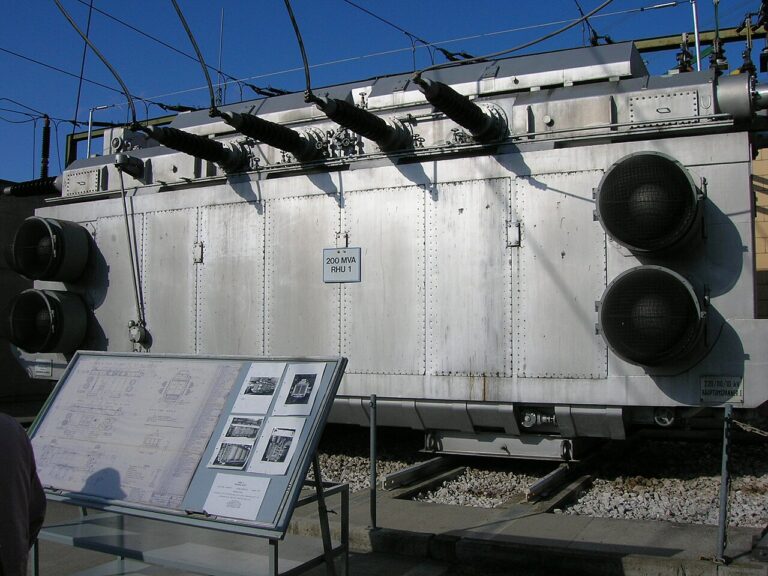
Cover: AI-generated editorial illustration of a transformer and closed monitoring enclosures. Not a customer site, verified monitor model, alarm state or approved installation drawing.
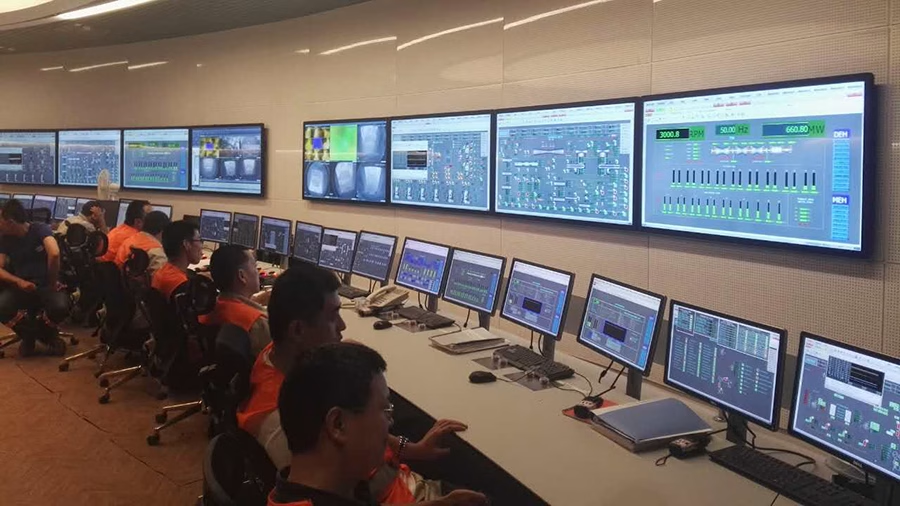
Cover photograph: Zetes-3 power station control room; not a Seetalabs software interface. Photo: Zhangmin16 / Wikimedia Commons, CC BY-SA 4.0. Commons download, resized where applicable; no editorial retouching. Illustrative photograph, not a Seetalabs customer case or evidence of the results discussed.