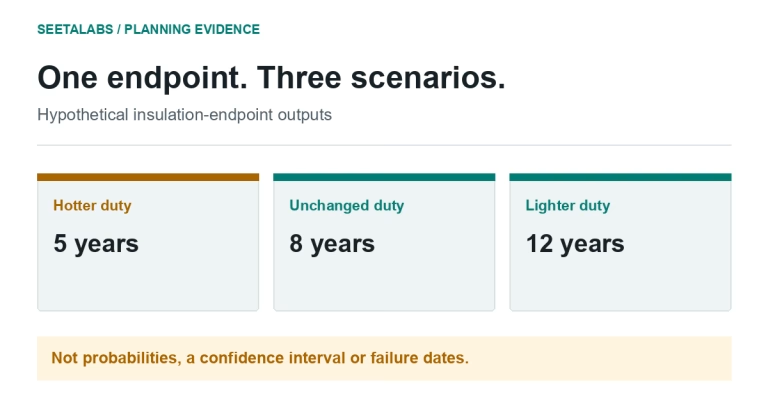

Overload capability depends on duty, starting temperature, cooling, insulation and equipment limits. A nameplate rating or low oil temperature cannot answer all of those questions. This checklist prepares, but does not approve, an overload review.
Define the Duty Before Asking for Extra Capacity
A contingency and recurring daily peak differ. Record preceding duty, ambient conditions, proposed profile, recovery period and repetition.
IEC 60076-7:2018 and IEEE C57.91-2025 guide mineral-oil transformer loading. Select the applicable guide with manufacturer information and operating rules; do not combine convenient limits from different procedures. Only the IEEE edition and scope were checked here.
CIGRE's 2026 working-group mandate examines design, condition and operating environment. It is a research programme, not permission to relax limits.
Assemble Condition Inputs, Not Just a Health Score
This screening table exposes gaps; it is not a normative approval matrix.
| Input | Why the loading reviewer needs it | Consequence of an unresolved gap |
|---|---|---|
| Actual cooling availability | Thermal capability depends on configuration | Cooling assumption remains unverified |
| Paper and moisture evidence | Insulation condition affects the risk assessment | A dry, healthy insulation assumption is unsupported |
| DGA trend and open defects | An existing concern may affect the proposal | Specialist condition review is needed |
| Temperature model and test basis | Determines credibility of predicted response | Temperature output needs an explicit uncertainty allowance |
| Bushings, leads and tap changer | Other components may constrain duty | Winding assessment alone is incomplete |
| Protection and connected equipment | The full circuit must support the scenario | System-level constraints remain unresolved |
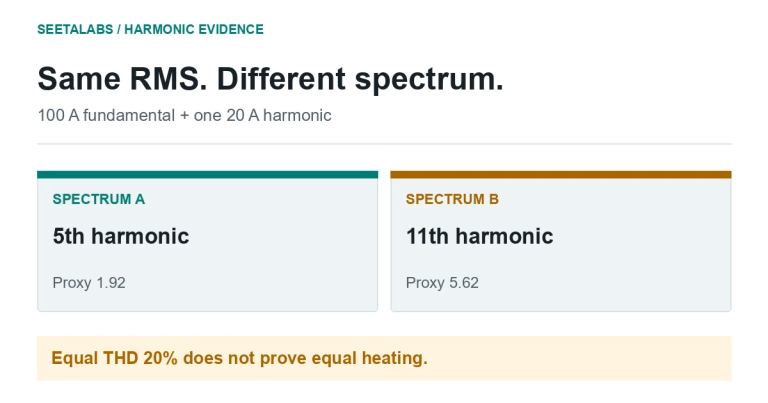
A transformer health index can organise condition evidence, but it is not a calibrated overload failure probability. A favourable score does not erase a specific defect.
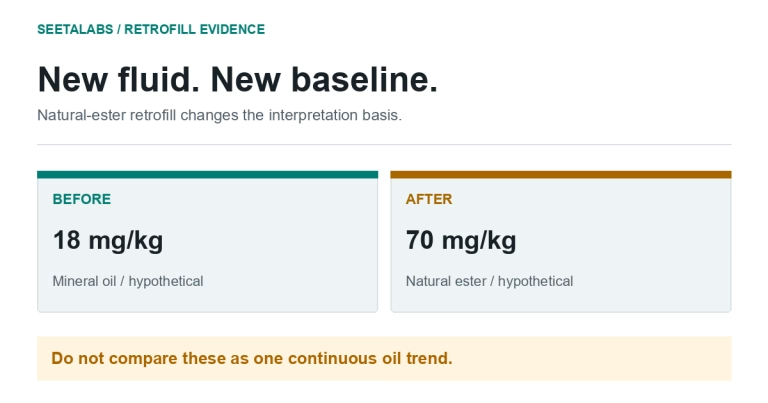
Check dates against interventions: a pre-repair cooling test cannot establish the present configuration, and missing moisture evidence cannot support an assumption of dry paper.
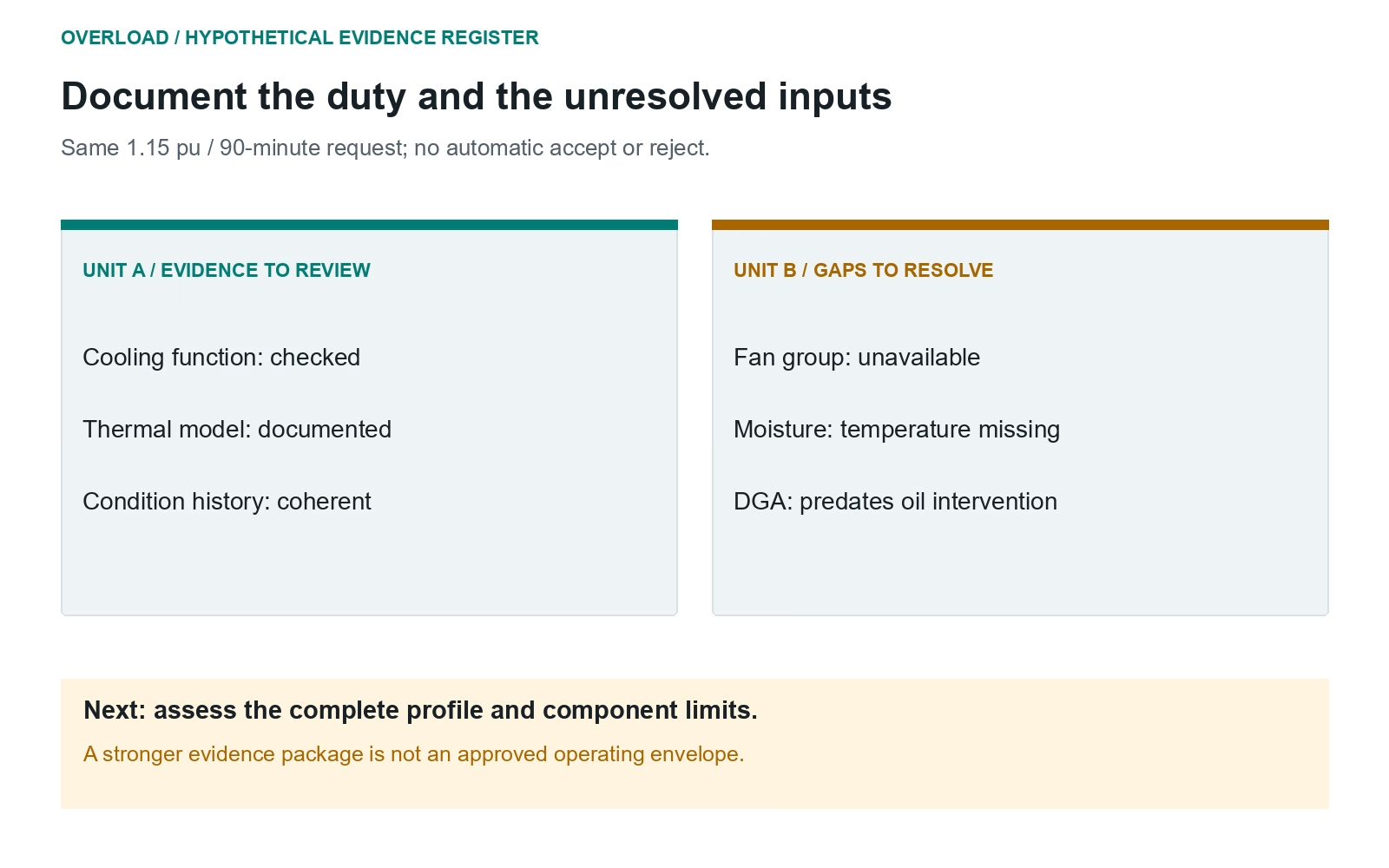
Worked Example: Two Identical Loading Requests
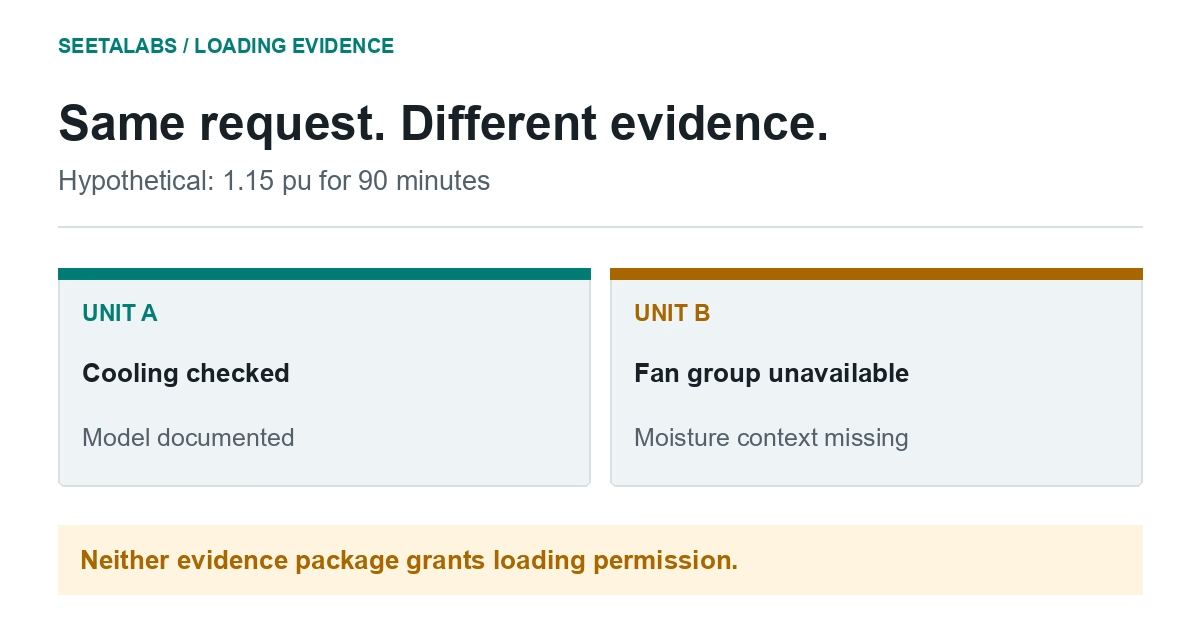
Hypothetical, not recommended duty: two equally rated transformers are proposed for 1.15 per-unit current for 90 minutes.
For A, there is a recent cooling check, documented thermal model, comparable duty and coherent condition record. For B, one fan group is unavailable, the moisture estimate lacks temperature context, and DGA predates an oil intervention.
A is not automatically acceptable and B is not automatically prohibited. A has a stronger evidence package; B's scenario relies on unverified assumptions.
For B, update the cooling configuration, recover the intervention record and decide what new condition evidence is needed. The responsible engineer evaluates the requested duty against those uncertainties.
Check whether another contingency extends the 90 minutes or the next peak begins before cooling. Both alter the scenario.
Document the Boundary of the Assessment
The report should state the assessed scenario, checked equipment limits, decision owner and conditions that invalidate the assessment. Distinguish calculated temperature and ageing contribution from an approved operating envelope.
A calculated ageing contribution is not a promise of remaining life. It models one mechanism; mechanical damage, accessories and external events remain.
Build a one-page evidence register marking each input measured, documented, assumed or missing. Link it to the condition-monitoring record.
Sources and scope: IEC 60076-7:2018, official scope and clauses 5, 7 and 8 checked in the earlier licensed local review; IEEE C57.91-2025 official scope and publication date rechecked 29 September 2026, full text not read. CIGRE JWG A2/D1.82 mandate approved 8 May 2026, read 29 September 2026. No numerical standard requirements are reproduced. The checklist is not a normative approval process.