
A low oxidation-inhibitor result does not alone justify replenishment. Confirm the original oil formulation and analyte, then distinguish depletion from dilution or treatment before deciding what intervention is needed.
Establish What the Oil Was Designed to Contain
IEC 60422:2024, Clause 7.8, distinguishes inhibited and uninhibited mineral oils. Antioxidant may be consumed before oxidation products rise substantially.
No detected added inhibitor is not a defect in oil supplied uninhibited. For historically inhibited oil, investigate a decline using the supplier certificate, grade, additive, top-ups and processing history.
IEC 60666:2010 covers detection and determination of specified additives. Its published scope distinguishes identifying an additive from quantifying a known one. Request the named analyte and units.
Oxidation inhibitor is not metal passivator. Nynas's additive descriptions distinguish them, without providing a general dosing rule.
Separate Depletion, Dilution and Treatment Effects
This original review table gives no additive targets or treatment rules.
| Evidence pattern | Question to resolve | Useful next evidence |
|---|---|---|
| Low measured inhibitor, stable supporting chemistry | Is planned replenishment suitable? | Confirmed grade, trend and supplier/OEM advice |
| Declining inhibitor with rising acidity or falling IFT | Has degradation already progressed? | Full oil-quality review and treatment feasibility |
| Concentration changes after a top-up | Was the oil diluted or blended? | Added fluid identity, quantity and compatibility record |
| Low concentration after reclamation | Were additives removed during processing? | Contractor's additive restoration and verification plan |
| No additive specification available | Is the result actually unexpected? | Original procurement and laboratory records |
IEC 60422:2024, Clause 14.4.4, addresses additive renewal after reclamation.
Record the cause in condition monitoring; restored concentration does not explain the decline.
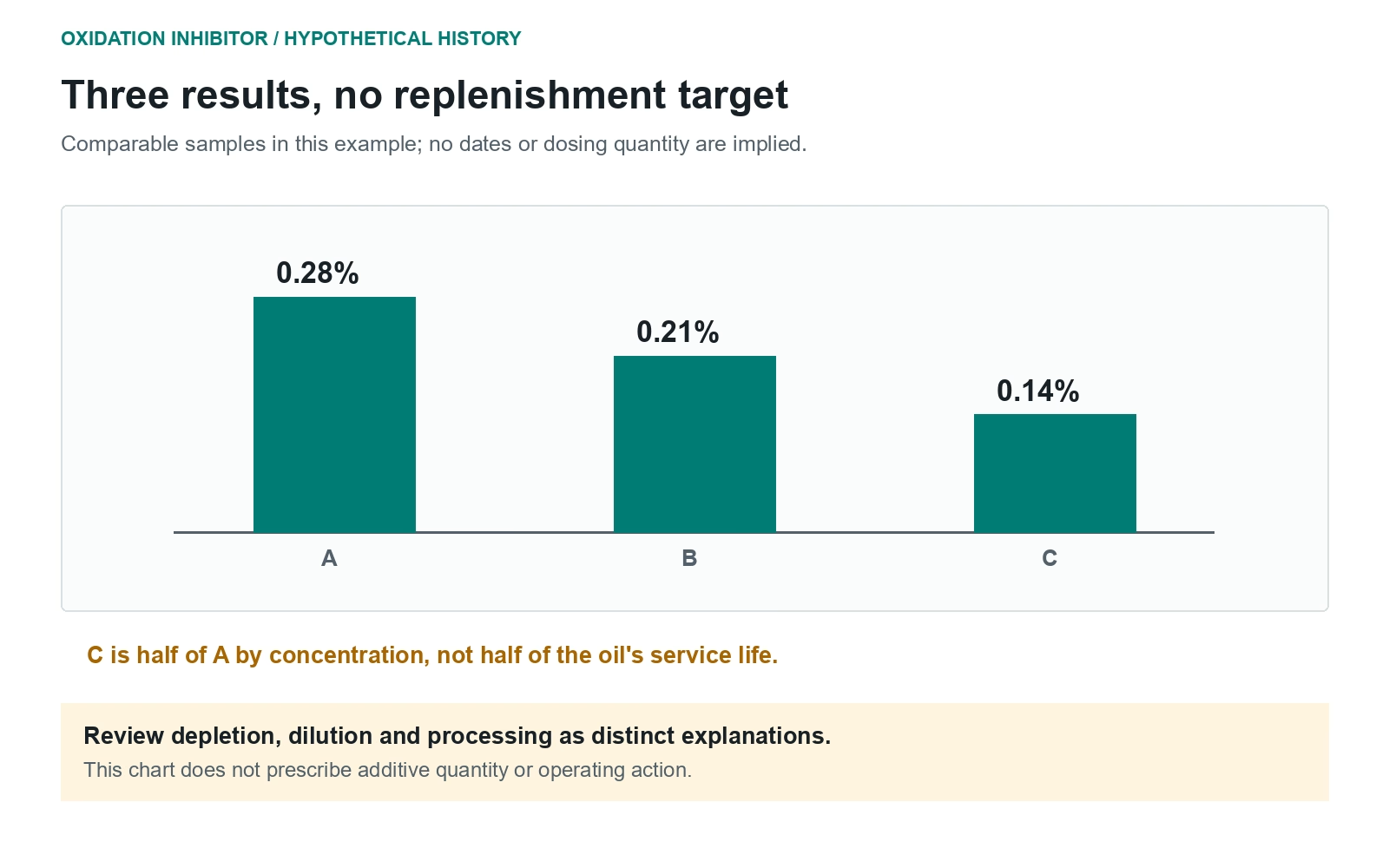
What a Falling Concentration Does and Does Not Establish
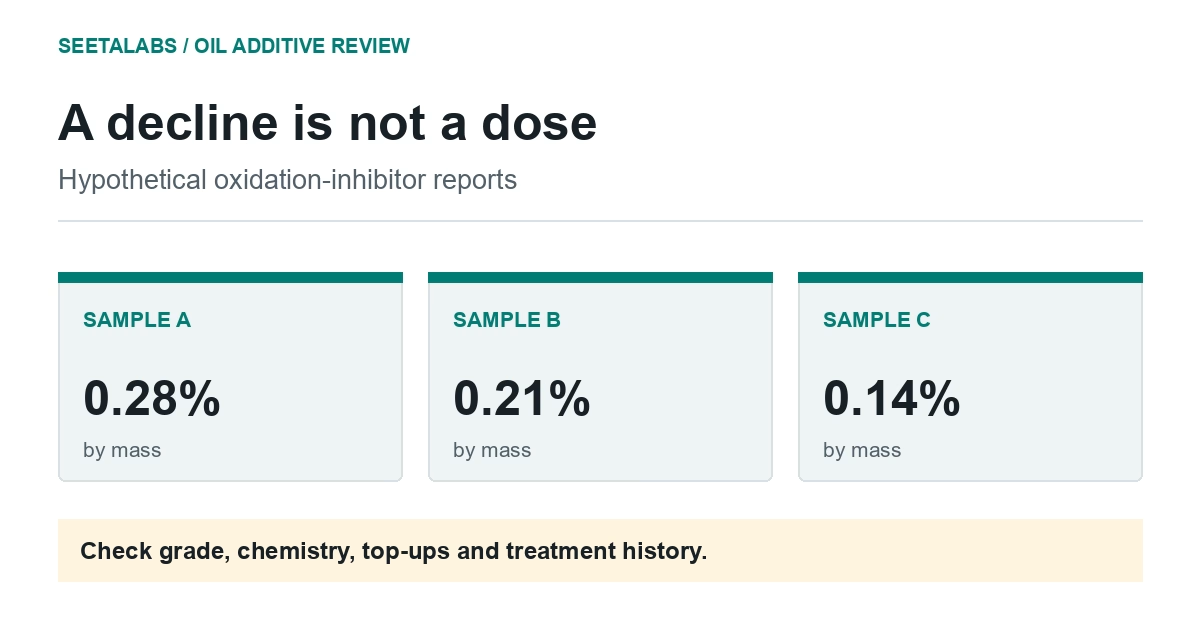
Hypothetical, not a threshold: an inhibited oil measures 0.28%, 0.21% and 0.14% by mass across three comparable samples without top-up or treatment.
The latest is half the first, not half the oil's remaining life or a dose calculation.
Review contemporaneous acidity, IFT and dissipation factor. If supporting chemistry remains acceptable, discuss a controlled proposal with supplier and specialist. If deterioration has progressed, inhibitor alone may not address it.
If the last sample instead followed reclamation, treatment may have altered the additive content. Check the contractor's formulation, mixing and verification plan.
Keep the original history; replenishment creates an intervention point, not spontaneous recovery.
Specify Verification Before Adding Anything
Specify additive and carrier, supplier/OEM agreement, concentration basis, handling and representative post-work measurement. A specialist sets quantities and execution conditions; this is no dosing recipe.
Record addition, date, compartment and procedure. Verify achieved concentration and supporting oil condition.
Preserve qualifiers: below detection is not absolute absence; missing is not depletion. Do not transfer mineral-oil expectations to esters.
Require the original oil specification, rationale and post-work evidence before approval.
Sources and Scope
IEC 60422:2024, clause 7.8, printed p. 22, and clause 14.4.4, printed p. 56, checked in the licensed text. IEC 60666:2010, edition 2.0, published scope verified; detailed analytical procedures not reproduced. Nynas supplier descriptions linked above. Evidence checked 25 September 2026.