
Water in transformer oil may be reported as ppm by mass or as relative saturation (RS): dissolved water relative to the fluid's saturation concentration at a stated temperature. Conversion needs a suitable fluid model and a dissolved-water result.
The same ppm in different fluids need not mean the same RS. Temperature can change RS without new water entering the system.
PPM Describes Concentration
On a mass basis, 1 ppm is 1 mg/kg; confirm that basis in the report. The published scope of IEC 60814:1997 covers coulometric Karl Fischer determination of water in insulating liquids and oil-impregnated cellulose.
A laboratory result describes the submitted sample, whose handling and representativeness matter.
For dissolved water below saturation, estimate relative saturation as:
RS (%) = 100 x water concentration / saturation concentration at the stated temperature.
Use the same units in numerator and denominator. IEC 60422:2024, Clause 7.5.3, states the relationship up to saturation. The denominator needs a model appropriate to fluid, condition and temperature. Mineral-oil criteria do not automatically apply to esters.
For free-water samples, do not insert total water into this dissolved-water relationship or equate the quotient with a sensor reading. Confirm what was measured and whether the sample supports calculation.
Keep this distinction in the condition-monitoring record.
Pair the Temperature with Its Measurement Location
Tank, sampling-point and instrument-chamber temperatures can differ. Pair a moisture reading with its actual measurement location.
Vaisala's instrument guidance distinguishes sensor-chamber and tank conditions; preserve both location and assumptions.
This original review table is not a maintenance-limit table.
| Available evidence | What it can support | What remains unresolved |
|---|---|---|
| Laboratory water in mg/kg | Concentration in the sample | Temperature-dependent saturation in service |
| Measured RS with local temperature | Saturation at the sensor location | Conditions elsewhere in the transformer |
| Calculated RS from ppm | A model-based estimate | Suitability of the solubility coefficients |
| Oil water plus load and temperature history | Investigation of changing moisture behaviour | Exact moisture distribution inside cellulose |
| Ester water result | Interpretation within that fluid's framework | Mineral-oil criteria are not transferable |
Sensor-derived ppm may itself be model-calculated from water activity. Do not merge it silently with Karl Fischer results.
Calculate Saturation, Then Check the Assumptions
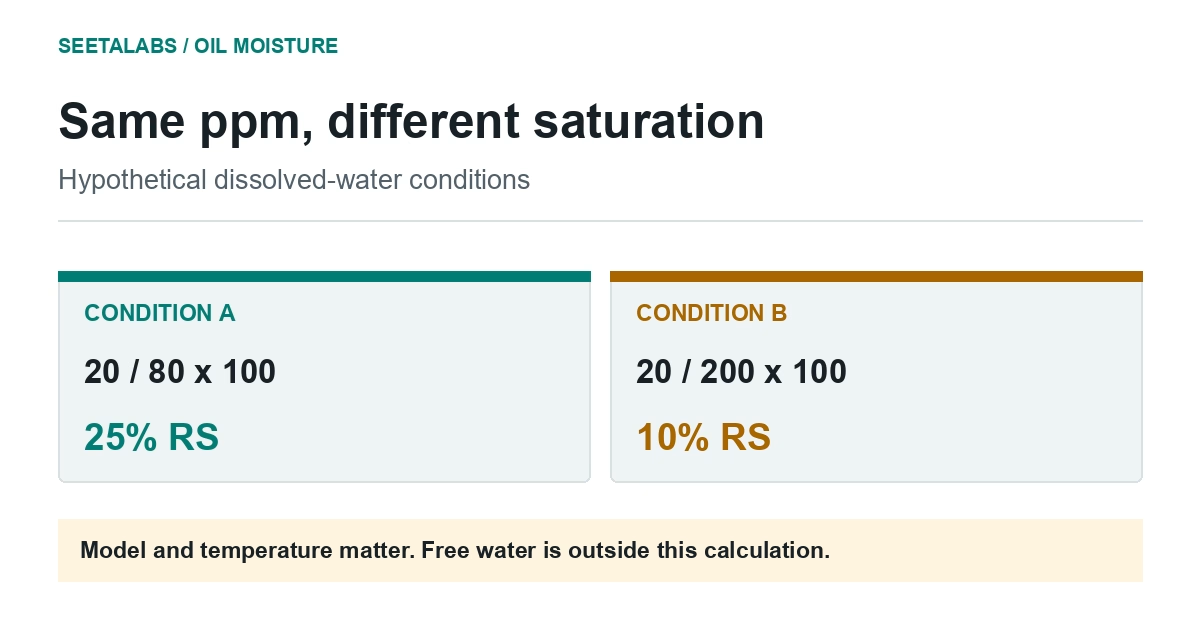
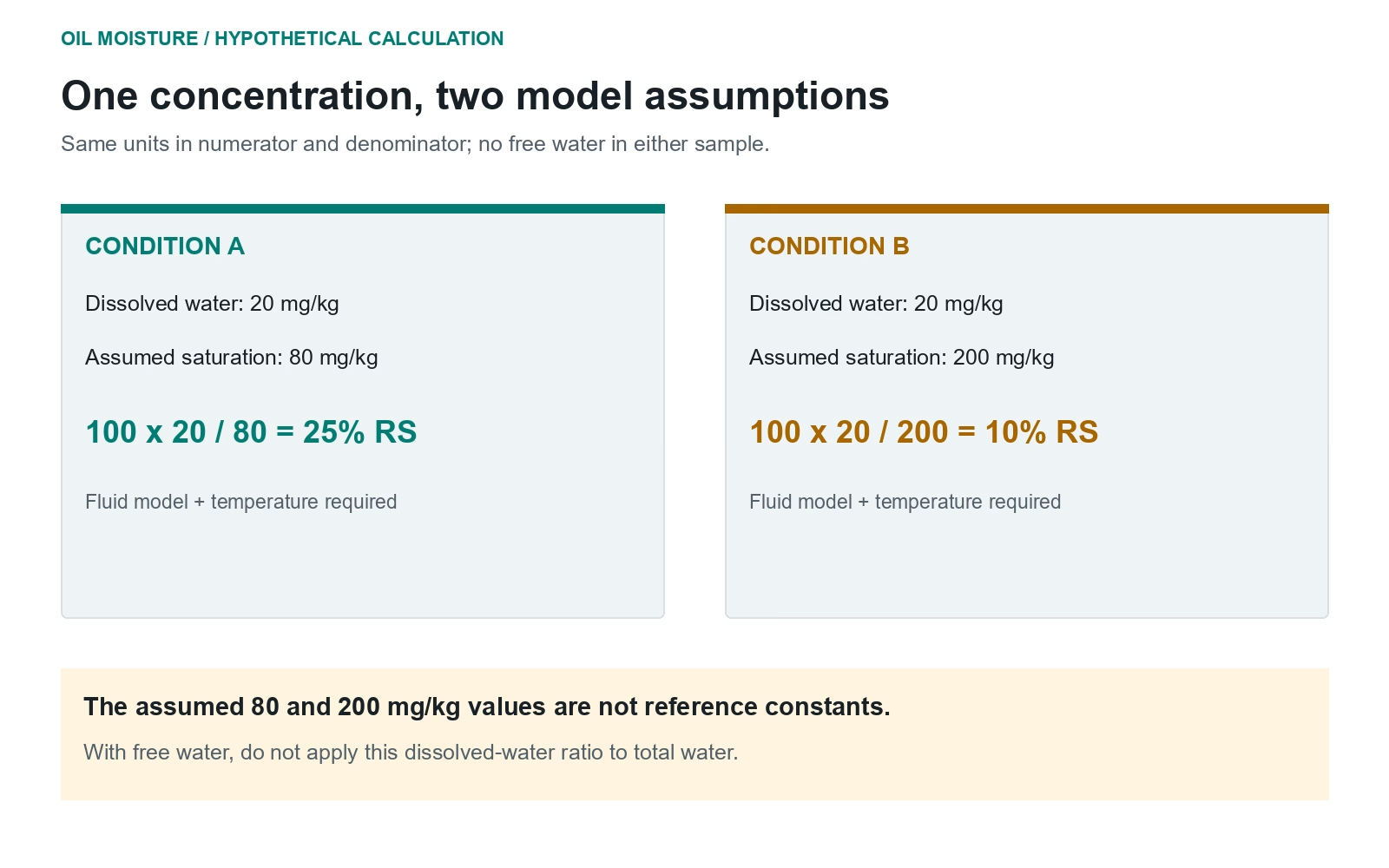
Hypothetical: two samples without free water each contain 20 mg/kg dissolved water. Assume justified models give saturation concentrations of 80 and 200 mg/kg under their respective conditions.
Then RS is 25% and 10%, respectively. The assumed denominators are teaching inputs, not published fluid values or operating limits.
An unverified generic coefficient could still produce 25%; extra decimals would hide rather than resolve that uncertainty. Record temperature and model limitation.
Do not infer exact paper moisture. IEC 60422:2024, Clauses 7.5.1 and 7.5.4, discuss oil-cellulose distribution and equilibrium limitations. Changing load or temperature can disrupt the assumed equilibrium.
Which Missing Input Changes the Interpretation?
Retain fluid, sample point and time, local oil temperature, load, method, units and solubility coefficients. Keep the report and note treatment or top-up between samples.
Preserve below-limit qualifiers; they do not mean zero. Without fluid identity or temperature, calculated RS is unavailable.
Confirm sampling, temperature history or model validity according to the missing evidence. No single ppm or RS value authorises operation, shutdown or drying.
Sources and Scope
IEC 60422:2024, Clauses 7.5.1-7.5.5, printed pp. 16-20, checked in licensed text; Clause 7.5.3 rechecked for this revision. IEC 60814:1997, edition 2.0, published scope verified; full procedure not reviewed. Vaisala instrument guidance checked 27 September 2026. No acceptance limits reproduced.