Can one spare transformer be counted as recovery capacity for several sites?
Only for the sites where its duty, interfaces and mobilisation dependencies have been checked. Matching MVA is not enough: vector group, impedance, terminals, auxiliaries, fluid, stored condition, transport route, release authority and shared exposure to the same flood or fire need verifying for each pairing. Put those dependencies into the restoration estimate and resolve the longest unverified one first, since a missing terminal adapter can make the closer spare slower.
A spare transformer counts as recovery capacity only for the sites where its duty, interfaces and mobilisation dependencies have been checked. Matching MVA is not enough. A missing connection adapter or an unavailable transport route can govern restoration even when the spare itself is ready.
The useful output is a candidate-to-site record with unresolved items, owners and completion dates. "One spare covers six sites" is otherwise an inventory claim, not a recovery plan.
Check compatibility for the intended service
Assess each pairing separately. Reduced service may be worthwhile, but specify the demand it can actually support and the limitations approved by the responsible engineers.
| Interface | What to compare | What can remain unresolved |
|---|---|---|
| Electrical duty | Voltage ratio, frequency, rating, tap range, insulation levels and cooling capability | Required duty outside the candidate's capability |
| Network behaviour | Vector group, impedance, earthing and protection arrangements | Studies or setting changes still needed |
| Installation | Terminal positions, clearances, dimensions, mass and foundation | Adapter, civil or lifting work |
| Auxiliaries | Supply voltages, fan/pump controls, alarms and trips | Control wiring or functional checks |
| Insulating system | Fluid, materials, preservation and handling requirements | Incompatible procedures or equipment |
| Stored condition | Inspection, test and preservation records | Condition not yet established |
This original checklist is a preparation tool, not a certificate of interchangeability. Do not mark a pairing "confirmed" while a consequential interface remains unverified.
Define whether the candidate would operate alone or in parallel with another unit. That choice changes the compatibility review; a matching nameplate rating does not establish acceptable load sharing or short-circuit duty.
Put dependencies into the restoration estimate
CIGRE TB 962:2025, Section 6.2.2, printed page 148, discusses transport surveys, permits and infrastructure constraints. An original delivery route may no longer be usable.
In this hypothetical comparison, both candidates have passed a separate compatibility review. Site preparation starts at day zero, independently of spare release. The final four-day allowance includes positioning, assembly, applicable oil work, tests and commissioning.
| Task | Ready on-site spare | Shared regional spare |
|---|---|---|
| Assessment and authorised release | 1 day | 2 days |
| Transport preparation and movement, after release | 0 days | 5 days |
| Site preparation, starting at day zero | 3 days | 3 days |
| Final installation and verification, after all prerequisites | 4 days | 4 days |
The on-site case takes max(1, 3) + 4 = 7 days. The regional case takes max(2 + 5, 3) + 4 = 11 days. Adding every row would wrongly ignore parallel work.
Now suppose the on-site candidate needs a terminal adapter. Its engineering review and fabrication take eight days from day zero, and it must be available before final installation starts. The estimate becomes max(1, 3, 8) + 4 = 12 days. The physically closer spare is no longer the faster scenario.
These invented durations assume the damaged unit can be removed within site preparation and no further work is discovered. They are not restoration promises.
They also assume that the teams and equipment needed for parallel tasks are independently available. One crew assigned to both tasks would require a different schedule. The US Department of Energy's July 2024 resilience report, Section III.3.14, discusses these installation resources. Its nominal durations are not the source of this example.
Test allocation and preservation, not only transport
If another member already has the regional spare, its 11-day scenario does not apply. Record who can release it, how competing requests are resolved and which fallback remains. Do not count the same shared unit as simultaneously available to every site it could serve.
Check shared exposure, too. DOE's Section III.3.7 notes that an on-site spare can face the same physical threats as the operating unit. In a site review, ask whether one flood or fire could make both unavailable. Off-site storage changes that exposure but introduces mobilisation dependencies.
Storage condition is a separate question. IEC 60422:2024 includes strategic spares in its mineral-oil and hydrocarbon-liquid maintenance scope. That scope is not a complete transformer preservation programme and does not provide ester acceptance criteria.
Retain the spare's preservation and test history. The DGA guide describes one evidence source; the wider condition-monitoring resources provide context beyond an oil sample.
Resolve the longest unverified dependency
For one high-consequence site, ask logistics, maintenance and engineering to substantiate each prerequisite. In the example, confirming the adapter design and delivery matters more than refining the one-day release allowance.
Keep the recovery scenario conditional until the route, equipment, people and authorisations have been checked. Talk to an engineer about the condition evidence associated with the asset and candidate spare. A condition assessment is not a substitute for compatibility approval.
Sources and access: CIGRE TB 962:2025, Section 6.2.2, printed page 148, licensed local text reread. IEC 60422:2024, edition 5, public catalogue scope checked; full standard not reviewed for this article. US DOE, Large Power Transformer Resilience, July 2024, Sections III.3.7 and III.3.14, printed pages 16 and 20-21, targeted public text read. The compatibility worksheet and dependency calculations are original, not reproduced standard criteria or DOE restoration benchmarks.
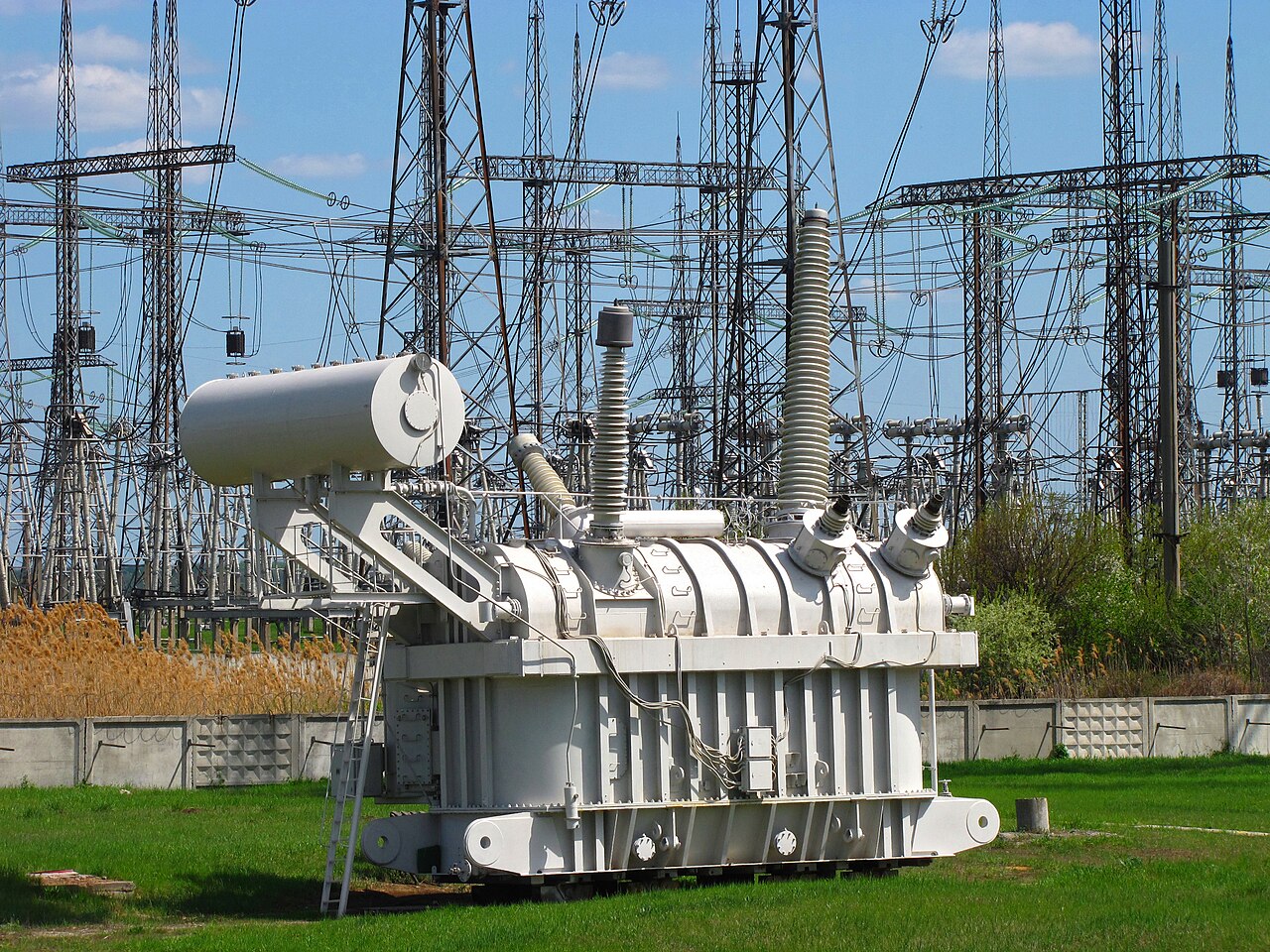
Cover photograph: High-voltage transformer in an outdoor substation; illustrative equipment, not a verified spare inventory. Novoklimov / Wikimedia Commons. CC0. Source: https://commons.wikimedia.org/wiki/File:High-voltage_transformer_750_kV_%D0%A2%D1%80%D0%B0%D0%BD%D1%81%D1%84%D0%BE%D1%80%D0%BC%D0%B0%D1%82%D0%BE%D1%80_750_%D0%BA%D0%92.jpg