
A transformer health index ranks assessed condition, not the order in which every asset should be replaced. The next decision also depends on the affected component, the evidence missing from the assessment and the consequences of losing service. Keeping those questions separate can produce a better work programme than sorting one column of scores.
Consider three hypothetical transformers assessed by the same method. Its scale runs from 0 to 100, with higher scores indicating better condition. These are invented scores, not Ronin AI outputs.
| Asset | Condition evidence | Service consequence | Next decision to prepare |
|---|---|---|---|
| A: index 38 | Concern concentrated in an accessory; a targeted repair appears feasible | Alternative supply has been checked | Define the repair scope and acceptance evidence |
| B: index 62 | No equivalent accessory finding, but deterioration still needs review | No proven alternative; lengthy process restart | Resolve the recovery gap alongside the condition review |
| C: index 78 | Recent oil results, incomplete component inspection records | Consequence assessment available | Obtain the missing component evidence before relying on the ranking |
This original comparison does not establish which transformer should be replaced. It identifies three different decisions that the maintenance meeting can move forward.
What the index leaves out
Check what the score actually covers. A main-tank assessment may say little about a bushing with no recent test result. A score may improve because missing records were recovered, not because the equipment changed. Scores from different methods may use different weights, component coverage and even opposite scale directions.
Our transformer health-index introduction explains the underlying measure. For prioritisation, retain its method version, assessment date and component findings beside the number.
CIGRE TB 761:2019 separates transformer assessment from site-specific consequences in Sections 6.1-6.2, printed pages 53-54. Method weights may reflect generic failure-mode consequences; that is different from assessing the particular site's exposure. Chapter 7, pages 55-57, distinguishes relative ranking from estimated failure probability. An index of 40 is not a 40% annual failure probability. Subtracting it from 100 does not create one.
Where likelihood has not been established through a suitable, checked model, describe the result as a priority class or relative score. Do not turn it into annual expected financial loss.
Decide what comes first, not just which asset
For A, the useful question is whether the identified accessory work addresses the concern and what remains outside that scope. A low aggregate score does not by itself justify replacing the active part.
For B, buying another routine oil panel may add less to the immediate planning decision than confirming whether an alternative supply can serve the affected process. That does not remove existing surveillance commitments or dismiss its condition findings.
For C, recover or commission the evidence that could change the assessment. An untested component is not a healthy component. Keep unavailable measurements distinct from laboratory-qualified results such as <LOD; neither is a measured zero.
These priorities can coexist. A condition investigation, a contingency study and an evidence request need not compete for the same budget or finish on the same date.
The example concentrates on service continuity. A real consequence assessment must also consider people, fire-related damage and environmental exposure. Verified supply redundancy does not remove those consequences.
Make each priority reviewable
Attach five items to each proposed action: the finding, the decision it supports, the responsible reviewer, the required evidence and the condition that would reopen it.
Then challenge the assumption most likely to change that action. Would B's recovery proposal remain necessary if a verified alternative became available? Would A's repair scope survive an adverse inspection of the adjoining component? Do not conceal these questions in a revised score.
The wider condition-monitoring workflow should preserve that reasoning. A planning priority is not authority to operate, stop or replace a transformer; those decisions remain within the owner's engineering process.
Bring one disputed ranking to the next review and write the next decision for each asset before debating its position in the list. Talk to an engineer about structuring that review.
Sources and scope: CIGRE TB 761:2019, Condition assessment of power transformers, Sections 6.1-6.2 and Chapter 7, printed pages 53-57, reread in the licensed local copy on 29 September 2026; public catalogue also checked. This was a targeted passage review, not a full-brochure reading. The comparison and action record are original planning suggestions.
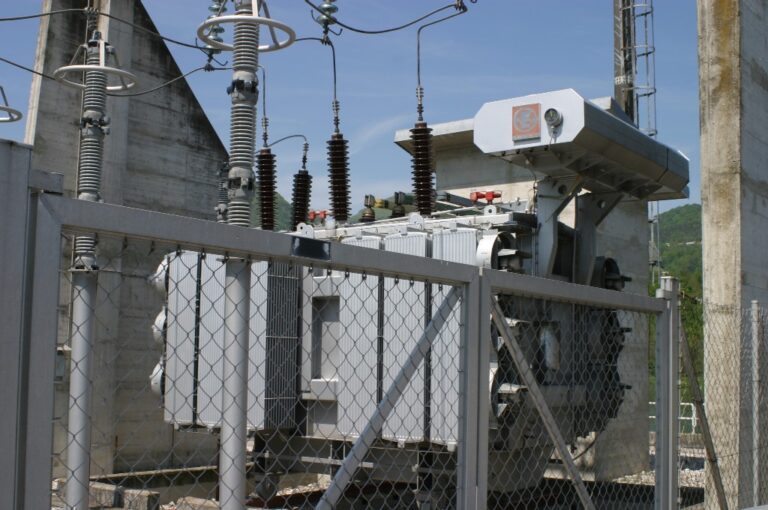
Cover: AI-generated illustration of generic transformers in an industrial and urban setting, not a real fleet, measured condition or validated electrical layout.