
A transformer commissioning baseline must identify the tested configuration. Signed acceptance sheets may omit tap positions, component identities or magnetic history. Specify the data package before transport: factory, transport and assembled-site states are not interchangeable baselines.
Separate Factory, Transport and Site States
IEC 60076-1:2011 addresses transport matters in clause 5.7.4. IEEE C57.93-2019 covers installation and maintenance of qualifying liquid-immersed power transformers. These references do not replace the supplied transformer-specific installation instructions; source-access limits are noted below.
Record transport configuration changes, component serial numbers and each test's setup. Measurements before dismantling and before reassembly may describe different electrical objects.
Megger's discussion of mechanical integrity describes SFRA around shipment and arrival. Preserve the test state with each trace, not just the transformer's serial number.
Retain shipping-monitor settings, timestamps, orientation and manufacturer review criteria. A maximum acceleration value alone is not a universal acceptance criterion.
Specify the Minimum Comparison Package
Discuss this original delivery checklist with the supplier and test contractor. It is not a standards test schedule.
| Record family | Preserve with the result | Future question it helps answer |
|---|---|---|
| Ratio and phase displacement | Vector group, terminal mapping, tap schedule, test voltage and frequency | Is a later ratio compared with the right expectation and method? |
| Winding resistance | Raw readings, stabilisation, temperature and conductor basis | Is the apparent change thermal or electrical? |
| SFRA | Raw traces, direction, tap positions and connection photographs | Can the reference setup be reproduced? |
| Bushing tests | Serial number, C1/C2 identity and correction provenance | Is the same component and circuit being trended? |
| Insulating-fluid tests | Fluid type, compartment, sampling time and reporting limits | Is later chemistry compared with the right starting state? |
| Transport and assembly | Event records, configuration changes and component installation | Could a diagnostic difference follow handling or assembly? |
| Functional checks | Tested function, result, settings and open issues | What was actually demonstrated at handover? |
| Test sequence and final state | AC/DC test order, demagnetisation record and as-left configuration | Could magnetic history or a configuration change explain a later difference? |
Ask for native instrument files, a readable export and the signed interpretation. Screenshots alone may not support recalculation or curve comparison.
Do not treat ratio-test current as a dedicated exciting-current baseline without matching conditions. Preserve voltage, frequency and connections. Prior DC testing can affect later AC diagnostics; see OMICRON's winding-resistance presentation, page 10. Missing demagnetisation records mean unknown magnetic history, not matching starting states.
A Worked Handover Review
A hypothetical handover includes three SFRA PDFs: factory with final bushings, arrival in transport configuration, and commissioning after assembly with no tap position recorded.
Do not merge these into a three-point trend. Retrieve raw files and test logs before the contractor demobilises. Resolve the missing tap setting and distinguish transport from assembled references.
One phase also has a new bushing serial number. Associate its commissioning capacitance with that component's records, not the removed bushing's history.
Two oil samples straddle a fluid-processing step. Retain both and mark that event; they are not a simple untreated trend.
Recover existing records first. Document irrecoverable gaps and agree how future comparisons will handle them; missing paperwork does not automatically require extra testing.
Make Acceptance and Future Monitoring Distinct Deliverables
Acceptance concerns the agreed specification, completed installation and authorised disposition of open issues. A diagnostic baseline concerns future comparability. One does not guarantee the other.
Nominate the accepted reference set, configuration, owner and storage location. Retain superseded baselines. Distinguish unavailable tests from results below reporting limits; a blank cell must not become zero during import.
The condition-monitoring overview places commissioning in the asset's longer history. The DGA guide provides oil-sampling context; do not transfer mineral-oil assumptions to ester-filled equipment without an appropriate basis.
Talk to an engineer about reviewing a commissioning evidence package.
Sources and scope: IEC 60076-1:2011, clause 5.7.4, printed page 26: earlier documented local full-text review; catalogue rechecked 29 September 2026. IEEE C57.93-2019: catalogue scope only. OMICRON, The DC Winding Resistance Test: In-Depth (2018), page 10, and Megger's 2020 article: public texts read on that date. Checklist and example are original suggestions, not mandatory acceptance requirements.
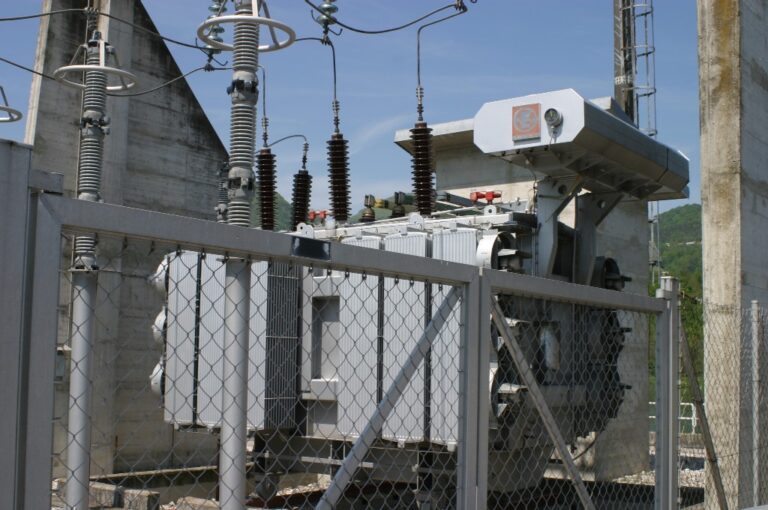
Cover: AI-generated editorial illustration of generic equipment, not an actual commissioning project or validated test setup.