
Multi-site transformer assessments are comparable only when teams share definitions, evidence rules and applicable method versions. A poor-condition label based on a confirmed trend is not equivalent to one assigned because the last sample is missing. Consolidating those labels without their basis hides the difference.
Start with definitions, authority and method versions. A shared software account or a centrally chosen colour scale cannot supply any of them.
Agree What Must Be Common and What Can Differ
Use a common asset identity policy, measurement dictionary, qualifier vocabulary and report vocabulary. Record local aliases rather than forcing every site to abandon familiar equipment names. The main tank and a separate tap-changer compartment must remain distinguishable everywhere.
Set an approved assessment method for each supported equipment and liquid category. Common governance does not mean applying mineral-oil assumptions to esters or oil-based diagnostics to dry-type units. Nor does it mean ignoring a site's known intervention history or specialist inspection findings.
CIGRE Technical Brochure 761, 2019, discusses condition assessment and scoring consistency for fleet ranking. The governance structure below is our proposed implementation approach, not a mandated organization chart.
Align teams on the meaning of a transformer health index. Document scale direction, inputs, limitations and method version. Do not combine scores from unrelated methods as though equal numbers implied equal condition or equal failure probability.
| Govern centrally | Retain locally | Escalate for technical agreement |
|---|---|---|
| Asset identity rules and alias history | Site labels and physical-location knowledge | Conflicting serial numbers or replacement history |
| Parameter and qualifier definitions | Laboratory method details | Unclear unit or reporting-limit convention |
| Approved assessment versions | Relevant operating and maintenance context | Unsupported asset or liquid type |
| Report vocabulary and evidence dates | Named reviewers and work ownership | Unexplained disagreement between assessments |
| Change-control process | Site-specific implementation constraints | Changes that alter fleet comparisons |
Make Laboratory Differences Inspectable
Ask each laboratory to provide its reporting units, methods, qualifiers, sample identifiers and revision conventions. Map them into the common dictionary without deleting the original representation. A result below detection and a missing result remain different states across every site.
Preserve the numeric bound and the laboratory's explanation of each qualifier: a less-than result is not automatically a detection-limit statement. Keep sample identity tied to the issuing laboratory and source-report version, not just a short identifier that another laboratory might also use. Distinguish sampling time, analysis time, report issue and receipt, with time zones where relevant.
IEC 60567:2023 addresses gas analysis in insulating liquids and free-gas sampling. Its public scope directs oil sampling to IEC 60475:2022 rather than treating it as part of IEC 60567. Neither a standard reference nor similarly named spreadsheet columns makes two datasets automatically comparable. The DGA overview explains the diagnostic context; fleet governance must additionally preserve source and method differences.
Where a laboratory changes, plan a comparability review appropriate to the decision. Depending on the issue, this may involve discussing method changes, checking retained records or arranging an agreed comparison with the laboratories. Do not infer a laboratory correction factor from a few unmatched field samples.
Include the sampling procedure and compartment in that discussion. Apparent laboratory disagreement may actually come from different sampling events or identities. Governance should help the team find the cause, not rank laboratories by whichever result looks most reassuring.
Resolve a Hypothetical Cross-Site Disagreement
Imagine an owner with three fictional sites. North uses an approved assessment version from the previous year. South has adopted a revised missing-data policy authorized for its local scope, but not yet reconciled for cross-site reporting. West still converts blank laboratory cells to zero during spreadsheet preparation.
The consolidated list appears to show West as the healthiest site. Before interpreting that as a performance difference, the central engineering lead selects comparable records and checks the inputs and method versions. The exercise identifies a preparation defect at West and a legitimate policy difference at South.
West checks the source reports and restores missing-data flags wherever no measurement was supplied; it does not invent replacement concentrations. It retains the previous output, reruns affected assessments and records the correction's scope. North and South evaluate the same frozen reference cases under both authorized versions within their applicable domains. Holding the input evidence fixed isolates the effect of the method change. New measurements are assessed separately so their effect is not mixed into that comparison.
The owner does not erase all historical scores to create a smooth trend. Reports already used for decisions retain their original version, while the current fleet comparison uses the agreed method and displays its applicability. Any unresolved asset remains visible with the reason it cannot yet be compared reliably.
Flag corrected outputs for review of affected decisions and notify the responsible recipients under the owner's document-control process. A corrected ranking does not show that the physical fleet improved overnight. For each comparison, show the assessment cutoff, the number of eligible assets and the number excluded or awaiting evidence. Otherwise a site with fewer assessable assets can appear better merely because difficult cases disappeared from its list.
Assign Authority and Review the Exceptions
Name an owner for the measurement dictionary, an engineering authority for method changes, and local reviewers for asset context. A supplier can explain its implementation, but the asset owner must decide whether the method fits its use and procedures.
ISO 55001:2024 provides an asset-management-system framework. Its committee overview discusses the relationship between decisions and value; it does not prescribe the approval roles proposed here. ISO TC 251 overview.
Use a scheduled exception review to resolve identity conflicts, unapproved mappings and unexplained method differences. Choose the cadence according to workload and consequence. Keep urgent engineering escalation available outside that schedule.
Have two sites independently assess the same small reference pack, using authorized or synthetic data. Compare their interpretations and reasons before combining outputs into a fleet review. Do not average unrelated scores into a new fleet number without a defined, justified aggregation method. Talk to an engineer about the evidence and decision rules your sites need to share.
Sources and Scope
- CIGRE TB 761, 2019, and IEC 60567:2023 (edition 5): public summary/scope and publication metadata checked; no full-text governance or laboratory-comparison protocol reviewed. The reference to IEC 60475:2022 comes from IEC 60567's public scope, not a review of that sampling standard.
- ISO TC 251 overview of ISO 55001:2024.
Evidence checked through 30 September 2026. Roles, table and three-site example are original engineering suggestions, not observations from customer sites. The ISO committee overview is context, not a full reading of the standard or a certification assessment.
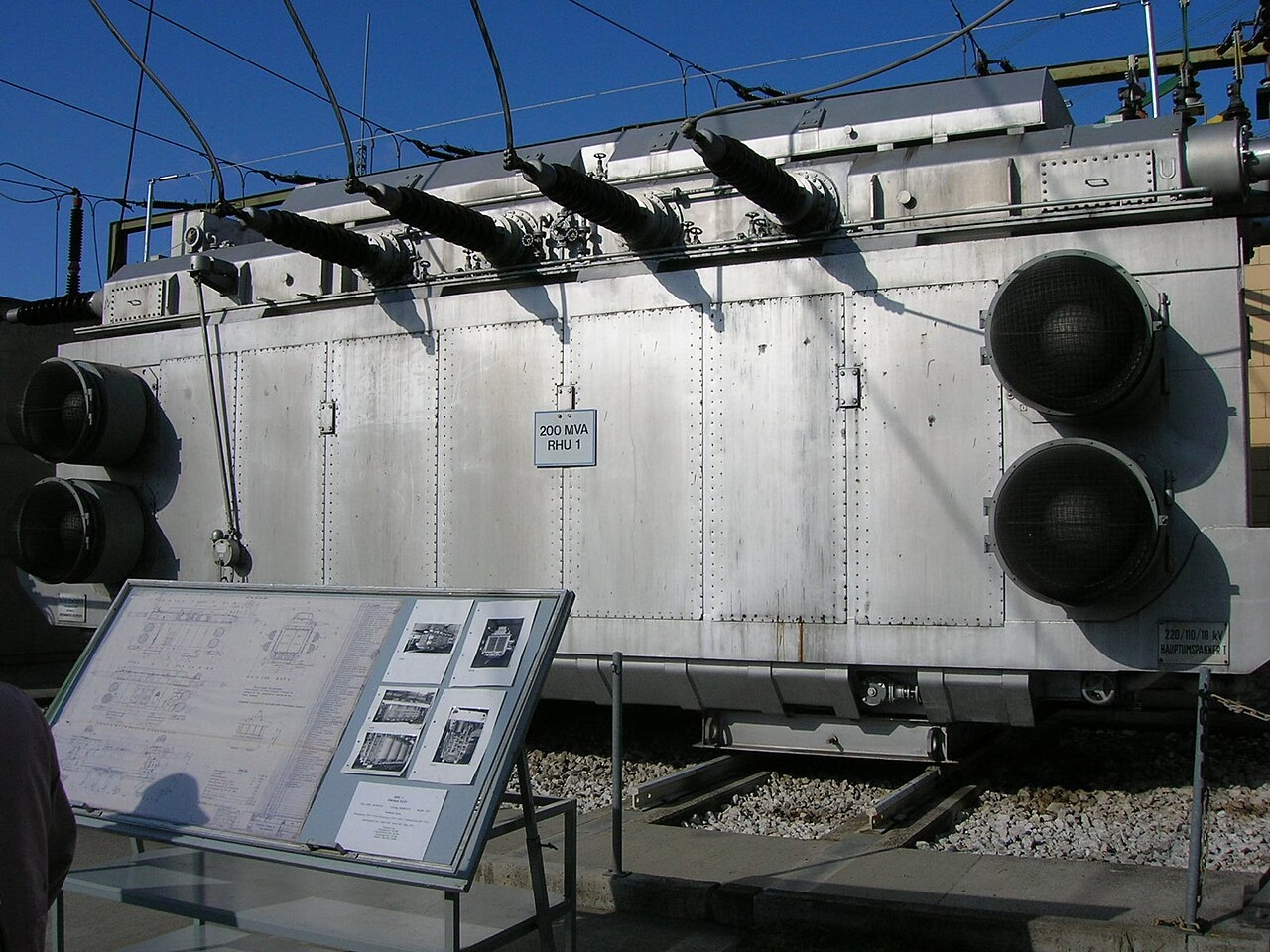
Cover photograph: A power transformer and cooling equipment at Bisamberg substation in Austria. Photo: Mario Sedlak / Wikimedia Commons, CC BY-SA 3.0. Commons download, resized where applicable; no editorial retouching. Illustrative photograph, not a Seetalabs customer case or evidence of the results discussed.