
More generator starts do not necessarily mean more energisations of the generator step-up transformer. Depending on the breaker arrangement, the GSU may remain energised from the grid while the generator is disconnected. Maintenance planning needs the transformer's actual switching and loading history, not a start counter used as a proxy.
A useful review aligns that history with cooling events, excitation conditions and laboratory samples. It does not assign an assumed amount of damage to each start.
Reconcile generator events with transformer events
Begin with the single-line diagram and switching records. Confirm whether a generator circuit-breaker separates the generator from the GSU and when the grid-side breaker actually energised or disconnected the transformer. Verify the timestamps and event definitions before counting them. An OEM explanation of the two connection arrangements illustrates why the generator and transformer can have different energisation histories; the installed plant records determine which arrangement applies.
This hypothetical comparison covers two consecutive 90-day periods. It assumes a plant arrangement in which the GSU can remain grid-energised with the generator disconnected.
| Record | Period A | Period B | What it establishes |
|---|---|---|---|
| Generator starts | 4 | 24 | Changed generator duty |
| GSU energisations confirmed from switching records | 2 | 3 | Transformer energisations differ from start count |
| GSU energised hours | 2,000 | 1,200 | Different energised exposure within equal calendar intervals |
| Cooling-stage unavailability | None recorded | Two logged events | Specific event records to investigate |
The numbers are invented, not a wear model. Period B has six times as many generator starts, but only one additional recorded GSU energisation. Neither comparison establishes a damage multiplier.
CIGRE TB 962:2025, Sections 3.5-3.6, printed pages 39-41, supports retaining operating events and accumulated service information alongside condition measurements.
Calculate the gas change without changing its meaning
Suppose comparable main-tank hydrogen results at the start and end of Period B are 20 and 38 ppm, expressed as gas volume per liquid volume, for a mineral-oil GSU. The samples are 90 days apart, with no intervening oil processing or replacement recorded.
The arithmetic interval slope is:
(38 – 20) / 90 = 0.20 ppm/day.
This is a concentration-change descriptor, not an alarm threshold or a direct measurement of gas-generation volume. It does not prove when within the interval the change occurred. Sampling quality, analytical uncertainty, the other gases and relevant events remain part of the DGA interpretation.
Dividing the same 18 ppm change by 1,200 energised hours gives 0.015 ppm per energised hour. That alternative denominator is not interchangeable with calendar time and is not presented here as a standard diagnostic criterion. In particular, a transformer can remain energised without carrying generator output.
Neither calculation allocates the change to loaded operation, energised no-load periods or de-energised periods. Those contributions cannot be separated from two sample results and a total-hours counter alone.
Place the two cooling events on the sample timeline. Their timing creates a question to investigate; it does not establish that they caused the hydrogen change.
Include excitation, not only current
Retain terminal voltage, frequency and any overfluxing-protection events, together with breaker state and tap position where relevant. A current-only thermal trend can miss an excitation issue.
IEC 60076-1:2011, Section 5.4.3, printed page 24, addresses operation at higher voltage or different frequency using V/Hz. Review any excursion against the unit's applicable capability and protection basis. This article supplies no general V/Hz limit or permission to exceed the nameplate.
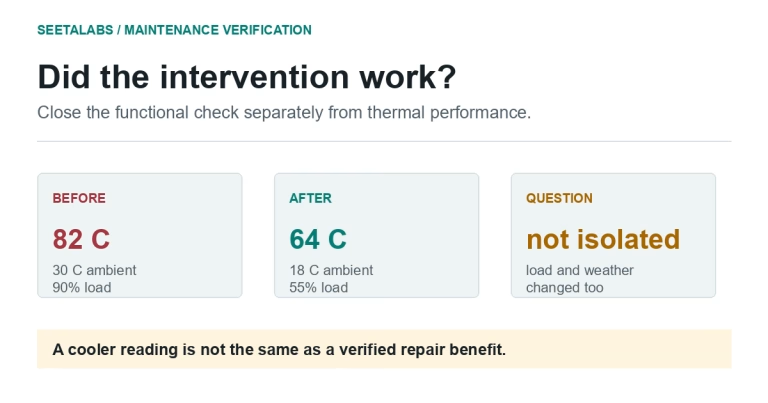
A lower top-oil reading during reduced dispatch does not settle those questions. Compare temperature with load history, ambient conditions and actual cooling availability. Confirm which components are installed; an OLTC should not appear on the worklist simply because other fleet units have one.
Turn the timeline into an outage question
For the hypothetical unit, the immediate proposal is to review the two cooling-event records and the associated load and temperature histories, then assess the DGA change with the complete sample set. If an excitation event is recorded, it needs its own electrical review rather than being absorbed into a generic "cycling" explanation.
For each proposed test, state the question it can resolve and whether its result is needed before, during or after the outage. The health-index summary can sit beside this record, but should not replace it.
Reconcile one operating interval before finalising the next outage scope. Talk to an engineer about the unit-specific evidence needed for that review. No switching sequence, protection setting or return-to-service approval is supplied here.
Sources and access: CIGRE TB 962:2025, Sections 3.5-3.6, printed pages 39-41; IEC 60076-1:2011, edition 3, Section 5.4.3, printed page 24. Targeted passages reread in local reference copies, not full-document reviews. The linked GE Vernova article's connection-scheme section was read; its product-performance and financial claims are not used. All operating counts and gas results are hypothetical.
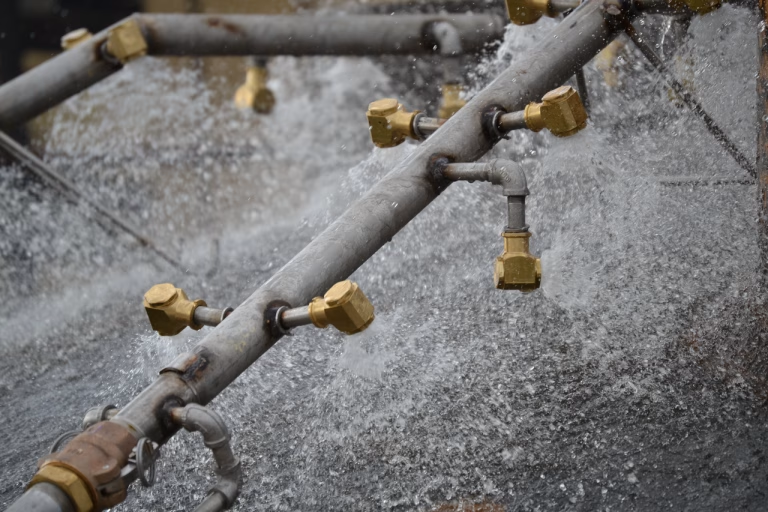
Cover: AI-generated editorial illustration of transformer cooling equipment beside a generic generator hall; not a customer installation, measured thermal result or validated electrical design.
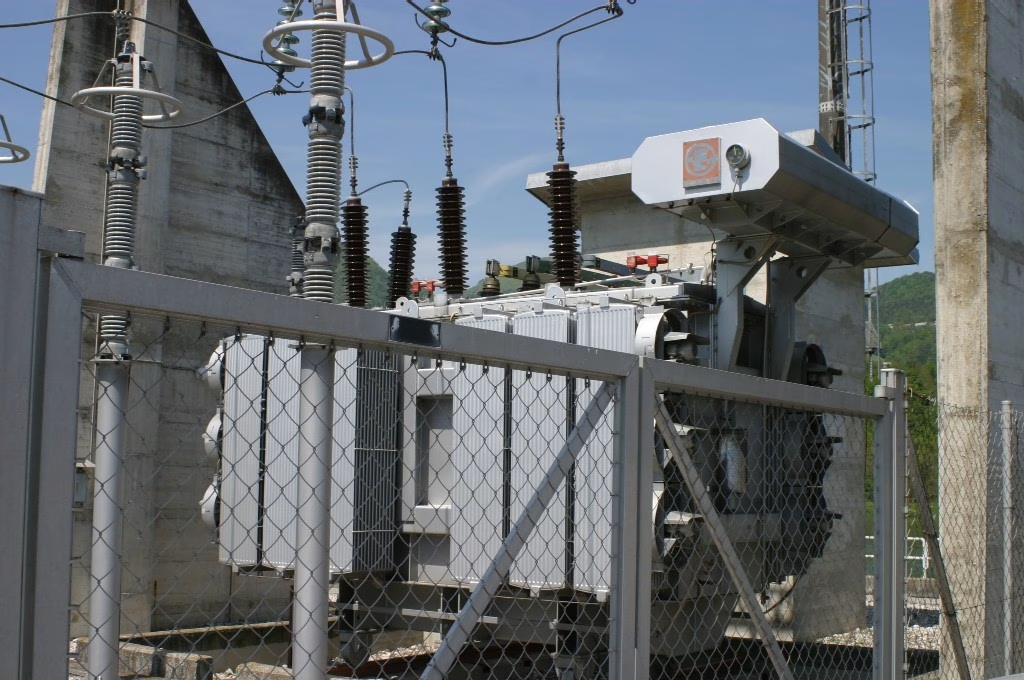
Cover photograph: A power transformer at Vrhovo hydroelectric power station in Slovenia. Photo: Andrejj / Wikimedia Commons, CC BY-SA 3.0. Commons download, resized where applicable; no editorial retouching. Illustrative photograph, not a Seetalabs customer case or evidence of the results discussed.