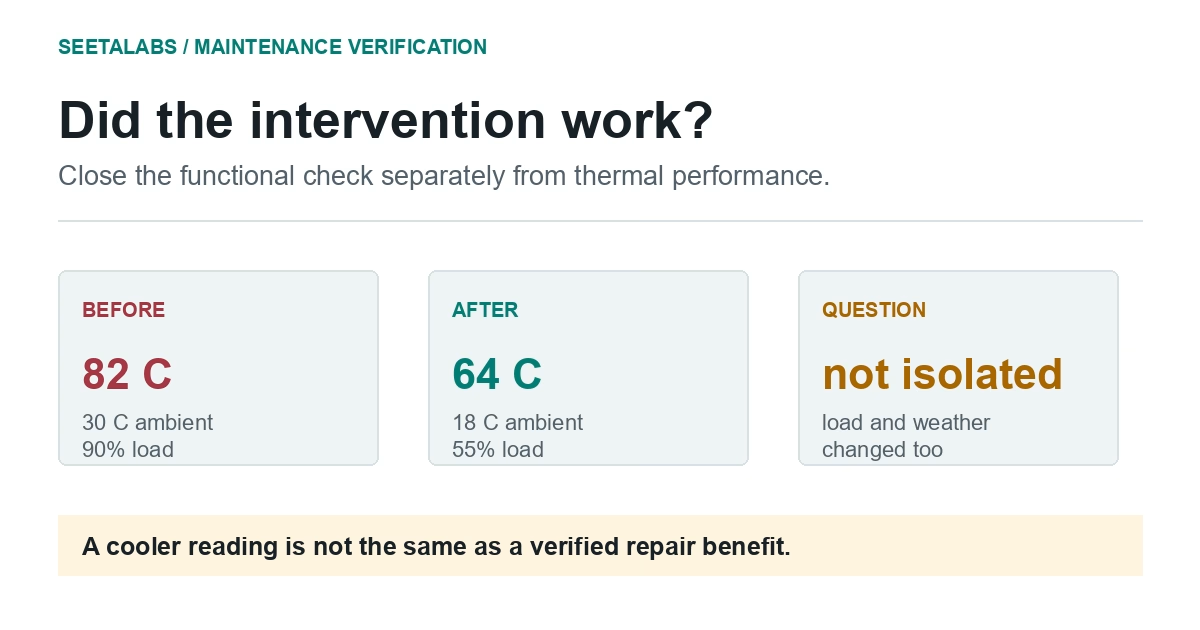

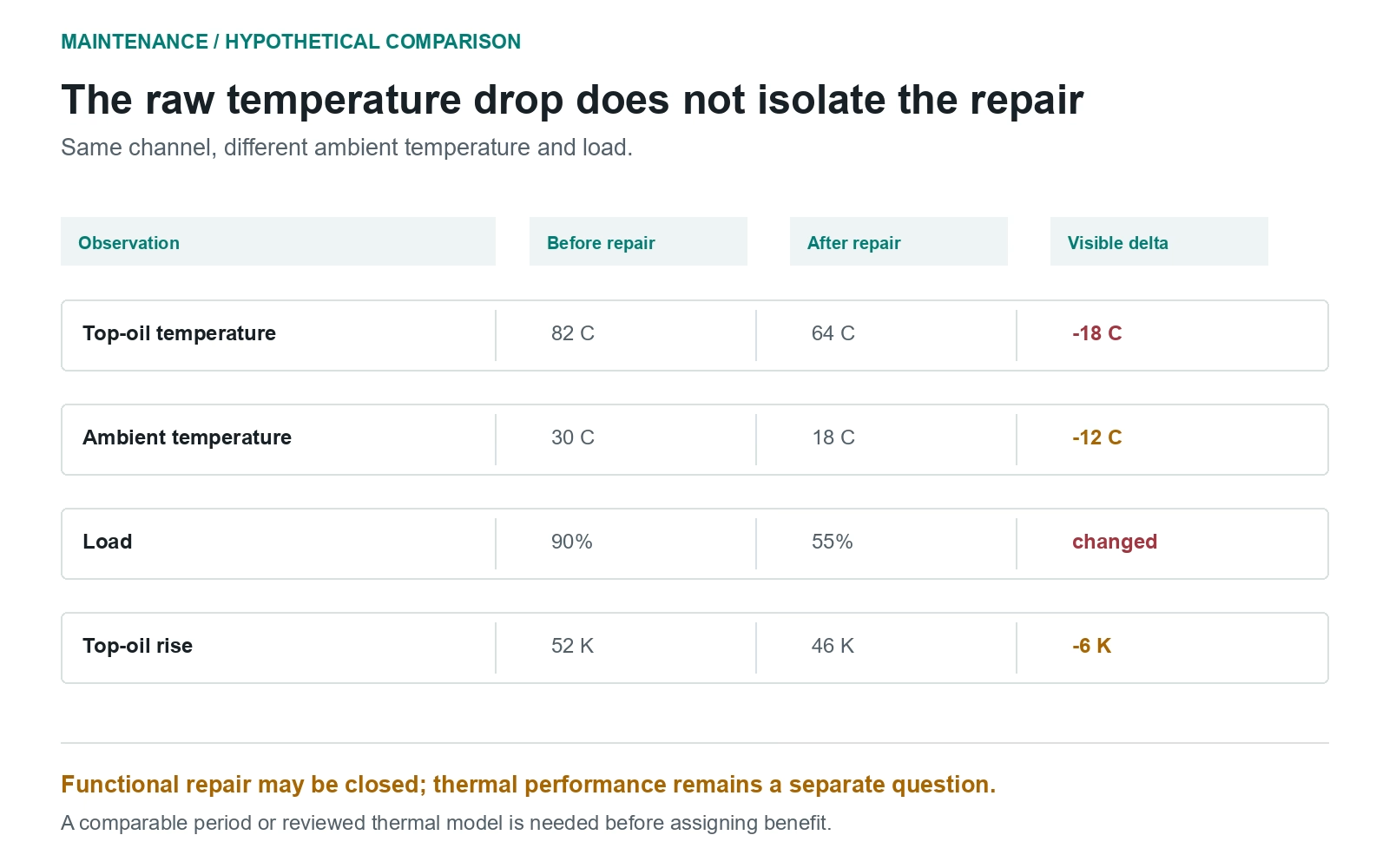
A top-oil reading falls from 82 to 64 degrees C after a cooling repair. That 18-degree difference does not establish an 18-degree repair benefit if load and weather also changed. Verification must separate restored equipment function from thermal performance under comparable service.
Both conclusions matter, but they need different evidence.
Read the before-and-after conditions first
Consider this hypothetical record. Both readings come from the same temperature channel, whose configuration has been checked.
| Observation | Before repair | After repair |
|---|---|---|
| Top-oil temperature | 82 degrees C | 64 degrees C |
| Ambient temperature | 30 degrees C | 18 degrees C |
| Load on the same rating basis | 90% | 55% |
| Top-oil rise above ambient | 52 K | 46 K |
Subtracting ambient removes one visible difference, but not the different load or preceding thermal history. The 6 K difference in temperature rise cannot be assigned to the repair either.
CIGRE TB 962:2025, Section 3.5, printed pages 39-41, discusses technical maintenance records and the conditions affecting repeatability. Its principle is directly useful here: retain the measurement setup and operating context, not merely the two temperatures.
Close the functional objective separately
Suppose the intervention replaced a failed cooling-stage contactor. The agreed, authorised functional checks subsequently confirm that the stage responds to its control demand, the intended fans run and the relevant indications and alarms behave as specified.
Those observations support closing the contactor-repair objective. They do not demonstrate full cooling capacity or prove that every radiator and oil path performs as intended.
A useful close-out statement is:
Hypothetical conclusion: The repaired cooling stage passed the agreed functional checks. Thermal-performance verification remains open because the available before-and-after readings represent different service conditions.
Attach the test record, component identity and reviewer. Do not let a completed work order silently clear the separate performance concern. Return-to-service acceptance also remains within the owner's authorised process; a later performance comparison is not a substitute for required acceptance checks.
Agree what would demonstrate thermal performance
Before collecting more data, decide what comparison the responsible engineer will accept. Retain load history, ambient measurements, cooling-stage states, temperature-channel identity and any sensor changes.
Choose comparable operating periods where available. If duty prevents a direct comparison, an applicable thermal model may help, but only with suitable parameters and uncertainty review. Two snapshots are not enough to validate that model.
IEC 60076-7:2018 addresses loading and thermal ageing of mineral-oil-immersed transformers. Its published scope does not supply an acceptance temperature for this repair. It must not be used as a shortcut to impose mineral-oil assumptions on an ester-filled unit.
The condition-monitoring resources provide broader context for retaining operating history. The next data request should answer the open performance question, not simply produce a cooler reading.
State the outcome without resetting the asset
Use a conclusion proportionate to the evidence: demonstrated, partly demonstrated or insufficient evidence. These are suggested review descriptions, not standard-defined classes.
For this case, the functional repair is demonstrated; the claimed thermal benefit remains unverified. Assign a reviewer and an agreed follow-up condition, such as the next comparable duty period. Do not create an unsafe test load merely to obtain a comparison.
The same discipline applies when oil processing accompanies maintenance. A concentration decrease may reflect gas removal rather than elimination of its cause; retain the intervention in the DGA history.
Audit one recently closed cooling repair against its original objective. Can the reviewer locate the functional result and distinguish it from the performance conclusion? SEETA Labs can discuss a Ronin AI demonstration using the assessment evidence available.
Sources: CIGRE TB 962:2025, Section 3.5, printed pages 39-41, licensed text checked. IEC 60076-7:2018, edition 2, published scope verified only. Temperatures, repair scenario and closure wording are original hypothetical examples, not acceptance criteria.